

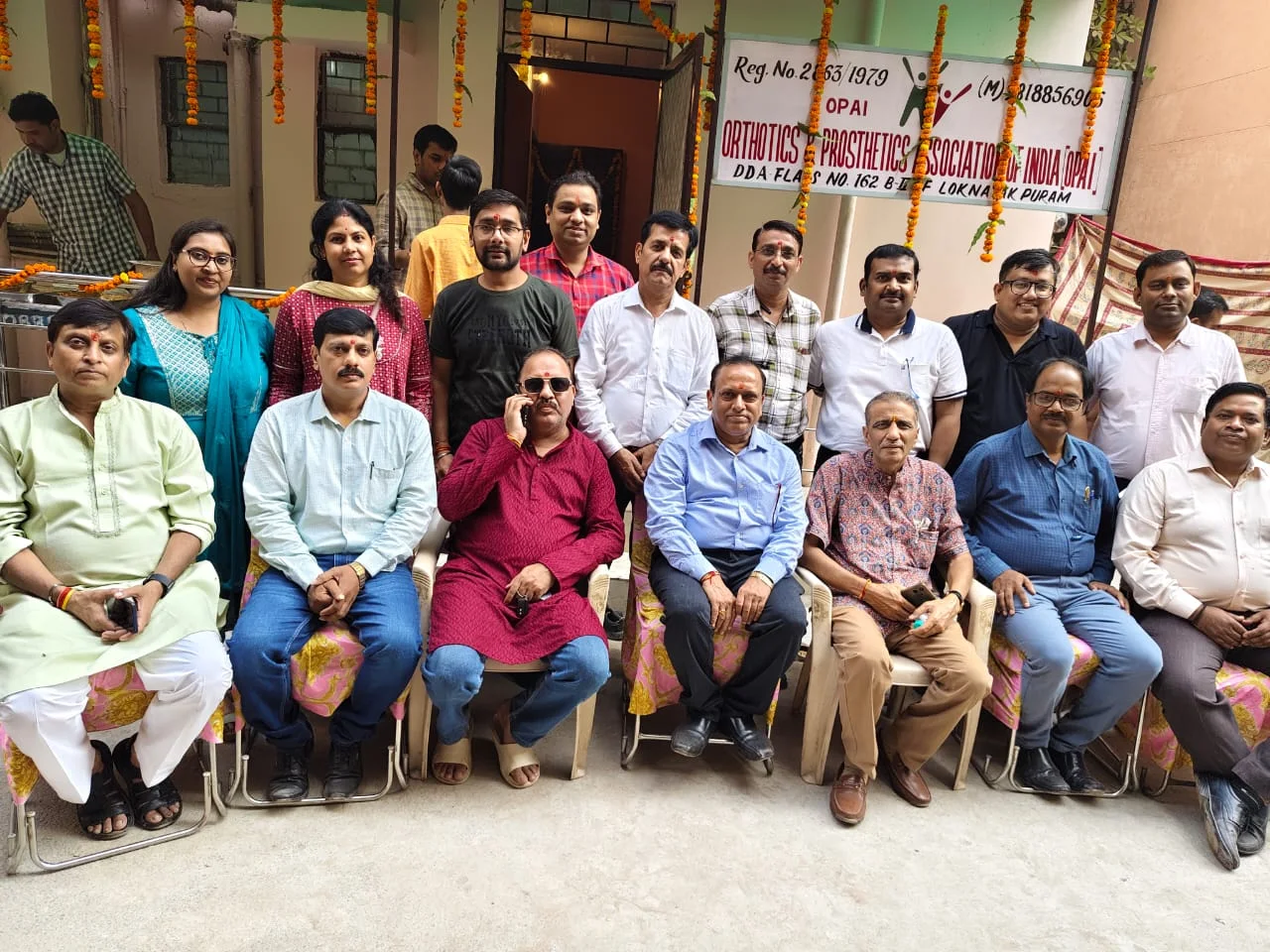
The history of India’s national prosthetics and orthotics professional movement is closely linked to two names: Orthotics & Prosthetics Society of India (OPSI) and Orthotics & Prosthetics Association of India (OPAI). Although the two names are sometimes discussed separately, OPSI is best understood as the original name under which the national professional body was established, while OPAI is the later restructured name used today.
According to the Orthotics and Prosthetics Association of India, the national professional body for prosthetics and orthotics in India was established in 1979 under the Indian Societies Registration Act and was originally named the Orthotics & Prosthetics Society of India (OPSI). The title was later restructured as the Orthotics & Prosthetics Association of India (OPAI) for administrative convenience.
This makes OPSI an important historical name in Indian P&O. It represents the early organised phase of the profession, when prosthetists, orthotists, educators, clinicians and rehabilitation professionals began building a national platform for academic exchange, professional identity and technical development. OPAI represents the continuation and expansion of that same professional legacy.
OPSI: The Early Professional Platform
The Orthotics & Prosthetics Society of India emerged at a time when prosthetics and orthotics in India were developing from a relatively specialised rehabilitation service into a more formal professional field. India had long traditions in artificial limb provision, including public institutions, charitable limb services and rehabilitation centres, but the need for a national professional platform became increasingly important as education, clinical practice and technology evolved.
OPSI provided that platform. It helped bring together practitioners working in prosthetic limb fitting, orthotic bracing, rehabilitation engineering, paediatric orthotics, spinal orthotics, mobility aids and disability rehabilitation. Historical references from professional records show OPSI conferences being active through the 1990s and early 2000s, including meetings in Agra, Trivandrum, Mumbai, Bangalore and Cuttack, where Indian clinicians and organisations presented work in orthotics, prosthetics and community rehabilitation.
These conferences were important because they gave Indian professionals a national forum to present case studies, technical innovations, research papers and clinical experiences. For a developing profession, this kind of exchange helped build confidence, standards and professional recognition.
OPSI also served as a bridge between India’s rehabilitation needs and global developments in prosthetics and orthotics. During the late 20th century, international discussions around community-based rehabilitation, professional categories, training standards and assistive technology were becoming more structured. Indian professionals needed a platform that could connect national practice with these international conversations.
The Transition From OPSI to OPAI
The later restructuring of OPSI into OPAI was more than a change of name. It reflected the maturing of the profession and the need for a clearer national association identity.
OPAI’s own conference history states that the organisation was originally established in 1979 as OPSI and later restructured as OPAI. It describes OPAI as the national professional body and the platform for bringing prosthetics and orthotics professionals together across India.
The name Orthotics and Prosthetics Association of India also better reflects the organisation’s role as an association representing professionals, supporting academic development, organising conferences, engaging with standards and strengthening the national P&O community.
Today, OPAI identifies itself as the apex body of P&O professionals in India. It has conducted national conferences, Continuing Rehabilitation Education programmes and workshops, and it remains a key platform for academic and professional development in Indian prosthetics and orthotics.
OPAI’s Role in Professional Standards and Education
One of OPAI’s central roles has been to support standards in prosthetic and orthotic practice. The organisation states that it works to maintain high standards for professional practice in India and is actively involved in the standardisation of prostheses, orthoses and mobility devices through the Bureau of Indian Standards as a member of a technical committee.
This role is important because prosthetic and orthotic devices directly affect mobility, safety, skin health, posture, function and quality of life. Poorly designed or poorly fitted devices can cause harm. Professional standards, technical guidelines and competent clinicians are therefore essential to safe rehabilitation.
OPAI membership is linked to recognised professional education. OPAI states that RCI-recognised degree and master’s degree holders in prosthetics and orthotics are eligible to become members. This reinforces the association’s role in promoting qualified professional practice and supporting the identity of prosthetists and orthotists as recognised rehabilitation professionals.
Conferences, CRE Programmes and Knowledge Exchange
OPAI’s national conferences have become important milestones in the Indian P&O calendar. The 29th National Conference of OPAI, held in Ahmedabad from 6 to 8 February 2026, brought together more than 700 national and international delegates, including clinicians, academics, researchers, rehabilitation professionals, industry leaders and students.
The 2026 conference theme, “Enabling Lives: Integrating Prosthetics & Orthotics into the Primary Healthcare Ecosystem,” reflected a major challenge for India: moving P&O from specialist centres into wider healthcare pathways.
This theme is significant for BharatCPO because India’s rehabilitation needs are not limited to major urban hospitals. Prosthetic and orthotic services are needed in district hospitals, rehabilitation centres, rural outreach programmes, diabetic foot clinics, paediatric services, trauma care pathways and community-based rehabilitation systems.
OPAI’s Continuing Rehabilitation Education programmes and workshops also help professionals stay current with clinical methods, technology, research and regulatory expectations. In a fast-changing field shaped by digital fabrication, 3D printing, advanced prosthetic components, diabetic foot orthotics and paediatric bracing, lifelong learning is essential.
The Journal of OPAI
Another important development in OPAI’s modern history is the Journal of Orthotics and Prosthetics Association of India (JOPAI). OPAI states that the journal began publication in 2011 and is a bi-annual national journal covering technical, clinical and bioengineering studies related to prosthetics and orthotics, including ethical and social issues.
JOPAI provides a platform for Indian research, clinical case studies, technical briefs, reviews and professional discussion. This is important because India needs more locally generated evidence in P&O. Clinical realities in India can differ from those in Europe or North America because of cost pressures, climate, rural access, footwear habits, floor-sitting, squatting, diabetes prevalence, trauma patterns and public-sector service models.
A national journal helps document Indian solutions to Indian rehabilitation challenges.
OPAI and International Partnerships
OPAI’s role has also expanded through partnerships with international rehabilitation organisations. The International Committee of the Red Cross (ICRC) has described its collaboration with OPAI as part of a wider two-decade journey in India through the ICRC Physical Rehabilitation Programme. Since 2013, ICRC’s partnership with OPAI has focused on capacity-building programmes and professional exchange platforms.
At the 2026 OPAI conference, ICRC highlighted the importance of strengthening national health systems through collaboration with professional associations and authorities. It also described OPAI as an apex body that can help bridge international technology providers with local expertise needed for adoption.
This is a crucial point for India’s future. New devices and technologies do not improve patient outcomes automatically. They need trained clinicians, appropriate prescription, local maintenance, follow-up and integration into real health systems. Professional associations such as OPAI can help ensure technology adoption remains clinically grounded.
OPSI’s Legacy in Indian P&O
Although the name OPSI is no longer the main public identity of the national professional body, its legacy remains important. OPSI represents the foundation phase of India’s organised P&O profession. It was the name under which many earlier conferences, awards, papers and professional exchanges took place.
For many senior Indian P&O professionals, OPSI was the platform where they first presented research, received recognition, built networks and contributed to national professional development. References to OPSI in older professional biographies, conference awards and institutional histories show its significance in the development of India’s rehabilitation sector.
In that sense, OPSI should not be seen as a separate competing organisation in the modern context, but as the historical root of today’s OPAI identity.
OPAI, ISPO India and the Wider Professional Landscape
It is also useful to distinguish OPAI from ISPO India. ISPO India is the Indian national member society of the International Society for Prosthetics and Orthotics. ISPO states that its India member society has existed since the early 1980s and was registered in 2011 under the Indian Societies Registration Act in the name of the Society of Prosthetist and Orthotist as the national member society of ISPO in India.
This can sometimes create confusion because several names sound similar: OPSI, OPAI, ISPO India and Society of Prosthetist and Orthotist. However, their roles can be understood clearly:
- OPSI: the original name of India’s national P&O professional body, established in 1979.
- OPAI: the restructured name of that professional body and the current national association identity.
- ISPO India / Society of Prosthetist and Orthotist: the Indian national member society linked to ISPO’s international network.
Together, these bodies reflect the growth of Indian prosthetics and orthotics from a small specialist field into a recognised rehabilitation profession with national and international connections.
Why This History Matters Today
The history of OPSI and OPAI matters because India’s P&O sector is entering a new phase. Demand is increasing due to diabetes, road traffic injuries, ageing, neurological conditions, paediatric disability, spinal conditions and trauma. At the same time, the profession is being reshaped by digital scanning, CAD/CAM, 3D printing, bionic technologies, pressure mapping, advanced orthotic materials and new assistive products.
India needs professional bodies that can support standards, training, research, ethical practice, advocacy and workforce development. OPAI’s history gives it a unique role in this process because it carries the legacy of OPSI while responding to current challenges.
The future agenda for OPAI and the wider Indian P&O profession should include:
- Stronger professional recognition for qualified prosthetists and orthotists
- Greater integration of P&O into primary healthcare and public rehabilitation pathways
- More Indian research and case reporting through national journals and conferences
- Clearer standards for prostheses, orthoses and mobility devices
- Stronger action against unqualified practice and unsafe device provision
- Expanded continuing education for clinicians and technicians
- Collaboration with government, BIS, RCI, ALIMCO, ISPO India, universities and rehabilitation centres
- Better access to P&O services for rural, low-income and underserved populations
Conclusion
The story of OPSI and OPAI is the story of Indian prosthetics and orthotics becoming organised, professional and nationally visible. OPSI laid the foundation in 1979 as the original professional society. OPAI carried that foundation forward as the national association, building conferences, education, standards engagement, professional identity and research platforms.
For BharatCPO, this history is worth recording because professional memory matters. India’s future in prosthetics and orthotics will depend not only on new technologies, but also on strong institutions, ethical practice, qualified professionals and national collaboration.
OPAI’s journey from OPSI to today reflects a profession that has grown steadily over more than four decades. The next challenge is to ensure that this professional strength translates into wider access, better outcomes and dignified rehabilitation for every person in India who needs prosthetic or orthotic care.
- Orthotics and Prosthetics Association of India
- What is OPAI?
- OPAI National Conference 2026
- Journal of Orthotics and Prosthetics Association of India
- OPAI Constitution
- ICRC article on OPAI and physical rehabilitation partnerships
- ISPO India member society page
- ISPO official website
- WHO standards for prosthetics and orthotics
- Rehabilitation Council of India