
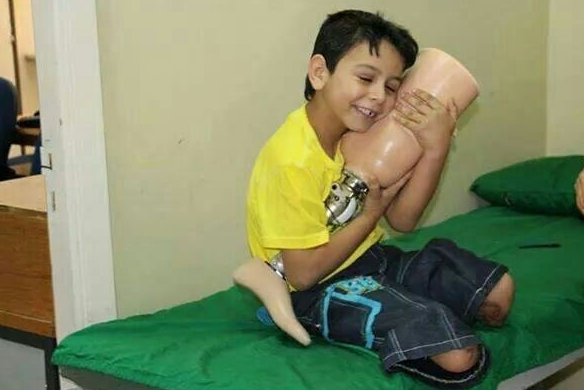
A new preprint has highlighted major gaps in India’s prosthetic and orthotic services, calling for stronger workforce planning, public financing, quality standards and health-system integration to improve access for people who need assistive and rehabilitation devices.
The manuscript, titled “Prosthetic and Orthotic Service Gaps in India: Implications for Rehabilitation Access and Policy Reform”, was posted on Preprints.org in March 2026. As a preprint, the paper has not yet undergone peer review, but it raises important issues for India’s rehabilitation, prosthetics, orthotics and assistive technology sectors.
The authors frame India’s P&O service gaps as a health-system challenge rather than only a device-supply problem. Their review identifies four major structural deficits: an insufficient trained P&O workforce with uneven geographic distribution, fragmented manufacturing and procurement systems, inadequate public financing and insurance coverage, and the absence of routine service and outcome monitoring.
For Bharat CPO, the paper is significant because it brings together many of the issues repeatedly seen across India’s rehabilitation landscape: long travel distances for users, limited access in rural areas, dependence on camps or welfare-based provision, weak follow-up systems, inconsistent device quality and limited integration of prosthetic and orthotic services into mainstream healthcare.
The preprint argues that prosthetic and orthotic care in India remains too often positioned within disability welfare structures rather than fully embedded in public health services. This creates a disconnect between acute medical care, rehabilitation planning and long-term functional support. A person may receive surgery, trauma care or diabetes treatment, but still face delays in obtaining the prosthesis, orthosis, mobility aid, refit, repair or rehabilitation support needed to return to daily life.
This is especially important in India, where demand for P&O services is shaped by trauma, road traffic injuries, diabetes-related amputations, congenital conditions, neurological disorders, musculoskeletal conditions and ageing. Without timely access to appropriate devices and clinical follow-up, people may experience preventable loss of mobility, increased caregiver dependence, delayed return to work, reduced education access and poorer quality of life.
One of the strongest messages from the paper is the need for a national P&O workforce strategy. India has a shortage of trained prosthetists and orthotists relative to population need, and access to qualified professionals is uneven across states and regions. Scaling the workforce will require more training places, stronger faculty pipelines, credentialing, continuing education and clearer public-sector career pathways.
The paper also calls for better procurement and quality assurance. Device provision cannot be measured only by the number of aids distributed. Prostheses and orthoses require clinical assessment, design, fitting, alignment, training, review and maintenance. Poorly fitted or low-quality devices may be abandoned, cause discomfort or fail to deliver meaningful functional improvement.
Financing is another central issue. Many users continue to face out-of-pocket costs or rely on schemes and distribution programmes that may not fully cover the clinical pathway. The authors recommend clearer financing and benefit design for assistive services, including pathways that recognise prosthetic and orthotic care as part of rehabilitation and universal health coverage.
The paper also recommends decentralised service hubs with tele-rehabilitation links. This is highly relevant for a country as large and diverse as India, where centralised specialist services alone cannot meet national demand. District-level rehabilitation access, supported by referral networks, digital follow-up and regional fabrication capacity, could help reduce travel burdens and improve continuity of care.
A further recommendation is the creation of a national monitoring dashboard linked to service and outcome indicators. Better data would help policymakers understand where services exist, who is being reached, what devices are being provided, how long users wait, whether devices are being used successfully and where investment is most urgently needed.
For clinicians, the paper reinforces the importance of seeing P&O as part of a complete rehabilitation pathway. A prosthesis or orthosis is not simply a product; it is a clinical intervention requiring assessment, prescription, fabrication, fitting, training, review and long-term adjustment. For policymakers, the paper suggests that meaningful access requires systems, not just schemes.
The preprint also aligns with global priorities from the World Health Organization, which has emphasised the need to integrate rehabilitation into health systems, and the WHO Assistive Technology agenda, which highlights the global gap between need and access to essential assistive products.
India has already taken important legal and policy steps through the Rights of Persons with Disabilities Act, 2016, national disability programmes and assistive device schemes. However, the preprint argues that implementation remains uneven and that P&O services need stronger integration into mainstream public health planning.
For Bharat CPO, the key takeaway is clear: India’s prosthetic and orthotic sector needs greater recognition as an essential part of rehabilitation, disability inclusion and health-system strengthening. Improving access will require investment in people, infrastructure, procurement, financing, technology and data.
Although the manuscript remains a preprint, it provides a useful policy framework for discussion. Its recommendations could support a more coordinated national conversation on how India can build a stronger, more equitable and more clinically integrated P&O service system.
- Preprints.org: Prosthetic and Orthotic Service Gaps in India
- WHO: Rehabilitation
- WHO: Assistive Technology
- WHO: Standards for Prosthetics and Orthotics
- Department of Empowerment of Persons with Disabilities, Government of India
- Rights of Persons with Disabilities Act, 2016
- Rehabilitation Council of India
- Artificial Limbs Manufacturing Corporation of India