
The future of Indian orthotics and prosthetics may not be built around larger general-purpose workshops. It may instead belong to specialised clinical networks focused on clearly defined patient groups.
A clubfoot network does not attempt to treat every orthotic condition. It builds expertise, referral relationships, clinical protocols, products and patient education around children undergoing clubfoot treatment.
A head-shape service similarly concentrates on infants with positional cranial deformities, creating a coordinated pathway between paediatricians, craniofacial specialists, physiotherapists and orthotists.
These models can deliver something that the traditional walk-in O&P workshop often struggles to achieve: a predictable flow of suitable patients supported by recognised referral pathways.
When developed responsibly, a condition-focused network can increase clinical quality, patient value, case volume and profitability at the same time.
Clubfoot India demonstrates the power of focus
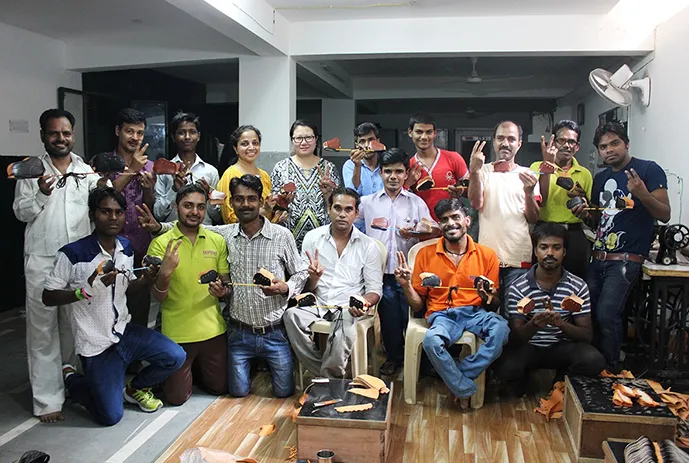
Clubfoot India Initiative Trust manufactures affordable Steenbeek foot-abduction braces used during the bracing phase of Ponseti clubfoot treatment. Its technicians—including people with disabilities—have supplied braces to CURE International India, which operates one of the world’s largest clubfoot programmes. Club Foot India
The organisation’s proposition is clear:
- One principal patient group
- One recognisable treatment pathway
- A defined orthotic product
- Nationwide availability
- An emphasis on affordability and adherence
- Close alignment with clinicians providing Ponseti treatment
The brace is not presented as an isolated retail product. It forms part of a longer clinical pathway intended to maintain correction and reduce the risk of relapse after casting and, where required, tenotomy. clubfootindia.com
The wider CURE India programme demonstrates the scale that can become possible when specialist care is organised as a network. CURE reports operating hundreds of designated clubfoot clinics across India through a public-private partnership model, supported by trained doctors and recurring weekly clinics. CURE International India …
For Indian orthotists, the lesson is not simply to manufacture more clubfoot braces. It is to recognise the commercial and clinical power of organising services around a complete patient journey.
From product supplier to pathway partner
A conventional O&P business may depend on irregular prescriptions arriving from many unrelated specialties. One day it receives an AFO referral, the next a spinal brace, followed by a diabetic insole or prosthetic repair.
That diversity can be valuable, but it also makes marketing, training, inventory and capacity planning difficult. Referral sources may see the provider as a general workshop rather than a specialist clinical partner.
A condition-focused network changes the proposition.
Instead of telling a paediatric orthopaedic surgeon, “We make every type of brace,” the provider can say:
“We operate a dedicated clubfoot bracing pathway, educate parents, monitor brace fit and adherence, provide rapid replacement as the child grows and report concerns back to the treating team.”
That is a much stronger referral proposition because it solves a defined clinical and operational problem.
The same principle could be applied to:
- Infant head-shape assessment and cranial remoulding
- Cerebral palsy and paediatric AFO management
- Scoliosis bracing
- Diabetic-foot ulcer prevention
- Stroke-related foot drop
- Partial-foot amputation
- Post-mastectomy care
- Pectus deformity
- Upper-limb reconstruction and prosthetic rehabilitation
Each network would have its own clinical criteria, referral partners, assessment process, products, follow-up schedule and outcome measures.
Why referral concentration drives volume
Most patients do not independently decide that they require a specialised orthosis. They enter care through a paediatrician, surgeon, rehabilitation physician, physiotherapist, diabetologist or another trusted healthcare professional.
A specialist network builds relationships with the professionals who repeatedly encounter the same condition.
For a head-shape service, the referral community might include:
- Paediatricians
- Neonatologists
- Craniofacial and paediatric surgeons
- Paediatric neurosurgeons
- Physiotherapists treating torticollis
- Maternity hospitals
- Child-development centres
A specialist cranial-remoulding service can then provide objective assessment, scanning, clinical documentation, orthotic fitting, adjustment and scheduled follow-up. The Head Shape Clinic in India, for example, describes a pathway in which craniofacial advice is followed by orthotic assessment and digital scanning for infants considered suitable for helmet therapy. theheadshapeclinic.com
A general supplier may receive occasional cranial cases. A recognised network can become the destination to which appropriate cases are routinely directed.
Greater volume then supports deeper experience. Deeper experience strengthens results and professional confidence, which can generate further referrals. This creates a clinical referral flywheel rather than dependence on one-off advertising.
Volume should improve care—not industrialise prescribing
The financial attraction of a focused network is clear. A more predictable caseload improves staff utilisation, inventory planning, purchasing and manufacturing efficiency. It can also reduce the cost of acquiring each patient because one established referral relationship may generate many appropriate cases.
However, commercial incentives must not determine clinical eligibility.
A high-quality network needs safeguards including:
- Published inclusion and exclusion criteria
- Independent clinical assessment
- Documented informed consent
- Transparent pricing
- No payments for patient referrals
- Referral back when orthotic treatment is inappropriate
- Standardised outcome measurement
- Clear adjustment and remake policies
- Protection of patient information
- Regular audit of complications and treatment completion
Not every infant with cranial asymmetry needs a helmet. Not every person with diabetes needs a custom orthosis. Not every child with a neuromuscular condition requires the same AFO.
The network becomes valuable because it identifies the correct intervention—not because it converts every enquiry into a device sale.
Where the profits come from
A specialist network should not rely on charging an excessive margin on one orthosis. Its profitability can come from operating the complete pathway more efficiently.
Potential sources of value include:
- Higher numbers of clinically appropriate referrals
- Better use of specialised clinicians and equipment
- Standardised assessment and documentation
- Centralised design and fabrication
- Reduced remakes through consistent protocols
- Planned follow-up and replacement cycles
- Training for referring clinicians
- Faster turnaround
- Bulk purchasing of approved materials
- Digital scanning and remote design support
- Multi-city access through accredited partner clinics
The patient benefits from specialist expertise and continuity. The referring clinician gains a dependable care partner. The O&P provider develops repeatable demand and a defensible clinical reputation.
That is a healthier model than competing primarily through discounts or relying on isolated high-margin device sales.
A hub-and-spoke model for India
India’s geography makes it difficult to establish a fully equipped specialist centre in every city. A hub-and-spoke structure offers a more practical approach.
The central hub could provide:
- Clinical governance
- Specialist case review
- Training and accreditation
- Digital design
- Central fabrication
- Quality assurance
- Outcome monitoring
- Marketing and referral resources
Local partner clinics could provide:
- Patient assessment
- Digital capture or measurement
- Fitting
- Education
- Follow-up
- Minor adjustments
- Communication with local referral sources
Digital workflows make this structure increasingly viable. Scans and clinical information can be reviewed centrally, while trained orthotists remain responsible for local assessment, fitting and patient care.
The model also allows an independent clinic to join a recognised specialist network without investing immediately in every item of manufacturing equipment.
Building the first network
An O&P organisation considering this approach should begin with one patient group rather than launching several specialist brands simultaneously.
The first service should be chosen according to:
- The number of identifiable patients in the region
- The availability of credible referral partners
- The strength of the clinical evidence and pathway
- The ability to train clinicians consistently
- Product registration and professional requirements
- Manufacturing repeatability
- Patient affordability and reimbursement
- Follow-up requirements
- Potential for objective outcome measurement
- Availability of appropriate escalation pathways
The organisation can then establish a pilot with a small group of referral partners, measure conversion and outcomes, and expand only after the pathway has been validated.
The next stage of Indian O&P
Indian O&P has traditionally been organised around workshops, institutions, hospitals and individual practitioners. These will remain essential, but condition-focused clinical networks could add a new layer to the profession.
The most successful networks will not simply repackage devices under attractive consumer brands. They will combine specialist clinical knowledge, trusted referral relationships, standardised protocols, patient education, measurable outcomes and efficient production.
Clubfoot services show what can happen when treatment, bracing, training and access are organised around one clearly understood condition. Cranial-remoulding networks offer another example of how focused expertise can connect medical assessment with specialised orthotic care.
For Indian orthotists and prosthetists, the opportunity is significant: stop thinking only about how to sell more products and start building the trusted clinical pathway through which the right patients receive the right products.
That approach can generate volume, value and profit—but its strongest competitive advantage will be better-organised patient care.
- Clubfoot India
- About Clubfoot India Initiative Trust
- CURE International India Trust
- The Head Shape Clinic
- Ponseti International Association