
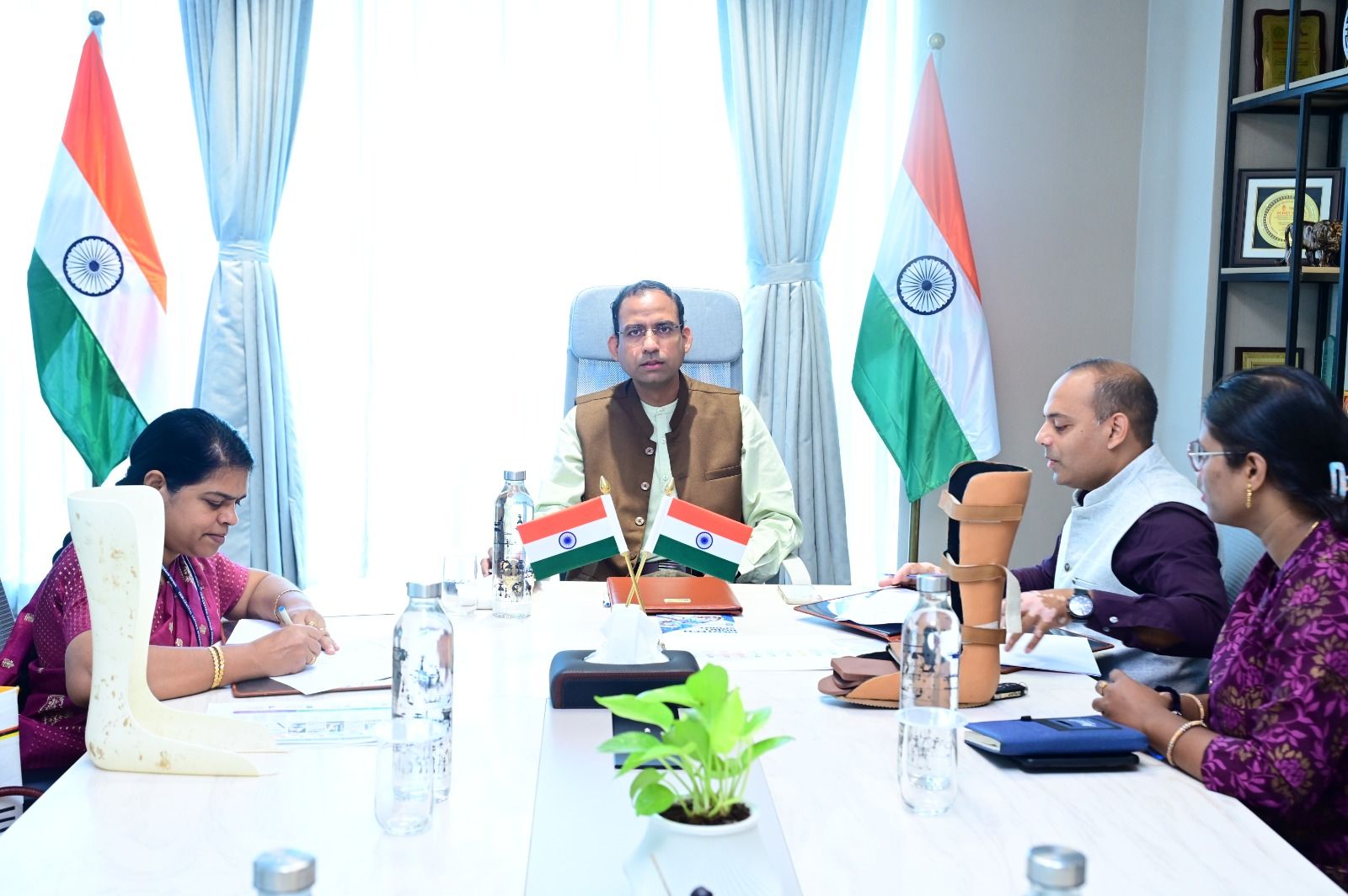
Bharat Limb Centre and the CSIR–Central Leather Research Institute have signed a memorandum of understanding to develop and commercialise ankle-foot orthosis technology intended for people with diabetic-foot complications.
The partnership combines CLRI’s scientific research, materials and footwear expertise with Bharat Limb Centre’s clinical rehabilitation, orthotic fabrication and service-delivery capabilities.
Its objective is to advance an affordable Indian orthotic solution that can redistribute plantar pressure, support healing and improve mobility for appropriately selected patients.
For India’s prosthetists and orthotists, this is an important development. It places CPO expertise within the country’s growing limb-preservation ecosystem and creates a pathway for publicly funded research to move from laboratory development towards regulated manufacture and clinical implementation.
Not a conventional gait-support AFO
Although the technology is described as an ankle-foot orthosis, its intended function differs from the conventional AFOs commonly prescribed for foot drop, ankle instability, cerebral palsy or stroke.
CLRI’s technology is designed around plantar-pressure offloading for the diabetic foot.
The official CSIR technology portfolio describes standardised posterior and anterior shell dimensions combined with a specially designed midsole. The system is intended to distribute plantar pressure more uniformly and reduce loading at affected areas of the foot.
The technology uses anatomically appropriate indigenous materials and is associated with Indian Patent IN433889.
Earlier reporting on CLRI’s development described the device as combining an AFO structure with specialised footwear to redistribute pressure, improve gait and assist ulcer management.
This distinction matters clinically. The product should be evaluated as an offloading and protective system rather than assumed to perform like a general-purpose neurological AFO.
Why offloading matters
A diabetic foot ulcer is rarely caused by pressure alone. Neuropathy, deformity, vascular disease, infection, reduced joint mobility and poor glucose control may all contribute.
However, repetitive mechanical loading can prevent a wound from healing and may cause tissue damage to recur after closure. Reducing pressure at the affected area is therefore a central component of diabetic-foot management.
Depending on the wound, patient and care setting, offloading may involve:
- Removable walkers
- Non-removable casting systems
- Custom ankle-foot orthoses
- Charcot restraint orthotic walkers
- Custom footwear
- Rocker soles
- Total-contact insoles
- Local pressure-relief modifications
No single solution is suitable for every patient.
A rigid or unstable deformity, active infection, suspected osteomyelitis, poor circulation or acute Charcot neuroarthropathy requires multidisciplinary assessment. Orthotic treatment must be coordinated with vascular care, wound management, infection control, endocrinology and rehabilitation.
The proposed AFO should therefore be understood as one part of a complete clinical pathway—not as an independent treatment for every diabetic ulcer.
Combining research with clinical delivery
CSIR-CLRI has an established history of research into therapeutic footwear and plantar-pressure management.
Its diabetic-footwear technology uses a full-length polyurethane foam insole, an extra-depth outer sole and uppers designed to accommodate feet with varying volumes. The footwear incorporates ankle padding, structural support and tread features intended to improve stability and traction.
CLRI previously collaborated with the M.V. Hospital for Diabetes and Diabetes Research Centre on DIASTEP footwear, which was developed to help prevent ulcers and other diabetic-foot complications.
Bharat Limb Centre brings the implementation side of the partnership.
Based at Andhra Pradesh MedTech Zone, the associated limb centre provides custom prostheses, orthoses, assistive devices, diabetic footwear and custom-insoles. The clinical facility operates within an environment designed to connect research, engineering, manufacturing and healthcare delivery.
This combination could allow the partners to undertake the work required between invention and meaningful adoption, including:
- Clinical refinement
- Standardisation of components and sizes
- Material selection
- Manufacturing-process development
- Product testing
- Practitioner training
- Field evaluation
- Regulatory compliance
- Commercial-scale production
- Distribution and after-sales support
The CPO’s role in diabetic-foot care
The partnership also highlights the wider contribution that prosthetists and orthotists can make to limb preservation.
A CPO can assess alignment, deformity, range of motion, tissue condition, footwear, gait and the mechanical forces acting through the foot. The clinician can then translate the multidisciplinary treatment objective into a device that can be fitted, adjusted and monitored.
Important responsibilities include:
- Confirming that the prescription matches the clinical objective
- Accommodating deformity without creating new pressure points
- Selecting suitable interfaces and materials
- Verifying fit and pressure distribution
- Educating the patient about wearing schedules and skin inspection
- Reviewing the device as swelling or wound condition changes
- Coordinating transition into protective footwear after healing
The device must also be practical enough for the patient to use consistently. An offloading system that is heavy, difficult to put on or incompatible with daily life may be removed, undermining its clinical purpose.
Affordability is therefore only one dimension of access. Usability, professional fitting, follow-up and local repair are equally important.
Questions for commercialisation
The MoU is a promising step, but successful commercialisation will require clear evidence and implementation planning.
The partners will need to define:
- The intended patient population
- Clinical indications and contraindications
- Whether the device is intended for active-ulcer treatment, post-healing protection or both
- Required vascular and wound assessments
- Device classification and regulatory pathway
- Pressure-reduction and clinical-performance evidence
- Available sizes and customisation options
- Practitioner training requirements
- Replacement components and repair procedures
- Recommended follow-up intervals
- Outcomes to be measured during deployment
Clinical claims should remain proportionate to the supporting evidence. Statements regarding ulcer healing or amputation prevention require appropriately designed clinical evaluation rather than mechanical testing alone.
An opportunity for Indian orthotic manufacturing
The partnership comes as India places increasing emphasis on early detection, multidisciplinary diabetic-foot care and avoidance of preventable amputation.
It also demonstrates how India can develop locally appropriate orthotic technology using domestic research, clinical knowledge and manufacturing capacity.
If the programme successfully combines affordability with safety, measurable offloading, user adherence and professional follow-up, it could provide an important alternative for hospitals and diabetic-foot programmes seeking scalable solutions.
The wider lesson is that orthotic innovation becomes valuable only when research, clinical practice and manufacturing remain connected.
CLRI can contribute technology and materials knowledge. Bharat Limb Centre can translate that work into patient assessment, fitting and real-world feedback. AMTZ can provide an ecosystem for testing, manufacturing and commercial development.
Together, these capabilities could help move diabetic-foot orthotics from isolated projects towards a repeatable Indian service model focused on healing, mobility and long-term limb preservation.
- Bharat Limb Centre on LinkedIn
- CSIR-CLRI Diabetic-Foot AFO Technology
- CSIR-Central Leather Research Institute
- CLRI Diabetic Footwear Technology
- Bharat Limb Centre at AMTZ
- Andhra Pradesh MedTech Zone