
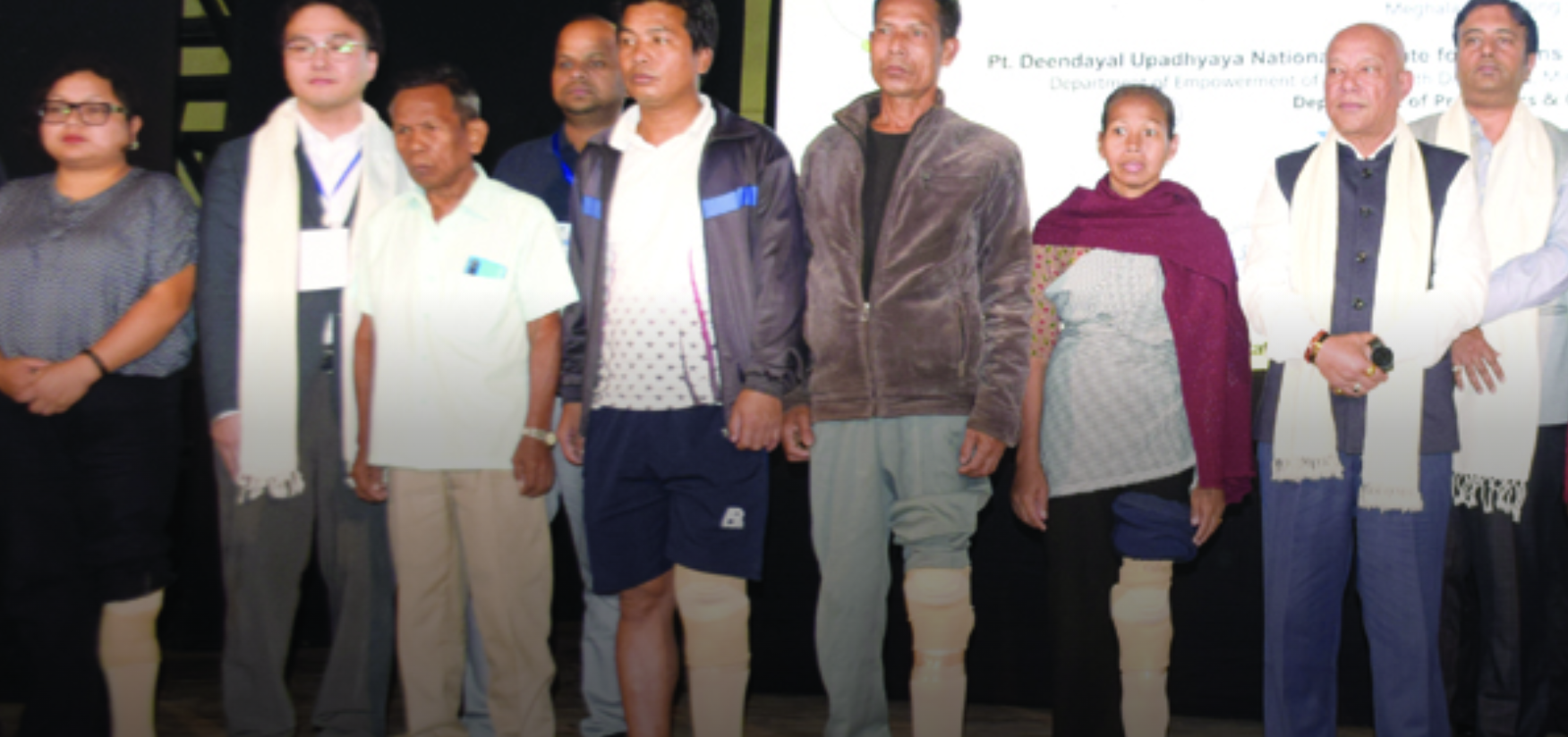
A hands-on training programme in Shillong has highlighted the growing role of 3D printing in improving prosthetic access, clinical training and rehabilitation services across Northeast India.
According to The Shillong Times, Meghalaya minister Sanbor Shullai said quality prosthetic care is receiving a “3D boost” as prosthetic and orthotic professionals from the region received practical exposure to digital prosthetic technology. The programme reportedly included the distribution and fitting of 3D-printed artificial limbs for 12 people, linking professional development with direct patient benefit.
The initiative is significant for India’s orthotics and prosthetics sector because it brings together three priorities that are increasingly central to modern rehabilitation: regional access, digital fabrication and workforce upskilling.
Digital Prosthetics Moves Closer to Regional Rehabilitation Services
For many people with limb loss in Northeast India, access to prosthetic services can be limited by distance, cost, transport barriers and the availability of trained personnel. A programme based in Shillong therefore has importance beyond a single training event. It represents a model where digital prosthetic fabrication can be introduced closer to underserved regions rather than being concentrated only in larger metropolitan centres.
Digital workflows in prosthetics may include scanning, computer-aided design, digital rectification, 3D printing and repeatable manufacturing processes. These tools do not replace the clinical judgement of prosthetists and orthotists, but they can support faster design iterations, improved documentation and more consistent fabrication when properly integrated into clinical care.
The Shillong programme reportedly involved prosthetic and orthotic professionals from across Northeast India, giving the event a regional workforce-development role. For BharatCPO readers, this is an important detail: the value of 3D printing in prosthetics depends not only on machines and software, but on whether CPOs and technicians are trained to assess, design, fit, align and follow up devices safely.
Training, CRE Learning and Clinical Application
The programme’s emphasis on hands-on training is particularly relevant for India’s O&P workforce. Digital fabrication is often discussed as a technology story, but in clinical practice it is a competency story.
For prosthetists, orthotists and technicians, the shift toward digital prosthetics raises several practical questions:
- How should residual limb shape be captured and verified?
- How should digital socket designs be modified for comfort, pressure distribution and suspension?
- What quality-control checks are needed before fitting a 3D-printed limb?
- How should clinicians document outcomes, follow-up, repairs and replacement needs?
- Which cases are suitable for 3D-printed prosthetic pathways, and which still require conventional fabrication?
These questions are essential because prosthetic care is not simply the production of a limb. It includes assessment, prescription, fabrication, fitting, gait training, user education, maintenance and long-term review.
The reported involvement of the Pandit Deendayal Upadhyaya National Institute for Persons with Physical Disabilities is also relevant. PDU NIPPD is one of India’s recognised national rehabilitation institutions, and its association with professional training gives the programme added significance for workforce development in prosthetics and orthotics. Background information on the institute notes its role in human resource development and rehabilitation services, including prosthetics and orthotics.
Instalimb India and the Growing 3D Prosthetics Ecosystem
The Shillong training also connects with the wider growth of 3D prosthetics activity in India. Instalimb India has been associated with affordable 3D-printed prosthetic limb models and partnerships in the Indian rehabilitation sector. Earlier this year, The Times of India reported that Dr Shakuntala Misra National Rehabilitation University in Lucknow had entered into a partnership with InstaLimb to support advanced 3D-printed prosthetic limb technology, including an upgraded 3D printing lab at the university’s Artificial Limbs and Rehabilitation Centre.
Taken together, these developments suggest that digital prosthetics in India is moving from isolated demonstration projects toward training, institutional collaboration and service delivery models. That transition is important. For 3D printing to have meaningful impact, it must become part of a structured rehabilitation pathway, not just a one-time fabrication event.
Why Northeast India Matters
Northeast India presents a distinct rehabilitation access challenge. Its terrain, dispersed populations and distance from major tertiary centres can make follow-up care more difficult for people who need prosthetic and orthotic services. A prosthetic limb is not a single transaction; it requires review, adjustment and sometimes replacement as the user’s body, activity level and environment change.
This makes regional training especially valuable. When local and regional O&P professionals are exposed to digital methods, the benefits can extend beyond the immediate fitting camp. Skilled clinicians and technicians can help build local capacity for assessment, digital capture, socket design, fabrication coordination and follow-up.
For government rehabilitation services, district disability programmes and regional centres, the Shillong initiative also offers a possible template: combine professional training with patient-facing service delivery, and use technology as a tool for improving reach rather than as a substitute for clinical systems.
The Clinical Message for Indian O&P Professionals
For BharatCPO’s professional audience, the main lesson is that 3D printing should be seen as an extension of prosthetic practice, not a replacement for it.
Digital tools can help improve efficiency, repeatability and access, but outcomes still depend on clinical assessment, socket comfort, alignment, component selection, user training and follow-up. Manual skills also remain important, especially in India where hybrid workflows are likely to dominate for years. A digitally produced prosthesis still requires the eyes, hands and judgement of a trained prosthetist or technician.
The Shillong programme therefore matters because it appears to address both sides of the equation: introducing advanced fabrication technology while also training the professionals who must apply it responsibly.
A Step Toward More Accessible Prosthetic Care
The distribution and fitting of 3D-printed artificial limbs to 12 people gives the programme immediate human impact. But the longer-term significance may be in the professional capacity created through the training.
If similar programmes are expanded across India, especially in underserved regions, digital fabrication could support faster access to prosthetic care, better documentation and stronger local rehabilitation networks. For Northeast India, the Shillong initiative is a timely reminder that innovation in prosthetics must be measured not only by the technology used, but by whether it reaches the people and professionals who need it most.
- Original report: The Shillong Times
- Pandit Deendayal Upadhyaya National Institute for Persons with Physical Disabilities
- Instalimb
- Department of Empowerment of Persons with Disabilities, Government of India
- Rehabilitation Council of India
- Dr Shakuntala Misra National Rehabilitation University
- Times of India report on DSMNRU–InstaLimb 3D prosthetics partnership