
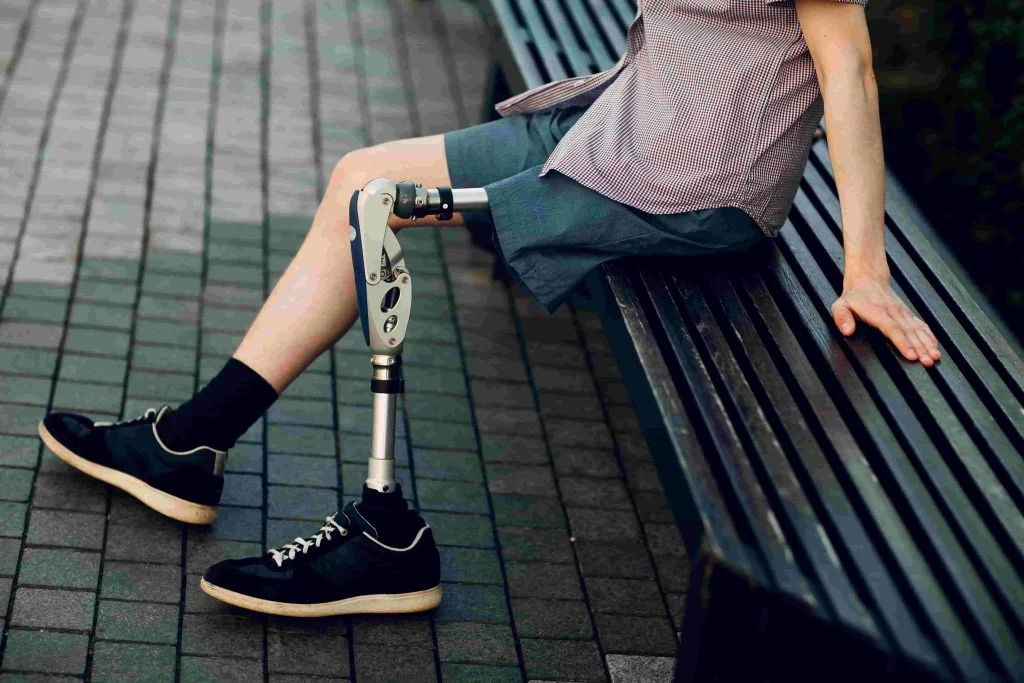
India’s Supreme Court has ruled that the loss of a leg above the knee should be treated as 100% functional disability in the case of a mason whose livelihood depended on physically demanding work.
The decision is important for India’s prosthetics, orthotics and rehabilitation sector because it reinforces a key principle: disability compensation should not be calculated only from a medical percentage on a certificate. It must also consider how the injury affects the person’s ability to work, earn and participate in daily life.
According to a report by The Law Advice, the Supreme Court enhanced compensation for a mason from Tamil Nadu from ₹29.01 lakh to ₹40.29 lakh, after finding that the lower courts had wrongly assessed his loss of earning capacity at 70% based only on the medical disability certificate.
The case was M. Paramesh v. VRL Logistics Ltd. & Anr. and was heard by a Bench comprising Justice Prashant Kumar Mishra and Justice N.V. Anjaria. The claimant had suffered severe injuries in a road accident in April 2017, when a lorry struck his bicycle from behind on the Namakkal-Salem highway, eventually leading to amputation of his right leg above the knee.
Physical Disability and Functional Disability Are Not the Same
The central issue in the case was the difference between physical disability and functional disability.
The claimant’s permanent physical disability had been assessed at 70%. The Motor Accident Claims Tribunal and the Madras High Court used the same figure when calculating loss of earning capacity. However, the Supreme Court disagreed.
The Court held that in this specific case, the amputation had to be assessed in relation to the claimant’s actual occupation. Masonry requires standing, climbing, balancing, carrying materials and continuous use of both legs. The loss of a leg above the knee therefore did not merely create a medical impairment. It effectively ended his ability to continue his previous work.
The Supreme Court observed that functional disability should be assessed according to how the injury affects livelihood, not by mechanically applying the physical disability percentage.
Why This Matters for Prosthetics and Rehabilitation
For Bharat CPO readers, the ruling is highly relevant because it recognises the real-world impact of limb loss.
A transfemoral amputation does not affect every person in the same way. A desk-based professional, a driver, a farmer, a mason, a factory worker and a student may experience very different functional consequences from the same level of amputation.
This is why prosthetic rehabilitation must consider:
- The person’s occupation
- Working environment
- Mobility demands
- Terrain and transport needs
- Safety requirements
- Energy expenditure
- Ability to return to previous work
- Need for vocational retraining
- Long-term prosthetic maintenance
- Replacement costs over a lifetime
A prosthetic limb can significantly improve mobility and independence, but it may not fully restore a person’s ability to perform heavy manual labour, especially when work involves climbing, carrying loads, uneven ground or prolonged standing.
Compensation Must Include Prosthetic Costs Over Time
Another important part of the ruling is the Court’s recognition of future prosthetic costs.
The Supreme Court increased the amount awarded for future medical expenses, including artificial limb and prosthetic maintenance, from ₹1 lakh to ₹2 lakh. The Court noted that the claimant would require replacement and maintenance of the prosthesis throughout his lifetime.
This point is significant.
In India, compensation discussions often focus on the initial cost of a prosthetic limb. However, amputee care is not a one-time expense. A person with above-knee limb loss may require repeated socket changes, component servicing, replacement feet or knees, liners, suspension systems, cosmetic covers, physiotherapy and periodic clinical review.
For younger amputees, the lifetime cost can be substantial.
A proper compensation framework should consider:
- Initial prosthetic fitting
- Future socket replacement
- Prosthetic knee and foot replacement
- Liners and consumables
- Repairs and servicing
- Physiotherapy and gait training
- Travel for follow-up appointments
- Work adaptation or retraining
- Pain management and residual limb care
The Court’s recognition of ongoing maintenance is therefore an important step, even though actual lifetime prosthetic costs can vary widely depending on device type, activity level and clinical needs.
The Vocational Impact of Limb Loss
The ruling also highlights the importance of vocational rehabilitation.
For many workers in India’s informal and manual labour sectors, the body itself is the main source of livelihood. A mason, carpenter, agricultural worker, construction labourer, loader or mechanic may not be able to return to the same work after major limb loss, even with a prosthesis.
This does not mean that the person cannot work again. But it may mean that they need:
- Prosthetic rehabilitation
- Mobility training
- Worksite assessment
- Vocational counselling
- Skills training
- Job transition support
- Assistive technology
- Employer accommodation
- Social protection support
Without these services, the financial impact of amputation can continue long after hospital discharge.
India’s rehabilitation system needs stronger links between prosthetic services, disability certification, compensation processes, employment support and social welfare schemes.
A Reminder for Medical Boards and Tribunals
The Supreme Court’s decision sends an important message to tribunals, insurers, medical boards and legal professionals.
A disability certificate is important, but it does not tell the whole story. A 70% physical disability may become 100% functional disability if it removes the person’s ability to perform their only occupation.
For prosthetists, orthotists and rehabilitation professionals, this creates a need for clear functional documentation.
Clinical reports should ideally describe:
- Amputation level
- Residual limb condition
- Mobility potential
- Prosthetic prescription
- Need for gait training
- Work-related limitations
- Environmental barriers
- Expected maintenance needs
- Likely functional outcome with and without prosthetic rehabilitation
Such documentation can help courts and tribunals understand the difference between medical impairment and real-life loss of earning capacity.
Why the Case Matters for India’s Amputee Community
Road traffic accidents remain a major cause of traumatic limb loss in India. Many affected people are young or working-age adults. For families dependent on daily wages or manual labour, an amputation can cause immediate financial crisis.
This ruling is therefore important because it recognises the economic reality of limb loss.
A person may survive an accident, receive surgery and be discharged from hospital, but still face a lifetime of prosthetic expenses, mobility challenges and work limitations. Compensation must reflect these realities if it is to be meaningful.
For the amputee community, the ruling strengthens the argument that assessment should be person-centred and occupation-specific.
Implications for Bharat CPO
For India’s prosthetics and orthotics sector, the case reinforces several practical priorities.
First, prosthetic services should be involved early in post-amputation planning. Patients need realistic guidance about mobility, device options, costs and timelines.
Second, prosthetic prescriptions should consider work demands, not only basic walking.
Third, documentation should clearly explain long-term maintenance and replacement needs.
Fourth, rehabilitation should include return-to-work planning wherever possible.
Fifth, compensation systems should recognise that a prosthetic limb is not a one-time purchase but part of lifelong care.
Functional Justice Requires Functional Rehabilitation
The Supreme Court’s ruling is not only a legal development. It is also a rehabilitation message.
Disability must be understood in context. For a mason, the loss of a leg above the knee may mean the loss of the work that sustained him and his family. The law has now recognised that reality in this case.
But financial compensation alone is not enough. India also needs stronger prosthetic rehabilitation pathways, affordable long-term device provision, maintenance support and vocational reintegration services for people with limb loss.
The case of M. Paramesh reminds us that a prosthesis is not just a medical device. It is part of a person’s ability to work, move, earn and live with dignity.
- The Law Advice: Loss of Leg Above Knee Equals 100% Functional Disability for Mason
- Supreme Court of India
- Department of Empowerment of Persons with Disabilities, Government of India
- ADIP Scheme: Assistance to Disabled Persons for Purchase/Fitting of Aids and Appliances
- Artificial Limbs Manufacturing Corporation of India
- WHO: Prosthetics and Orthotics Services
- WHO: Rehabilitation