
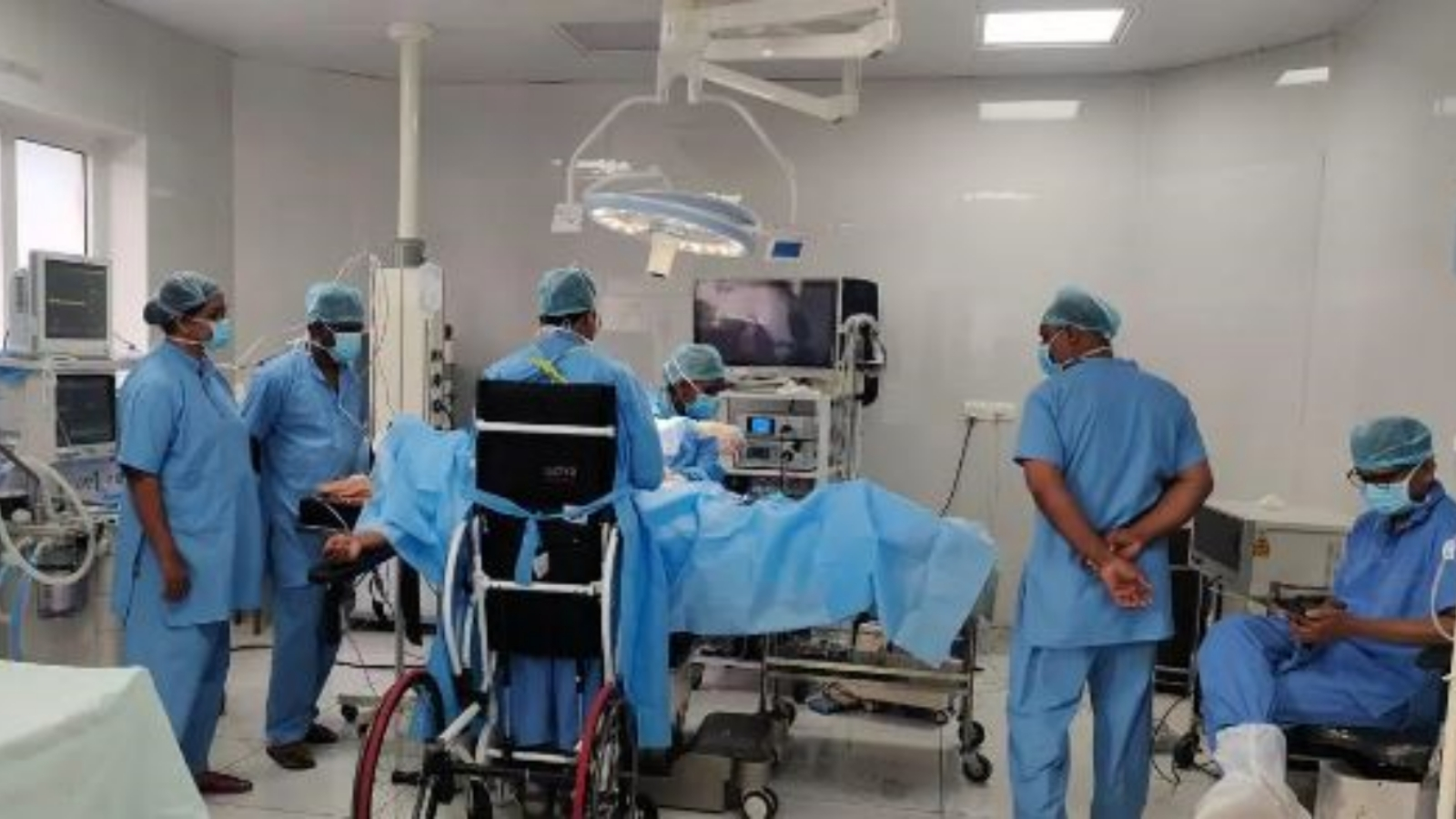
India’s healthcare system risks excluding talented students and professionals with disabilities because many medical colleges, clinical training environments and digital systems remain inaccessible.
An opinion article published by Tech Observer argues that assistive technology should be treated not only as a rehabilitation product, but also as an educational resource and workforce enabler.
Written by Prashant Agarwal, President of Narayan Seva Sansthan, the article highlights how accessible software, adaptive equipment and inclusive clinical systems can help people with physical, sensory and communication disabilities study and work across medicine, nursing and allied health professions.
For India’s prosthetic, orthotic and rehabilitation sector, this is particularly relevant. People with disabilities should not be viewed only as recipients of assistive technology. They can also become prosthetists, orthotists, therapists, researchers, clinicians, technicians and leaders involved in designing and delivering rehabilitation services.
Disability should not be confused with inability
Students with disabilities frequently encounter assumptions that they cannot complete healthcare education safely or meet the demands of clinical practice.
In reality, the barrier may lie in the design of the institution rather than the capability of the student.
A visually impaired learner may be excluded because digital textbooks and examination platforms are incompatible with screen readers. A student with hearing loss may struggle because lectures and clinical discussions are not captioned. A wheelchair user may be unable to enter a laboratory or treatment area because of inaccessible architecture.
Assistive technologies can help remove many of these barriers without lowering academic or professional standards.
The Tech Observer article states that assistive technology enables competence to be demonstrated through accessible pathways rather than replacing competence itself.
This distinction is important. Reasonable accommodation does not mean excusing a student from essential clinical requirements. It means enabling the student to meet those requirements through safe and appropriate methods.
Assistive technology extends far beyond mobility aids
Assistive technology is often associated mainly with prosthetic limbs, wheelchairs, walking aids and hearing devices.
Its role in education and employment is much broader.
Healthcare students and professionals may use:
- Screen readers and magnification software
- Optical character recognition
- Text-to-speech and speech-to-text systems
- Accessible electronic medical records
- Real-time captioning
- Hearing-assistance systems
- Adaptive keyboards and pointing devices
- Ergonomic workstations
- Voice-controlled documentation
- AI-supported image description
- Adapted diagnostic instruments
- Patient-lifting and transfer equipment
- Accessible laboratory equipment
- Alternative communication systems
These tools can support access to textbooks, lectures, medical literature, patient records, laboratory work and clinical communication.
The global need is substantial. More than 2.5 billion people are estimated to require one or more assistive products, including mobility, hearing, communication and digital-accessibility technologies.
Medical education must be designed for inclusion
The Rights of Persons with Disabilities Act 2016 recognises 21 categories of disability and establishes principles of accessibility, non-discrimination and equal opportunity.
However, legal recognition does not automatically create accessible medical education.
Students may still encounter:
- Inaccessible admission and examination systems
- Buildings without appropriate physical access
- Rigid interpretations of clinical competency
- Limited availability of assistive technology
- Inconsistent accommodation procedures
- Faculty members unfamiliar with disability inclusion
- Digital platforms that do not meet accessibility standards
- Stigma from educators, peers or patients
The Tech Observer article calls on bodies including the National Medical Commission, the Ministry of Health and Family Welfare, the Ministry of Social Justice and Empowerment and state governments to convert legislative intent into measurable implementation.
This would require clear standards covering accessibility, assistive technology, faculty training and institutional accountability.
Opportunities exist across the healthcare workforce
The discussion should not be limited to whether a person with a disability can become a doctor.
India’s healthcare system depends on a much wider workforce, including:
- Nurses
- Prosthetists and orthotists
- Physiotherapists
- Occupational therapists
- Pharmacists
- Psychologists
- Audiologists
- Laboratory professionals
- Rehabilitation engineers
- Public-health practitioners
- Researchers
- Healthcare administrators
Each profession contains different responsibilities, environments and competency requirements. Assistive technology and workplace adaptation can enable many qualified people to participate effectively.
In allied health professions, accessible software, adaptive laboratory equipment, communication technology and ergonomic workstations can remove unnecessary barriers while maintaining patient safety.
Healthcare institutions should therefore assess the essential functions of each role rather than applying broad exclusions based solely on a disability label.
P&O should lead by example
Prosthetics and orthotics is a profession built around improving function and participation, yet its own educational and employment systems are not always fully inclusive.
People with limb loss, mobility impairments or other disabilities can bring valuable lived experience to P&O practice.
A prosthetic user may understand socket discomfort, component maintenance, social stigma and the emotional adjustment to limb loss in ways that cannot be learned entirely from a textbook.
This experience does not replace professional education, but it can strengthen:
- Patient communication
- Device evaluation
- Peer support
- Service design
- Product development
- Clinical research
- Education of students and families
P&O colleges and employers should consider whether their workshops, laboratories and clinical environments are accessible to students and professionals with disabilities.
Adjustable workbenches, lifting equipment, accessible CAD systems, redesigned tools and task-sharing may enable qualified people to work safely and productively.
Inclusive education can improve patient care
A more diverse healthcare workforce may also provide better care.
Professionals with disabilities can identify barriers that other clinicians may overlook. They may be more aware of inaccessible communication, unsuitable equipment or assumptions that reduce patient participation.
Their presence can also challenge the idea that disability is incompatible with clinical expertise, independence or leadership.
Patients with disabilities may feel more confident engaging with healthcare systems when they see professionals with similar lived experiences occupying respected roles.
This is particularly important in rehabilitation, where patients are frequently encouraged to rebuild independence and participate in society.
A healthcare system cannot credibly promote inclusion for patients while excluding disabled people from its own workforce.
India’s wider assistive-technology system remains fragmented
The need for accessible education sits within a larger national challenge.
Research on assistive-technology provision in India describes a fragmented system in which products are delivered through different health, social-welfare, charitable and employer-based pathways.
People working in organised sectors such as defence, railways and central government may have comparatively better access, while schoolchildren, older people and workers in agriculture, construction and other informal sectors remain more likely to be excluded.
More than half of people with severe functional difficulties may lack access to essential assistive technology, with rural communities and older people facing particularly significant barriers.
The same fragmented provision affects students attempting to enter healthcare careers. A learner may qualify for admission but have no reliable route for obtaining the software, hearing equipment, mobility device or workplace modification needed to complete the course.
A national assistive-technology policy could provide structure
Researchers have called for a comprehensive national assistive-technology policy covering legal rights, financing, equitable access, integration into healthcare, digital inclusion and local manufacturing.
Such a policy could also establish a clearer pathway for students and healthcare employees.
Potential measures could include:
- National funding for essential educational assistive technology
- Standard accommodation procedures across healthcare institutions
- Accessible digital-learning requirements
- Assistive-technology assessment centres
- Loan and rental services for students
- Support for device repair and replacement
- Faculty training in disability-inclusive education
- Accessible clinical-placement planning
- User-led monitoring and complaints systems
- Integration with scholarships and student-support programmes
Eligibility should be based on functional need rather than unnecessarily restrictive disability percentages or income thresholds.
Current schemes such as ADIP and Rashtriya Vayoshri Yojana serve important groups but contain eligibility restrictions that may exclude people with mild or moderate impairments who would still benefit from assistive products.
Accessible technology must be matched to the individual
Providing the same device or software to every student with a similar diagnosis will not produce equal access.
Assistive technology should be selected according to:
- The person’s functional requirements
- The course or professional role
- The clinical environment
- Compatibility with institutional systems
- The user’s preferred method of working
- Training and technical-support needs
- Safety requirements
- Future maintenance and upgrades
A person with low vision may use magnification, speech output or a combination of both. A clinician with hearing loss may require captioning in some settings and an adapted stethoscope in others.
Assessment should involve the student or professional directly.
The principle of “nothing about us without us” is essential when institutions decide what accommodation will be appropriate.
Artificial intelligence is creating new possibilities
AI is expanding the range of accessible tools available to healthcare learners and professionals.
Potential applications include:
- Automatic captioning
- Document summarisation
- Voice-controlled navigation
- Image and chart descriptions
- Conversion of handwriting into accessible text
- Translation between languages and formats
- Conversational access to medical literature
- Clinical documentation support
These tools may reduce barriers, particularly in information-heavy fields such as medicine, pharmacy and research.
However, AI accessibility tools must be used with appropriate safeguards.
Medical content may be inaccurate, patient data must remain confidential and users need to understand where human verification is necessary.
Accessibility should not become an excuse for deploying poorly validated systems in clinical care.
Digital accessibility should become mandatory
Many healthcare institutions now depend on learning-management systems, electronic examinations, digital libraries and hospital records.
When these platforms are inaccessible, students and employees may be excluded even when the physical environment is suitable.
India should require healthcare education and clinical software to support recognised accessibility standards.
This includes:
- Keyboard navigation
- Screen-reader compatibility
- Captioning and transcripts
- Sufficient contrast and scalable text
- Accessible forms and examination systems
- Alternatives to image-only information
- Compatibility with voice-input systems
- Clear and consistent navigation
Accessibility should be included in procurement specifications rather than added after a platform has already been purchased.
The Ayushman Bharat Digital Mission could also support tele-rehabilitation, remote assessment and accessible healthcare applications, particularly for people in rural and underserved locations.
Faculty training is as important as equipment
Even the best technology may fail when educators do not understand how it should be used.
Faculty members and clinical supervisors need training on:
- Disability rights and reasonable accommodation
- Accessible teaching methods
- Assistive-technology capabilities
- Communication with students about functional needs
- Assessment of essential competencies
- Avoiding assumptions about ability
- Patient safety and clinical adaptation
- Confidentiality and respectful language
Training should be practical rather than limited to general awareness.
Educators need examples of how a student using a screen reader can complete an examination, how a wheelchair user can participate in a laboratory session or how a learner with hearing loss can follow a clinical discussion.
A central support unit could assist individual institutions with more complex accommodation decisions.
Inclusion can strengthen India’s workforce
India requires more trained healthcare professionals across almost every discipline.
Excluding capable students because environments are inaccessible reduces the available talent pool.
Assistive technology can help individuals with disabilities enter education, complete professional training and remain in employment.
This can contribute to:
- Greater workforce diversity
- Reduced dependence and unemployment
- Better understanding of disability in clinical care
- Increased innovation
- More representative health services
- Economic participation by people with disabilities
Inclusive education should therefore be viewed as a healthcare-workforce strategy as well as a disability-rights issue.
Local manufacturing creates an economic opportunity
India has the engineering, software and manufacturing capacity to become a major producer of affordable assistive technology.
A national strategy could encourage regional manufacturing clusters specialising in mobility, hearing, vision, communication and digital-accessibility products.
Researchers have proposed incentives such as tax support, faster regulatory pathways, public-private partnerships and stronger links between universities and industry.
For Bharat CPO’s community, this could create opportunities in:
- Prosthetic and orthotic devices
- Accessible workshop equipment
- Adaptive clinical tools
- Digital scanning and CAD
- Smart mobility systems
- Ergonomic workplace products
- Repair and maintenance services
- Training and technical support
Products should be designed with disabled users rather than merely for them.
User-led testing can improve safety, practicality and cultural relevance.
Progress should be measured
Institutions should report more than the number of students with disabilities admitted.
Meaningful indicators could include:
- Retention and course-completion rates
- Time taken to approve accommodations
- Availability of assistive products
- Accessibility of digital platforms
- Clinical-placement completion
- Graduate employment
- Student satisfaction
- Faculty training levels
- Complaints and resolution times
- Representation in leadership and research
Without measurement, accessibility commitments can remain symbolic.
Regulators should require medical and allied health colleges to demonstrate functioning systems rather than simply publishing inclusion policies.
From rehabilitation product to professional enabler
Assistive technology has traditionally been discussed within healthcare as something prescribed to a patient.
The Tech Observer article challenges institutions to recognise its wider role.
A screen reader can enable a doctor to access clinical information. An adapted workstation can support a laboratory professional. Captioning can allow a student to participate fully in a lecture or ward discussion. A prosthesis or wheelchair can make it possible for a clinician to move through the workplace independently.
These are not special privileges.
They are tools that allow qualified people to demonstrate their knowledge and perform their responsibilities.
India’s healthcare system needs skilled professionals, greater innovation and a deeper understanding of disability.
Making education and employment accessible to people with disabilities can support all three.
- Tech Observer – Assistive Technology in Healthcare: Bridging Disability and Medicine
- Rights of Persons with Disabilities Act 2016
- Department of Empowerment of Persons with Disabilities
- National Medical Commission
- World Health Organization – Assistive technology
- UNICEF and WHO – Global Report on Assistive Technology
- Frontiers – Considerations for a national assistive-technology policy in India
- Rehabilitation Council of India
- Narayan Seva Sansthan