
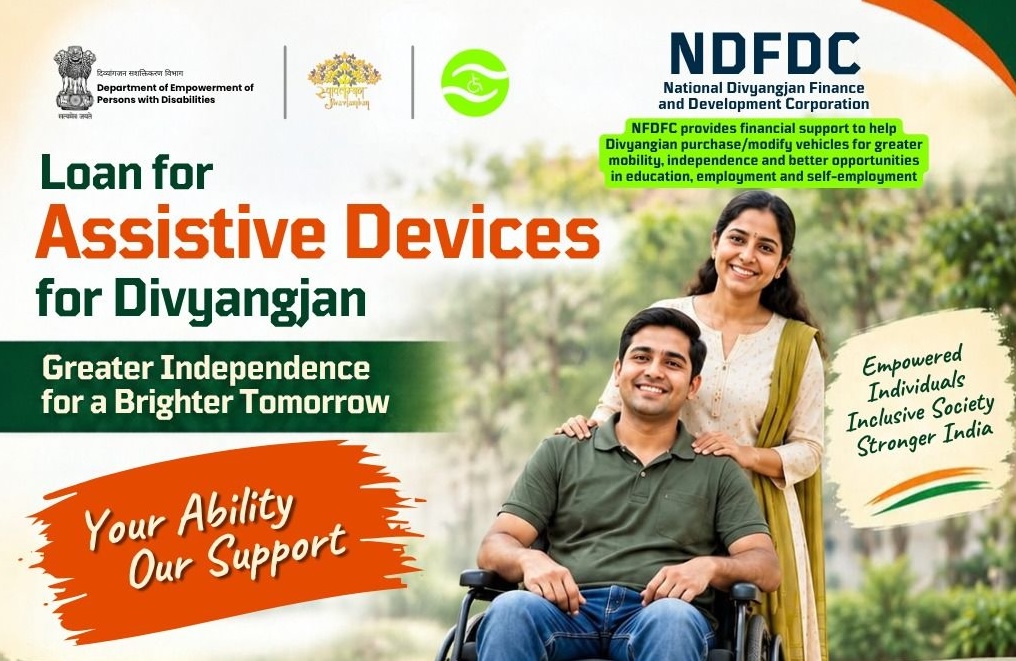
A recent message from the Department of Empowerment of Persons with Disabilities (DEPwD) highlighted financial support through the National Divyangjan Finance and Development Corporation (NDFDC) for assistive devices, including prosthetic and orthotic devices. For a certified prosthetist and orthotist (CPO), the opportunity is practical: a patient who needs a device but cannot pay its full cost immediately may have another route to explore. ndfdc.nic.in
The distinction matters. NDFDC’s Divyangjan Swavalamban Yojana offers concessional credit, and its stated purposes include the purchase or fitment of assistive devices. It is a loan to an eligible person, subject to assessment and sanction by an implementing agency. It should not be described to patients as a free prosthesis, an automatic subsidy or a payment guarantee to the clinic. ndfdc.nic.in
Where a CPO adds value
1. Turn a general funding option into a clinical plan. A patient may know that “assistive devices” are covered without knowing which device will meet their needs. The CPO can assess function, environment, activity goals and the likely need for fitting and adjustments. For example, a prosthetic quote should describe the complete proposed device and fitting process, while an orthotic quote should explain the prescribed brace and its intended function.
2. Produce a quotation the patient can take to an implementing agency. An itemised estimate can show the device components, fabrication, fitting, alignment, training, review appointments and any clearly identified exclusions. This helps the patient and lender understand what the requested finance would actually purchase. It also reduces the risk of a low initial price leaving the patient unable to afford essential follow-up care.
3. Guide patients to the application route. NDFDC says applicants can submit a loan-intent form online or through its mobile application, then provide the required documents to the relevant State Channelising Agency, Regional Rural Bank or Public Sector Bank, as applicable. A CPO can point the patient to the official NDFDC application guidance and provide clinical documentation, while leaving the lending decision to the agency. NDFDC
Under the published scheme, the applicant must be an Indian citizen with 40% or more disability and a UDID number. The general age requirement is above 18, with an exception stated for certain applicants and no age criterion for education loans. A clinic should check the patient’s current eligibility and the implementing agency’s document requirements before suggesting that an application will succeed. ndfdc.nic.in
What is the business benefit?
For the CPO, the benefit is a better route to serving patients whose clinical need is clear but whose upfront budget is limited. A well-documented prescription and transparent quote may allow those patients to pursue a suitable device rather than choosing solely on the first payment they can afford. The clinic may also build stronger referral relationships with disability organisations, rehabilitation centres and local implementing agencies.
That benefit is conditional. The scheme’s overall ceiling is ₹50 lakh per beneficiary or unit, but this is not an entitlement for a prosthesis or orthosis. The implementing agency determines the actual sanctioned amount according to the proposed need and the borrower’s repayment capacity. Its lending, security and repayment terms must be checked for the individual case. CPOs should therefore avoid ordering components or promising a delivery date on the assumption that a loan will be approved. ndfdc.nic.in
Do not confuse NDFDC with ADIP
Patients may also ask about the government’s ADIP scheme, which supports the provision of aids and appliances through approved implementing agencies. ADIP includes artificial limbs, prostheses and orthoses, but it follows a different eligibility, assessment and delivery process. A CPO should help the patient compare the available routes before committing them to borrowing. India
The most useful question at the first consultation is: What device is clinically appropriate, what will the complete fitting and follow-up cost, and which funding route can this patient realistically access? NDFDC creates another possible answer to the financing question. The CPO’s contribution is to make sure the device proposal remains clinically sound, clearly priced and centred on the patient’s long-term use.
- NDFDC: Divyangjan Swavalamban Yojana guidelines
- NDFDC: How to obtain a loan
- DEPwD: ADIP scheme overview
- DEPwD: ADIP application and downloads