
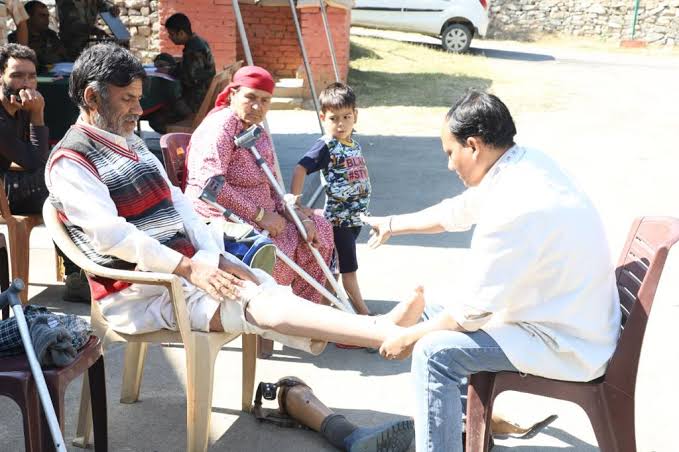
A disability support camp at Zangli Garrison in Kupwara brought prosthetic limbs, orthoses and other assistive devices to people from across the Kashmir Valley. The six-day initiative, held from 21 to 26 August 2026, was organised by Spark Minda Foundation in collaboration with the Indian Army in Kashmir.
A report published during the camp said more than 719 people affected by mobility, speech or hearing disabilities had received support by the fifth day, with more than 300 additional people reporting on the final day. The update listed 16 prosthetic legs and hands, 137 orthoses, 47 crutches, 20 walkers, 67 walking sticks and 132 wheelchairs distributed. It also reported that 437 hearing aids had been provided by the fifth day.
Reaching people in a remote region
The camp aimed to make assistive products available to beneficiaries who might face financial or travel barriers. The Army helped publicise the initiative and bring people from different parts of the Valley to the garrison, according to the report. This kind of outreach can connect people with assessment and equipment closer to their communities.
The range of products reported—from prostheses and orthoses to mobility aids and hearing devices—also shows the breadth of needs that community-based disability programmes may encounter. Effective support depends on identifying the individual’s requirements and selecting a device that suits their function and daily environment.
Device provision is one part of rehabilitation
For prosthetic and orthotic services, a distribution camp can be an important point of access. A prosthesis or orthosis, however, is most useful when it is appropriately assessed, fitted and adjusted, with users shown how to use and care for it. Follow-up matters too, as comfort, fit and function can change with use.
The report does not detail the clinical assessment process, fitting pathway or follow-up arrangements for beneficiaries at this camp. These are useful areas for future reporting, particularly when measuring longer-term outcomes such as device use, mobility and participation.
India’s Assistance to Persons with Disabilities for Purchase/Fitting of Aids/Appliances (ADIP) scheme provides a national framework for supporting access to assistive products through implementing agencies. The government’s scheme information includes prostheses and orthoses among the devices it covers.
Collaboration and continuity
The Zangli Garrison camp reflects a partnership model involving a community organisation and the Army’s local outreach network. Such collaboration can help identify potential beneficiaries and bring equipment services to areas where access may be limited. The next challenge is ensuring that people can continue to receive appropriate care after a camp concludes, including repairs, replacement parts and reassessment when needs change.
For Bharat CPO readers, the initiative highlights both the reach of mobile disability services and the importance of continuity. Camps can provide a practical route to assistive products; sustained rehabilitation and follow-up help people make use of them over time.
- Global Kashmir: Zangli Garrison in Kupwara brings new hope to persons with disabilities
- Scoop News: Army organises a six-day mega camp at Zangli Garrison, Kupwara
- Government of India: ADIP Scheme — information on assistance for aids and appliances, including prostheses and orthoses.
- ARJUN Portal: ADIP and RVY assistive-device services — scheme information and beneficiary services.
- BMVSS / Jaipur Foot — information about the organisation’s prosthetic services and locations.
- India Code: Rights of Persons with Disabilities Act, 2016 — India’s legislation covering rights and entitlements, including rehabilitation.
- Greater Kashmir: Army and PSF organise disability camps in Uri and Kupwara — a separate October 2026 initiative in the region.