
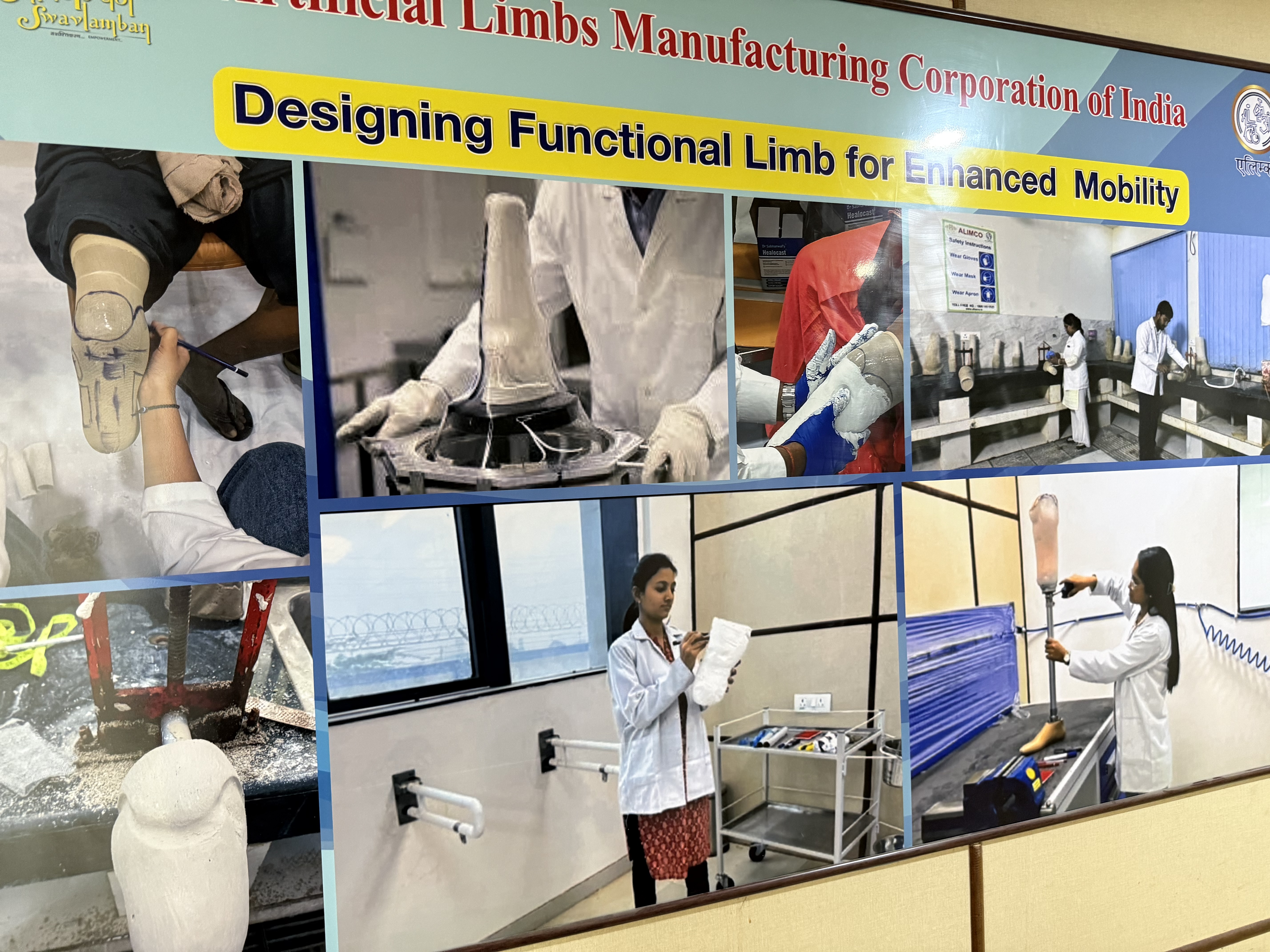
Andhra Pradesh is set to strengthen access to prosthetic and rehabilitation services by establishing artificial limb manufacturing units in five teaching hospitals across the state, according to a report by The Hindu.
The move is significant for amputees and persons with locomotor disabilities because teaching hospitals often act as major referral centres for trauma, orthopaedics, rehabilitation and long-term follow-up care. Locating artificial limb manufacturing units inside these institutions could help reduce delays between medical treatment, prosthetic assessment, device fabrication and rehabilitation.
For BharatCPO readers, the announcement reflects a wider national trend: Indian states are increasingly recognising that prosthetic and orthotic services should be embedded within public healthcare systems, not treated only as occasional camp-based distribution activity.
Why Teaching Hospitals Matter for Prosthetic Access
Teaching hospitals are important because they sit at the intersection of patient care, education, surgery, rehabilitation and workforce development.
Patients who require artificial limbs often enter the healthcare system through orthopaedic departments, trauma units, vascular surgery, diabetic foot services or rehabilitation departments. If prosthetic services are unavailable within the same hospital network, patients may have to travel to another city, private provider, charitable camp or distant rehabilitation centre.
This creates delays and can lead to poor continuity of care.
By placing artificial limb manufacturing units in teaching hospitals, Andhra Pradesh could improve the pathway from amputation surgery to rehabilitation. A more integrated model may allow:
- Earlier prosthetic assessment
- Better coordination between surgeons and prosthetists
- Improved residual limb management
- Faster fitting timelines
- More structured gait training and rehabilitation
- Better follow-up for socket comfort, alignment and repairs
- Training exposure for medical and rehabilitation students
This is particularly important in a state with both major urban centres and large semi-urban and rural populations.
Moving Beyond Camp-Based Prosthetic Provision
India has a long history of artificial limb distribution through camps, charitable organisations, public-sector programmes and CSR-backed initiatives. These programmes have supported millions of people and remain important for outreach.
However, prosthetic care is not a one-time event. A successful artificial limb fitting requires assessment, measurement, fabrication, alignment, training, review and long-term maintenance.
A camp can provide access, but a hospital-based manufacturing unit can provide continuity.
This distinction matters. A prosthetic limb may need socket adjustments, component replacement, gait re-training, suspension changes and follow-up as the user’s body, activity level or condition changes. For children, follow-up is even more important because growth can quickly make a device unsuitable.
Hospital-based prosthetic manufacturing units can therefore strengthen service quality if they are staffed by trained prosthetists and orthotists and linked to rehabilitation teams.
The Role of Public-Sector Manufacturing and ALIMCO
India’s public assistive technology ecosystem is strongly influenced by the Artificial Limbs Manufacturing Corporation of India, which works under the Department of Empowerment of Persons with Disabilities.
The Department describes ALIMCO as a not-for-profit Central Public Sector Enterprise established to promote the availability, supply and distribution of artificial limbs and assistive devices at reasonable cost across India. ALIMCO is also a major implementing agency for the ADIP scheme and has a pan-India presence through auxiliary production centres and marketing centres.
Andhra Pradesh’s plan should be seen within this broader context of improving access to assistive devices through public institutions, manufacturing capacity and service delivery networks.
The key question will be whether the new units become only production points or whether they develop into full prosthetic and orthotic service centres with clinical assessment, fitting, rehabilitation and follow-up.
Why Andhra Pradesh Is a Strategic Location
Andhra Pradesh already has a strong medical technology manufacturing profile through the Andhra Pradesh MedTech Zone (AMTZ) in Visakhapatnam, which has been described as India’s first dedicated medical device park.
The presence of AMTZ gives the state a wider medtech context that could support innovation, training, manufacturing partnerships and assistive technology development. While prosthetic limb manufacturing inside teaching hospitals is primarily a healthcare access initiative, it may also connect with the state’s broader ambitions in medical devices and rehabilitation technology.
For Andhra Pradesh, the opportunity is not only to manufacture artificial limbs locally, but to create a stronger ecosystem for prosthetic care, technical training and assistive device innovation.
What Will Determine Success?
The success of the new artificial limb manufacturing units will depend on implementation.
Several factors will be critical:
1. Qualified P&O professionals
The units must be staffed by trained prosthetists and orthotists, not only technicians. Clinical assessment, socket design, component selection and alignment require professional expertise.
2. Integration with rehabilitation
Artificial limb manufacturing should be linked to physiotherapy, occupational therapy, gait training, counselling and long-term follow-up.
3. Component quality and repair systems
Users need durable components, reliable socket materials, spare parts and repair pathways. A limb is only useful if it can be maintained.
4. Patient selection and documentation
Each patient requires proper assessment, including amputation level, residual limb condition, mobility goals, occupation, age, home environment and medical history.
5. Follow-up capacity
A hospital-based unit should not stop after delivery. Follow-up is essential to prevent abandonment, skin breakdown and poor functional outcomes.
6. Training and education
Teaching hospitals can become training sites for future clinicians, orthopaedic teams and rehabilitation professionals who need better understanding of prosthetic care.
A Potential Shift in State-Level Rehabilitation Planning
The plan to establish units in five teaching hospitals may signal a more structured approach to prosthetic rehabilitation in Andhra Pradesh.
Instead of relying only on centralised centres or temporary camps, the state appears to be moving towards decentralised service capacity inside major medical institutions. This could make prosthetic services more accessible to patients who would otherwise struggle with travel, cost and delayed follow-up.
For India’s wider rehabilitation sector, this model is worth watching. Other states may consider similar hospital-based units if the Andhra Pradesh model proves effective.
Why BharatCPO Readers Should Watch This Development
For prosthetists, orthotists, rehabilitation professionals and assistive technology stakeholders, this announcement raises important questions:
- Will the units provide both prosthetic and orthotic services?
- Which five teaching hospitals will be selected?
- Will trained CPOs be recruited?
- Will the units use conventional, modular or digital fabrication workflows?
- Will patients receive gait training and rehabilitation in the same hospitals?
- Will services be free, subsidised or income-linked?
- How will quality and outcomes be measured?
- Will local private and NGO providers be integrated into the referral ecosystem?
- Can this model reduce waiting times for amputees?
These questions will determine whether the initiative becomes a major improvement in public prosthetic care or remains limited to manufacturing capacity alone.
From Artificial Limb Production to Prosthetic Rehabilitation
The establishment of artificial limb manufacturing units in five teaching hospitals could be an important step for Andhra Pradesh. But the larger goal should be comprehensive prosthetic rehabilitation.
An artificial limb is not just a product. It is part of a clinical pathway that includes surgery, wound healing, residual limb care, socket fitting, alignment, gait training, psychological adjustment, community reintegration and long-term support.
If the new units are designed around this complete pathway, they could improve access, reduce delays and strengthen the state’s rehabilitation infrastructure.
For BharatCPO, the message is clear: Andhra Pradesh’s plan deserves attention not only as a manufacturing announcement, but as a potential model for how Indian states can bring prosthetic services closer to public hospitals, medical education and the patients who need them most.
- The Hindu report: Artificial limb manufacturing units to come up in five teaching hospitals in Andhra Pradesh
- Artificial Limbs Manufacturing Corporation of India
- Department of Empowerment of Persons with Disabilities: ALIMCO
- ALIMCO Centres
- Andhra Pradesh MedTech Zone
- World Health Organization: Prosthetics and Orthotics Standards
- World Health Organization: Rehabilitation