
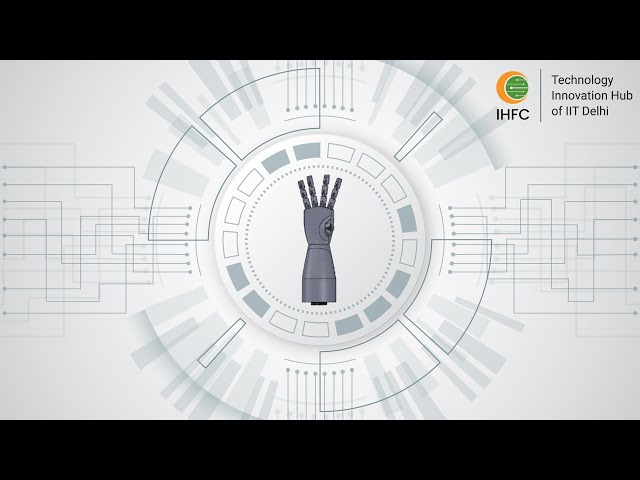
An indigenously developed myoelectric prosthetic hand is attracting attention for combining rapid muscle-signal control with an expected price considerably below that of many advanced imported devices.
ENRICH—short for EMG-CoNtrolled PRosthetIC Hand—uses electrical signals generated by the user’s muscles to operate a multi-articulated hand. According to a recent NDTV report, the device is expected to cost between ₹25,000 and ₹50,000 when commercialised.
That price remains an estimate rather than a confirmed retail figure. Nevertheless, the project addresses an important challenge in Indian upper-limb prosthetics: providing functional myoelectric technology at a cost that is more compatible with the financial realities of users and rehabilitation services.
Developed through an Indian research collaboration
Although ENRICH has been widely described as an IIT Delhi innovation, the project’s institutional structure is more specific. The IHFC project page identifies Tezpur University as the participating institute and Professor Nayan M. Kakoty as the principal investigator.
The associated research was undertaken by members of Tezpur University’s Embedded Systems and Robotics Laboratory, together with collaborators from TIMeS Hospital in Tezpur and the University of Maryland Baltimore County. Development received support through IHFC, the Technology Innovation Hub of IIT Delhi, and the Department of Science and Technology.
IHFC currently classifies ENRICH at Technology Readiness Level 7, generally indicating that a prototype has been demonstrated in a relevant operational environment. This is an advanced development stage, but it should not be interpreted as confirmation that the hand is already commercially available.
How the EMG control system works
Myoelectric prostheses use electromyography, or EMG, to detect electrical activity produced when a user voluntarily contracts a muscle. These signals are processed and converted into commands for the prosthetic hand.
ENRICH uses a single-channel EMG arrangement rather than multiple signal channels. In the published evaluation, electrodes were placed over the trapezius muscle, with a control algorithm interpreting the user’s intention to open or close the hand. The strength of the muscle signal could also be used to vary actuator speed.
A single-channel system may reduce the number of electrodes, simplify signal processing and shorten the initial learning process. The trade-off is that a simpler input system may provide fewer independently selected grip patterns than more complex multi-channel or pattern-recognition systems. Its practical value must therefore be assessed according to the tasks users need to perform, not only the number of articulating joints.
The peer-reviewed evaluation published in Wearable Technologies reports a grasping time of 250.8 ± 1.1 milliseconds, measured from the initiation of the user’s grasping intention. The researchers describe this response as meeting the neuromuscular timing constraints of the human hand.
Rapid response is encouraging, but response time alone does not establish overall dexterity. Reliable object manipulation also depends on socket stability, electrode contact, grip selection, visual feedback, practice and the user’s ability to control the device consistently.
Designed for everyday grasping
ENRICH has five fingers and 14 passive degrees of freedom. Its tendon-driven, underactuated mechanism allows the fingers to conform to differently shaped objects while using two actuators. The researchers report that the hand can carry a load of up to two kilograms and generate sufficient grasp force for many everyday activities.
Other reported specifications include:
- Approximately eight hours of operating time
- A 7.4-volt, 1,000 mAh lithium-polymer battery
- A charging time of approximately three hours
- Adjustable sockets for transradial and transhumeral users
- Additively manufactured components
- Proportional control of actuator speed
There is a small discrepancy in the published weight specifications. The current IHFC page lists the hand at 450 grams, while the 2025 research paper reports a weight of 515 grams with two actuators. This may reflect a subsequent design revision, but a final commercial specification will be necessary for meaningful comparison.
What clinical testing has shown
The research team clinically tested ENRICH with eight people with upper-limb amputations and reported an average grasping accuracy of 98.25%. User feedback on weight, appearance, ease of operation, grasping power and control effort was incorporated into the design.
Three users subsequently participated in a year-long pilot involving daily activities. This real-world use is valuable because many prosthetic-hand prototypes are assessed only under laboratory conditions.
However, the evidence remains preliminary. Detailed Box and Block and pick-and-place testing described in the paper involved one established user. Results improved with practice, demonstrating the importance of training, but they should not be treated as evidence of performance across the wider population of people with upper-limb loss.
Larger, multicentre studies would help establish durability, comfort, abandonment rates, functional outcomes and performance across different amputation levels, occupations and living environments.
Affordability depends on more than the hand’s price
The projected ₹25,000–₹50,000 price could make ENRICH significantly more accessible than many imported multi-articulating hands. Yet the price of the terminal device is only one part of the total cost of prosthetic rehabilitation.
Successful provision also requires:
- Clinical assessment and appropriate prescription
- Individual socket design and fitting
- EMG-site identification and electrode calibration
- Occupational therapy and functional training
- Follow-up as the residual limb changes
- Access to batteries, electrodes and replacement components
- Timely maintenance and repairs
- A clear warranty and regional service network
A low-cost hand paired with an uncomfortable socket or inadequate training may still be rejected. Certified prosthetists and orthotists will therefore remain central to translating the engineering into sustained functional benefit.
India already has public delivery mechanisms such as the government’s ADIP Scheme, which supports the purchase and fitting of certified aids and appliances through approved implementing agencies. Future inclusion of advanced indigenous devices in public or charitable provision could expand access, subject to certification, procurement approval and the availability of clinical support.
The next step is a complete service model
ENRICH represents a promising Indian effort to balance responsiveness, functionality and price. Its indigenous design may also support more accessible manufacturing, spare parts and technical servicing.
Before widespread adoption, stakeholders will need clear information about regulatory status, commercial availability, final specifications, durability testing, environmental protection, component life, repair costs and long-term clinical outcomes.
The real measure of ENRICH will not be whether it can produce a fast grasp in the laboratory. It will be whether people can obtain it, receive a comfortable fitting, learn to use it, have it repaired locally and continue benefiting from it in everyday life.
- NDTV: ENRICH—India’s Affordable EMG-Controlled Prosthetic Hand
- IHFC: ENRICH Project Profile
- Peer-Reviewed Functional Evaluation of ENRICH
- Department of Empowerment of Persons with Disabilities: ADIP Scheme
- ALIMCO: Upper-Limb Prosthetics and Artificial Hands