
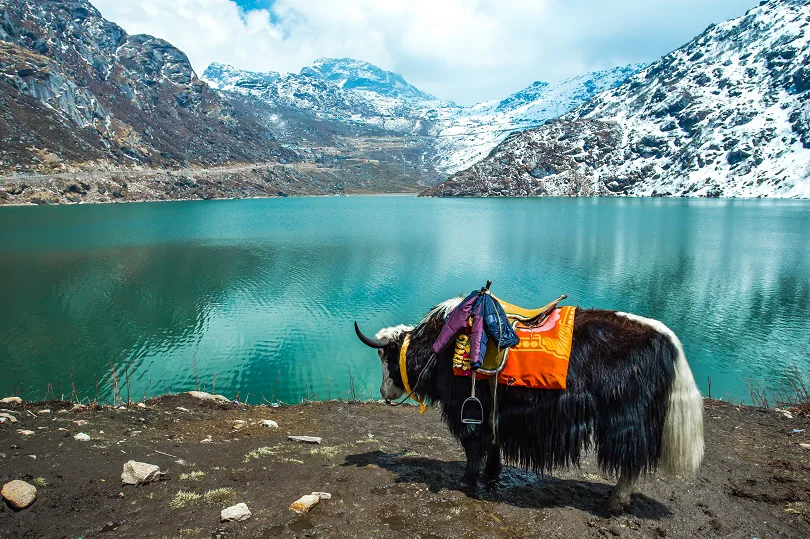
Sikkim’s small population should not disguise the complexity of delivering prosthetic, orthotic and rehabilitation services across the state.
Steep mountain roads, scattered settlements, seasonal disruption and the concentration of specialist services around Gangtok and Pakyong can make repeated clinical appointments difficult. For a person requiring a prosthesis or orthosis, the challenge is not simply reaching a centre once. Effective care may require assessment, measurement, casting or scanning, fabrication, fitting, gait training, adjustment, repair and eventual replacement.
The establishment of the Composite Regional Centre for Skill Development, Rehabilitation and Empowerment of Persons with Disabilities—better known as CRC Sikkim—has given the state an important foundation for developing more comprehensive services. The next priority is to connect this specialist capacity with hospitals, primary healthcare, schools and community-based services across all six districts.
State overview and demographics
Sikkim lies in the eastern Himalayas, bordered by West Bengal, Nepal, Bhutan and the Tibet Autonomous Region of China. Gangtok is the state capital and its principal administrative and healthcare centre.
According to the Government of Sikkim’s statistical profile, the state covers 7,096 square kilometres and recorded a population of 610,577 in the 2011 Census. Approximately 457,000 people lived in rural areas, while the literacy rate was 82.6%.
Sikkim now has six districts: Gangtok, Gyalshing, Mangan, Namchi, Pakyong and Soreng.
Although the distances between locations may appear modest on a map, travel time can be considerable. Mountain roads, landslides, heavy rainfall and limited transport options can restrict access, particularly for people with impaired mobility and families travelling with children or older relatives.
These conditions have direct implications for P&O care. A device may be clinically appropriate when fitted, but its value can quickly decline if the user cannot return for adjustment, rehabilitation or repair.
Disability profile
The 2011 Census disability dataset for Sikkim recorded 18,187 persons with disabilities, equivalent to almost 3% of the state’s population at the time. The total included 9,779 males and 8,408 females.
Within this figure, 2,067 people were recorded as having a disability in movement. However, this category does not represent the full population that could benefit from prosthetic or orthotic intervention.
Demand may also arise from:
- Limb loss following trauma, infection, vascular disease or other medical conditions
- Cerebral palsy and other childhood developmental conditions
- Clubfoot and congenital limb differences
- Stroke and neurological disorders
- Spinal cord injury
- Post-polio residual paralysis
- Arthritis and age-related mobility limitations
- Diabetic foot complications
- Foot and ankle disorders
- Spinal deformities
- Road-traffic, occupational and agricultural injuries
The Census figure should be treated as a historical baseline rather than a current estimate of need. The population has changed, disability definitions have expanded under the Rights of Persons with Disabilities Act 2016, and some people may remain outside official records because of limited assessment, certification or awareness.
A parliamentary response on the Unique Disability ID project reported that Sikkim had issued 5,575 UDID cards by 13 August 2025, with 39 applications pending. Four hospitals had been integrated into the UDID system since 2020.
These figures indicate progress in certification, but certification should also become an entry point into rehabilitation. Identifying a person with a locomotor disability is most valuable when it leads to clinical assessment, treatment, an appropriate device and long-term follow-up.
CRC Sikkim provides a specialist foundation
CRC Sikkim was established in 2020 at Assam Lingzey in Pakyong district. It operates under the administrative control of the National Institute for Locomotor Disabilities in Kolkata and the Department of Empowerment of Persons with Disabilities.
The centre provides multidisciplinary services including:
- Prosthetics and orthotics
- Physiotherapy
- Occupational therapy
- Clinical and rehabilitation psychology
- Special education
- Audiology and speech-language services
- Early intervention
- Vocational training and rehabilitation
- Guidance for parents and caregivers
- Community outreach
The centre’s prosthetic and orthotic unit assesses people with partial or complete limb absence and undertakes the design, fabrication and fitting of prostheses. Its documented process includes casting and measurement, material and component selection, static and dynamic alignment, evaluation of fit and function, and education about device care.
This is an important distinction. Prosthetic and orthotic care is not simply the supply of an appliance. It is a clinical process in which the device must be selected, customised and reviewed according to the individual’s diagnosis, functional objectives, environment and ability to use it safely.
CRC Sikkim’s multidisciplinary structure also makes closer coordination possible between the CPO, physiotherapist, occupational therapist, psychologist, special educator and rehabilitation team.
Outreach and assistive-device provision
CRC Sikkim operates centre-based and outreach services intended to reach people who cannot easily travel to Assam Lingzey.
During October 2024, the centre distributed assistive devices to 63 older people under the Rashtriya Vayoshri Yojana. Activities included walk-in assessments and outreach programmes supported by ASHA workers and the state health department. The programme reached locations including Singtam District Hospital and a Health and Wellness Centre in Namchi district, according to the Press Information Bureau.
In January 2025, another CRC programme assessed 35 residents aged 60 and above at an old-age home in Ranipool for need-based assistive devices under RVY.
More recently, CRC Sikkim and its Pradhan Mantri Divyanga Kendra conducted a week-long assessment, fitting and distribution initiative in Namchi. The centre also organised an assessment and distribution camp in Pakyong district.
Such programmes are valuable for finding people who might otherwise remain outside the rehabilitation system. However, outreach should be connected to permanent clinical pathways. A camp should begin a care process rather than become a one-time transaction.
People supplied with prostheses, orthoses, therapeutic footwear, wheelchairs or other mobility products need clear routes for training, adjustment, repairs and replacement.
Government support and access pathways
The ADIP Scheme can support eligible persons with disabilities in obtaining certified aids and appliances. Implementing agencies may include ALIMCO, national institutes, composite regional centres, District Disability Rehabilitation Centres, state bodies and eligible NGOs.
Sikkim also implements the Rashtriya Vayoshri Yojana for older people and the Niramaya Health Insurance Scheme for eligible people with autism, cerebral palsy, intellectual disability and multiple disabilities.
At district level, certification and awareness remain important priorities. In August 2026, the Namchi district administration called for simplified UDID access, improved coordination between health and welfare stakeholders, and more awareness programmes for people in remote communities. The meeting also emphasised the importance of ensuring that children with disabilities are not excluded from certification and government support.
For P&O services, these systems work best when social-welfare eligibility is linked with a clinical referral pathway. Financial approval alone cannot determine the correct orthosis, prosthetic prescription or wheelchair configuration.
The challenge of continuity
Sikkim’s central challenge is not the complete absence of rehabilitation services. It is the difficulty of making those services continuously accessible across mountainous terrain.
People from Mangan, Gyalshing, Soreng or remote parts of Namchi may need to make repeated journeys towards Gangtok or Pakyong for specialist care. Transport costs, weather conditions, accommodation and time away from work or school can all contribute to missed appointments.
This has particular consequences for children. Growth can rapidly change the fit and alignment of an ankle-foot orthosis, spinal brace or prosthesis. A device that is not reviewed may become uncomfortable, create pressure areas or fail to achieve its intended clinical purpose.
Adults may require socket adjustments, replacement liners, new straps, joint maintenance, footwear modifications or changes in prescription as their health and activity levels evolve.
A repairable device can also become unusable because a relatively small replacement part is unavailable locally. Establishing defined repair and maintenance pathways could therefore produce significant benefits without requiring the purchase of an entirely new device.
Building the rehabilitation workforce
A sustainable P&O system depends on qualified people as much as it depends on equipment and products.
Sikkim needs sufficient access to prosthetists and orthotists, rehabilitation physicians, physiotherapists, occupational therapists, rehabilitation engineers and trained technicians. Recruiting specialists into a small mountain state can be difficult, particularly when posts do not include clear career progression, continuing education or properly equipped clinical facilities.
The state could strengthen its workforce through partnerships with CRC Sikkim, the National Institute for Locomotor Disabilities and other institutions recognised by the Rehabilitation Council of India.
Potential measures include:
- Sponsored P&O education for students from Sikkim
- Clinical placements and internships at CRC Sikkim
- Visiting specialist clinics in district hospitals
- Continuing professional development for rehabilitation teams
- Training in contemporary materials and fabrication techniques
- Digital design and scanning exposure
- Technical training for local repair and maintenance personnel
- Remote case conferences for complex patients
Local technical roles could support repair, logistics and workshop operations, while clinical assessment, prescription and fitting remain under appropriately qualified professional supervision.
A hub-and-spoke model for Sikkim
Sikkim’s population size may not justify a complete P&O fabrication workshop in every district. A hub-and-spoke system would be more practical.
CRC Sikkim could function as the principal specialist, fabrication and training hub. District hospitals and selected community facilities could act as spokes for identification, referral, basic assessment, fitting support, follow-up and repair.
Mobile teams could visit underserved areas according to a published schedule. These visits should be integrated with permanent services so that patients know where to seek assistance between camps.
Digital systems could support the model through:
- Electronic referrals
- Shared clinical records
- Remote multidisciplinary consultations
- Digital measurements and scanning
- Tracking of device repairs and replacement dates
- Tele-rehabilitation where clinically appropriate
- Monitoring of functional outcomes
- Appointment coordination before patients travel
Digital technology cannot replace physical examination or hands-on fitting. It can, however, reduce unnecessary journeys and improve communication between specialist and district teams.
Priority opportunities for Sikkim
Establish district rehabilitation access points
Each district should have a clearly identified location through which people can access rehabilitation assessment, referral, follow-up and repair support. These access points should be connected directly to CRC Sikkim and relevant hospital departments.
Strengthen paediatric orthotic pathways
Coordination between paediatrics, orthopaedics, physiotherapy, schools, early-intervention services and P&O professionals could improve care for children with cerebral palsy, clubfoot, developmental delay and other mobility conditions.
Build a repair and maintenance network
Basic repair capability at district level could prevent otherwise useful devices from being abandoned. A stock of common straps, fasteners, padding materials and replacement components would help extend device life.
Develop diabetic-foot prevention services
Diabetes services should be connected with foot screening, protective footwear, custom insoles and pressure-relieving orthoses. Early intervention could reduce ulceration, hospital admission and preventable amputation.
Prepare for disasters and seasonal disruption
Landslides, earthquakes and severe weather can interrupt access and create new rehabilitation needs. Emergency plans should include the replacement of essential mobility products, continuity of therapy and access to repair services.
Measure outcomes, not only distribution
The number of devices distributed is an incomplete measure of success. Sikkim should also track whether devices fit, remain in use, improve mobility, enable school or work participation and can be repaired when problems arise.
Future outlook
Sikkim has an opportunity to build a rehabilitation system suited to the realities of a small, mountainous state.
CRC Sikkim provides a valuable specialist foundation, while district hospitals, health workers, schools, welfare departments and community organisations can extend its reach. The priority is to connect these resources into a continuous pathway from identification and assessment to prescription, fitting, rehabilitation, maintenance and long-term review.
Success should not be measured simply by how many prostheses, orthoses or assistive devices are handed over. It should be measured by whether people can use those products safely, return for support and participate more fully in education, employment, family life and their communities.
- Government of Sikkim: State Statistics
- Census of India: Sikkim Disability Data 2011
- Composite Regional Centre Sikkim
- CRC Sikkim: Prosthetic and Orthotic Services
- CRC Sikkim: Multidisciplinary Services
- CRC Sikkim: ADIP Scheme
- Press Information Bureau: CRC Sikkim Outreach and Device Distribution
- CRC Sikkim: Namchi Assessment and Distribution Programme
- Department of Empowerment of Persons with Disabilities: DDRCs
- Rehabilitation Council of India: Recognised Institutions
- Unique Disability ID Portal