
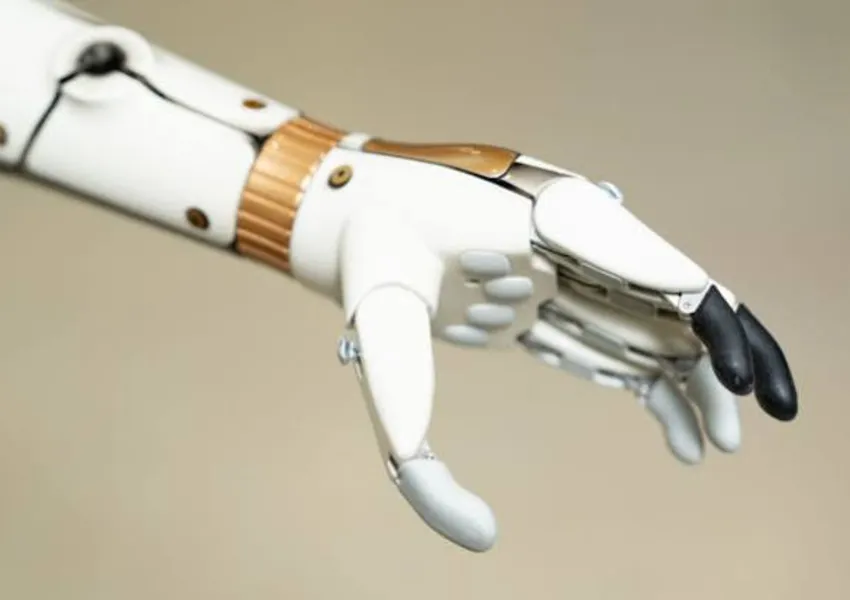
Motorica has begun local production of its Indy Hand myoelectric prosthesis at its Indian partner’s facility in Ghaziabad, Uttar Pradesh. The launch transfers manufacturing technology to the local facility, where production processes and quality-control standards have been introduced. Motorica describes the project as its first international transfer of manufacturing technology.
The Indy Hand is a single-grip myoelectric forearm prosthesis for people with upper-limb amputations and congenital limb differences. The announcement says Motorica specialists trained local personnel and supported the implementation of manufacturing processes. The company reports that several dozen prostheses have been produced at the facility, with some already fitted to users.
From technology transfer to local service
The Ghaziabad facility marks a change from serving the Indian market through a regional presence and clinical partners to making at least one product locally. Motorica says it intends to expand production and introduce additional products from its portfolio at the site. The manufacturing partner is described as an Indian prosthetics developer and manufacturer, but the announcement does not name the organisation.
For India’s prosthetics and orthotics sector, local production could help shorten some supply routes and make technical support more responsive. Those benefits will depend on how production develops: output capacity, availability of components, service coverage and the ability to maintain devices after fitting will all matter. Local manufacture alone does not establish how much a prosthesis will cost, who will be able to access it, or how quickly repairs can be completed.
Myoelectric devices also require a coordinated clinical pathway. Assessment, socket design and fitting need to be followed by control training, functional practice and ongoing adjustments. Prosthetists, therapists and users need time to build effective use into daily activities. For children and adults with congenital limb differences, device selection and goals will vary according to age, residual-limb presentation, activities and personal preference.
What providers will be watching
The announcement does not provide a production-capacity target, price comparison with imported devices, or details on local component sourcing. These will be useful measures as the project grows. Providers will also want to understand how warranty support, spare parts, repairs and training will be delivered across India’s regions.
For clinics and rehabilitation organisations, the next step is to assess how the locally manufactured Indy Hand fits the needs of individual users and the resources of the service. A powered hand is not suitable for every person or activity; selection should follow informed discussion of the user’s goals, expected function, maintenance requirements and alternatives.
Motorica says it plans to broaden the range of products manufactured in India. The launch therefore establishes a starting point rather than evidence of large-scale availability. Its longer-term significance will become clearer as production volumes, pricing, user access and follow-up support are demonstrated.
The development adds to India’s growing role in assistive-technology manufacturing. It also places practical questions before the sector: whether technology transfer can be sustained locally, whether services can support users after delivery, and whether the resulting devices become attainable for more people who may benefit from them.