

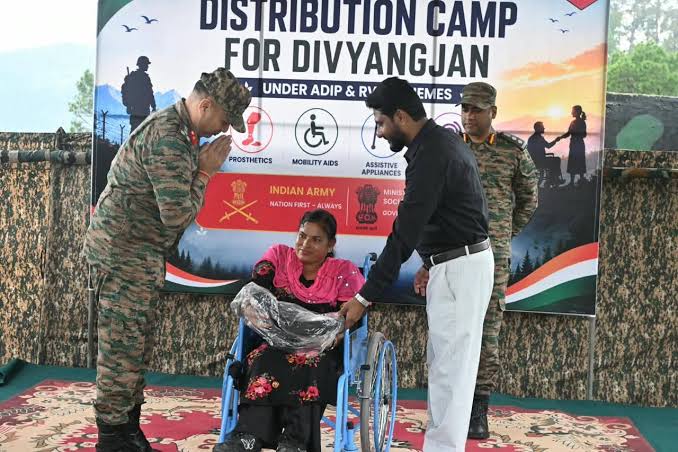
The Uri artificial limb camp, held from 14 to 16 October 2026 at Kalapahar Brigade in Jammu and Kashmir, screened and fitted 243 people with artificial limbs, calipers and other aids free of cost. Bajrang Battalion of Kalapahar Brigade organised the three-day camp with Pritam Spiritual Foundation of Poonch and Bhagwan Mahaveer Viklang Sahayata Samiti (BMVSS), widely known as Jaipur Foot, according to a report by JK Dastak.
What happened at the Uri artificial limb camp?
The camp was inaugurated by the Commander of Kalapahar Brigade and was aimed at persons with disabilities from remote border villages in the Uri and Boniyar tehsils. JK Dastak reports that the beneficiaries were screened, measured and then given artificial limbs, calipers and other assistive aids. A further 43 people received wheelchairs, and 76 underwent hearing assessments and received hearing aids through Pritam Spiritual Foundation.
Who organised it and who took part
According to the report, the clinical team comprised three specialist doctors and 11 prosthetic technicians, supported by additional staff. Gait training and post-fitting counselling were also provided. Civil administration officials and local representatives, including the SDPO, Naib Tehsildar, SHO, sarpanches and numberdars, attended. The organisers said the aim was to “restore confidence, improve mobility and enhance the quality of life” of persons with disabilities, as quoted by JK Dastak.
What the report does not say
The report gives a single total of 243 beneficiaries receiving limbs, calipers and other aids. It does not state how many of those received a prosthesis rather than an orthosis or another aid, nor which prosthetic components were used. Those details matter when comparing camps, and readers should treat the headline figure accordingly.
Why do border villages depend on camp-based prosthetic care?
Uri and Boniyar are border areas where people may live far from a rehabilitation centre. A camp brings measurement, fitting and training to them in a few days. Similar events have been reported elsewhere in Kashmir, including the Kupwara camp organised with the Indian Army, and in other states such as the Mangaluru camp. The broader debate about how such programmes sit alongside private practice is explored in our piece on free distribution camps in India.
What happens after a camp fitting?
A limb fitted in three days still needs adjustment, repair and review as the residual limb changes. The Uri report mentions gait training and post-fitting counselling, which are important first steps. The report does not describe follow-up arrangements, such as who will repair a device or where a returning user can go for review. Prosthetists and orthotists reading this should note that continuity of care, not the number fitted on the day, is usually the harder test of a camp model.
Bharat CPO Perspective
For India’s certified prosthetists and orthotists, camps like Uri show where demand sits: remote districts where permanent services are thin. They also show a professional opportunity. Qualified CPOs can add value through assessment, alignment and fitting quality, gait training, and by building referral links so that people fitted in a camp have a local place for follow-up. The figures in this report come from one news source, and Bharat CPO has not independently verified them. We would welcome details from the organisers on follow-up arrangements and on how many beneficiaries received prostheses specifically.
Frequently asked questions
How many people did the Uri artificial limb camp help? JK Dastak reports that 243 beneficiaries were screened, measured and given artificial limbs, calipers and other aids, with 43 more receiving wheelchairs.
Who organised the Uri camp? Bajrang Battalion of Kalapahar Brigade, with Pritam Spiritual Foundation and Bhagwan Mahaveer Viklang Sahayata Samiti (Jaipur Foot).
Were the devices free? Yes, the report says they were provided free of cost.
Suggested hyperlinks / sources
- JK Dastak: Indian Army organises artificial limb camp at Kalapahar Brigade, Uri (original report, 16 October 2026)
- International Society for Prosthetics and Orthotics (ISPO)
- Bharat CPO: NGOs and Camps