

Bionic hand affordability in India is only half the question, according to Llewellyn D’sa, who argues that a prosthesis paid for without training, skills support and work leaves the user with a device that ends up unused. In a recent LinkedIn post, D’sa responded to a question he says investors often ask: how will poor amputees ever afford an advanced bionic hand? His answer is that the more important question is what the person will do with it.
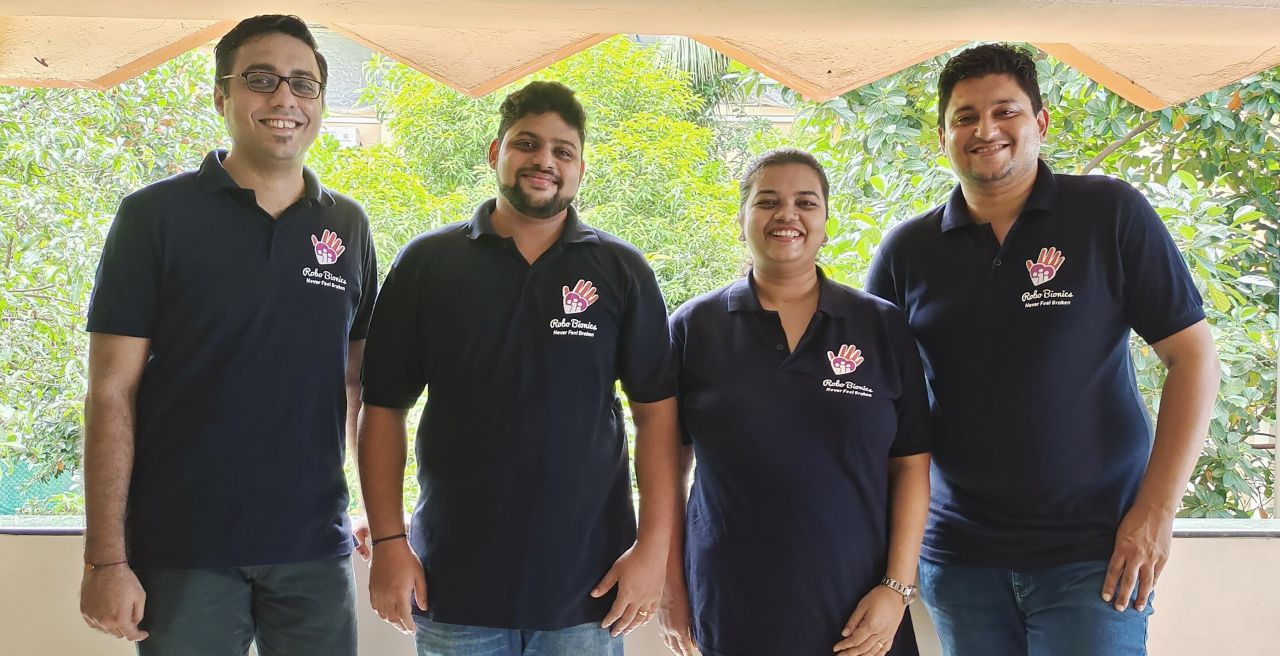
D’sa describes himself as leading the scale-up of advanced bionics and accessories and as a social entrepreneur on CSR-supported livelihood projects for amputees. Earlier reporting by The Machine Maker identifies him as co-founder and CEO of Robo Bionics, a Mumbai-based maker of prosthetic hands. Readers should therefore treat the post as the view of someone with a commercial and advocacy interest in the sector.
What does D’sa say about ADIP funding?
D’sa writes that India already meets part of the cost through the government’s Assistance to Disabled Persons for Purchase/Fitting of Aids and Appliances (ADIP) scheme. According to his post, eligible people receive aids up to ₹15,000 fully covered, and high-end prostheses are subsidised up to ₹30,000. He states that people earning up to ₹22,500 a month receive full support, while those earning between ₹22,501 and ₹30,000 receive half.
A caution on the figures
Bharat CPO has not been able to confirm these exact thresholds and ceilings against an official notification. Secondary guides reviewed during preparation of this article give different income bands and cost ceilings, and none carried a revision date. ADIP rules are set by the Department of Empowerment of Persons with Disabilities and can change, so anyone relying on the figures should check the current scheme guidelines before advising patients.
Why do prosthetics end up in a cupboard?
D’sa’s central argument is about what follows the fitting. He gives a hypothetical example of a young man who loses his hand in a factory, receives a prosthesis and goes home. In his account, nobody trains him to use it well, helps him learn work he can do now, or offers a small loan to restart. A few months later the hand sits unused. He concludes that the money spent is wasted even if the device itself did not fail.
He describes a chain of amputation, rehabilitation, skills and work, in which each link depends on the one before it. Funding one link and skipping the others, he says, pays for something that never gets used. The example is illustrative: D’sa does not cite data on how often devices are abandoned in India, and this article does not claim a rate.
What does this mean for CSR and rehabilitation programmes?
D’sa closes by inviting CSR leaders and skilling programme managers to map the chain with him for one district. That makes the post partly a call to funders. For the wider sector, it echoes themes already covered on Bharat CPO: the move from device schemes to services, financing routes for people who cannot pay in full, and the growth of lower-cost myoelectric hands.
Rehabilitation expert Rajesh Das has called for a shift from assistive-device schemes to last-mile services. Financing is another piece, as explored in our look at NDFDC assistive-device loans. On the technology side, ENRICH is aiming to make EMG-controlled hands more affordable, and a recent IDBI Bank CSR initiative supported a second Grippy bionic prosthesis at MGM.
Bharat CPO Perspective
For India’s certified prosthetists and orthotists, D’sa’s argument points to work that sits at the centre of their profession: assessing whether a device suits the person’s daily tasks, training them to use it, reviewing fit and function over time, and referring them to occupational therapy, vocational support and finance schemes. A myoelectric hand that is well fitted but not integrated into daily life or work is less likely to be used. The CPO’s role is therefore not only to fit but to help build that continuity, ideally in partnership with rehabilitation teams and funders.
The post is one person’s opinion, and its figures are unverified. Bharat CPO would welcome data from providers, NGOs or government programmes on device use and return-to-work outcomes after prosthetic fitting in India, which would help test the argument.
Frequently asked questions
What is Llewellyn D’sa’s main argument? That funding a bionic hand without rehabilitation, skills training and work support wastes the money, because the device may go unused.
What ADIP figures does he cite? Full cover for aids up to ₹15,000, subsidy of up to ₹30,000 for high-end prostheses, and income bands of up to ₹22,500 a month (full support) and ₹22,501 to ₹30,000 (half). These are his figures and have not been independently verified here.
Where can the current ADIP rules be checked? With the Department of Empowerment of Persons with Disabilities, which administers the scheme.
Suggested hyperlinks / sources
- Llewellyn D’sa on LinkedIn (source post)
- The Machine Maker: Robo Bionics profile
- International Society for Prosthetics and Orthotics (ISPO)