
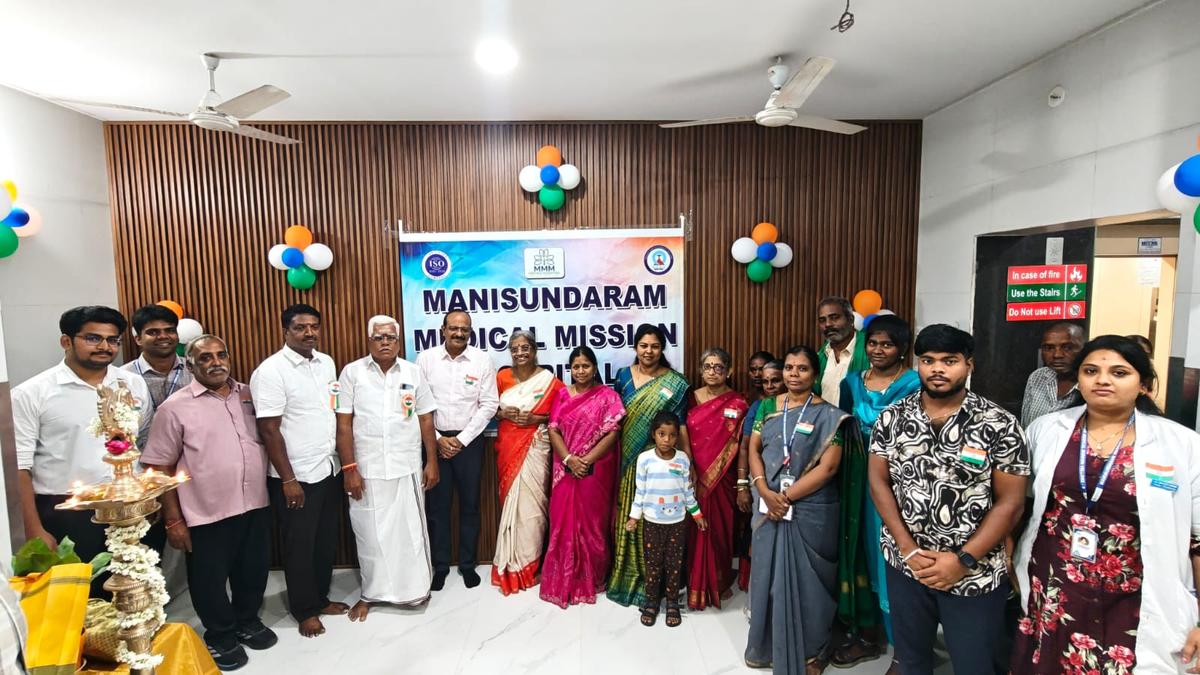
A free orthopaedic and diabetic foot care camp has been held in Vellore, Tamil Nadu, providing local residents with access to specialist assessment while drawing attention to the importance of identifying foot problems before they progress to ulceration, infection or more serious disability.
The camp was held at Sathuvachari, near the Vellore Collectorate, on Saturday as part of activities connected with India’s 80th Independence Day celebrations, according to a report by The Hindu.
For India’s prosthetics, orthotics and foot-health community, initiatives of this kind are particularly relevant because diabetic foot disease remains one of the areas where relatively simple early interventions can potentially prevent much more complex treatment later.
The diabetic foot can deteriorate quickly
Diabetes can affect both sensation and circulation in the lower limbs.
Peripheral neuropathy may mean that a person does not feel an injury, blister or area of excessive pressure, while impaired circulation can make healing more difficult.
What begins as a seemingly minor problem can therefore progress into a wound, infection and, in severe cases, lower-limb amputation.
This is precisely why screening is so important.
A major diabetic-foot training initiative based at Christian Medical College Vellore notes that diabetic foot complications can progress rapidly and are frequently detected too late, particularly where access to specialist services is limited.
The objective should increasingly be to identify the foot before it becomes a wound-care case.
What should diabetic foot screening look for?
A structured foot assessment can identify several warning signs before serious complications develop.
These may include:
- Loss of protective sensation
- Peripheral arterial disease
- Previous ulceration or amputation
- Callus formation
- Foot deformity
- Areas of high plantar pressure
- Poorly fitting footwear
- Skin or nail problems
- Changes in foot temperature
- Reduced joint mobility
The information can then be used to classify the patient’s risk and determine how frequently they should be reviewed.
CMC Vellore’s Global Diabetes Foot Training Programme specifically focuses on equipping clinicians to recognise these warning signs earlier and establish appropriate referral pathways. Its programme includes doctors working alongside nurses, physiotherapists or P&O personnel, highlighting the multidisciplinary nature of effective diabetic-foot management.
A major role for India’s P&O profession
For prosthetists and orthotists, diabetic foot care represents a major area of practice that extends well beyond caring for patients after an amputation.
CPOs can intervene much earlier.
Custom foot orthoses, accommodative insoles, therapeutic footwear and pressure-relieving modifications can all form part of a strategy to redistribute load away from vulnerable areas of the foot.
The goal is not simply comfort.
For a high-risk diabetic patient, reducing repetitive pressure at a particular site can potentially contribute to ulcer prevention or help prevent recurrence after an existing wound has healed.
This is why closer collaboration between diabetologists, surgeons, podiatrists, CPOs, physiotherapists, nurses and wound-care specialists can be so valuable.
The most successful diabetic-foot pathway is one in which the patient reaches the right professional before irreversible tissue damage occurs.
Vellore already plays an important role in diabetic-foot education
The location of the latest camp is also significant.
Vellore has developed into an important centre for diabetic-foot education through Christian Medical College’s Department of Endocrinology, Diabetes and Metabolism.
Its Global Diabetes Foot Training Programme combines online education with clinical training in Vellore and has reached 162 institutions and trained 572 healthcare professionals, according to programme partner the Novo Nordisk Foundation.
The programme also includes training around appropriate customised footwear and foot-support interventions, recognising that preventing diabetic ulcers requires more than wound treatment alone.
This emphasis on prevention represents an important shift.
Instead of waiting for a diabetic patient to arrive with an established ulcer, healthcare teams are increasingly being encouraged to identify neuropathy, vascular compromise, deformity and abnormal pressure earlier.
Footwear remains one of the most underestimated interventions
For many patients, footwear is effectively a medical device.
An individual with reduced sensation may continue walking in shoes that are creating excessive friction or concentrated pressure without experiencing the pain that would normally prompt someone to stop.
Appropriate footwear therefore needs to provide sufficient depth, internal volume, cushioning and pressure redistribution while accommodating deformity where necessary.
Higher-risk patients may need individually designed insoles or therapeutic footwear rather than simply being advised to purchase a softer shoe.
This represents an important opportunity for India’s orthotics sector as the country’s diabetic population grows.
Digital foot scanning, plantar-pressure analysis, CAD/CAM insole design and additive manufacturing are increasingly making it possible to deliver customised interventions efficiently, but the technology still needs to sit within an appropriate clinical assessment.
Prevention is considerably easier than rehabilitation after amputation
The economic argument for early diabetic-foot intervention is equally strong.
A previous World Diabetes Foundation programme in India demonstrated the potential scale of preventive foot-health initiatives. Its project trained thousands of healthcare professionals and screened more than 19,000 people for diabetes and diabetic-foot complications, while reporting thousands of cases in which treatment helped avoid lower-limb amputation.
Once an amputation occurs, the patient’s requirements become substantially more complex.
Treatment may involve surgery, wound healing, inpatient care, physiotherapy, prosthetic assessment, socket fabrication, components, gait rehabilitation and lifelong replacement and maintenance.
Preventing even a proportion of diabetes-related amputations therefore has substantial clinical, social and financial value.
Community camps can identify the patients clinics never see
The Vellore initiative also highlights the importance of taking screening outside specialist hospitals.
One of the major challenges in diabetic foot care is that people at greatest risk do not necessarily attend a dedicated foot clinic.
A patient may have lived with diabetes for many years without ever having undergone a detailed foot assessment.
Community camps can provide the first point of contact.
Their greatest value comes when screening is connected to a clear next step: referral for vascular assessment, wound care, footwear, orthotic intervention or ongoing specialist follow-up.
Without that pathway, screening risks becoming a one-off exercise.
From diabetic-foot care to amputation prevention
For Bharat CPO, the increasing visibility of diabetic-foot programmes represents an important evolution in the role of the profession.
India’s CPOs should not only be involved after an amputation has taken place.
There is an equally important role in helping prevent some amputations from occurring in the first place.
Foot assessment, pressure redistribution, orthotic intervention and appropriate footwear all sit naturally within that expanded scope.
A relatively small community event in Vellore therefore reflects a much larger healthcare challenge.
As India’s diabetes burden continues to drive demand for lower-limb care, expanding access to routine foot screening and multidisciplinary intervention could become one of the most effective ways of preserving mobility.
The ideal outcome of diabetic-foot care is not a successfully fitted prosthesis.
It is a patient who never needs one.
- The Hindu – Free orthopaedic, diabetic foot care camp held in Vellore
- CMC Vellore – Global Diabetes Foot Training Programme
- Novo Nordisk Foundation – Diabetic Foot Training in India
- World Diabetes Foundation – India Diabetic Foot Programme
- Christian Medical College Vellore
- Bharat CPO