
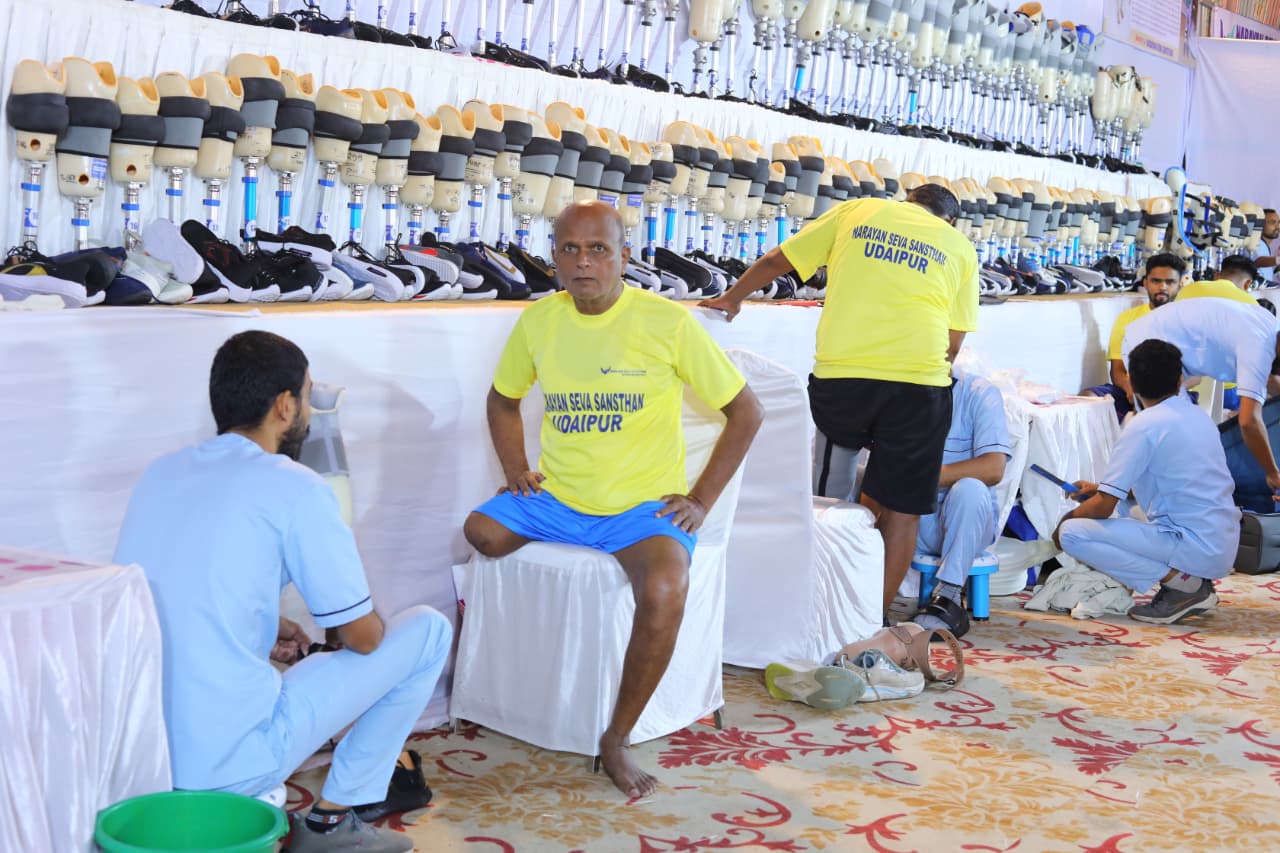
A large-scale assistive-device camp organised by Narayan Seva Sansthan has provided 361 prosthetic limbs and orthotic calipers to 328 people with disabilities in Pune, India.
The free fitment event was held at Tirupati Mangal Karyalaya in Tingre Nagar and delivered by a 40-member team of doctors, prosthetic and orthotic specialists and technical personnel from the Udaipur-based organisation.
According to Pune Pulse, the devices comprised:
- 276 Narayan Modular Artificial Limbs fitted to 268 recipients
- 85 orthotic calipers fitted to 60 recipients
- 361 devices supplied to 328 beneficiaries in total
The difference between the number of beneficiaries and devices indicates that some people received more than one prosthesis or caliper.
The event was described as a 3D-printed Narayan Modular Artificial Limb Fitment Camp incorporating Japanese and German technology. However, the published report does not specify which parts were additively manufactured, the printing process or materials used, or how digital manufacturing was integrated into the clinical workflow.
A two-stage camp model
The Pune programme followed a staged process rather than attempting to assess and fit every participant during a single event.
More than 396 people registered at a selection and measurement camp held on 5 July. From this group, 328 beneficiaries were selected to receive devices at the subsequent fitment event.
Separating assessment and measurement from delivery gives the clinical and technical team time to review each case, determine the appropriate device and complete fabrication before the final camp.
This model can also reduce waiting times during the fitment event and help organisers prepare the correct quantities of components, materials and devices.
For organisations planning high-volume camps across the Middle East, Africa, Central Asia or South Asia, the distinction between registration, selection and final fitment is important. The number of people who initially attend may exceed the number clinically suitable for the devices being offered. Some may require surgery, wound care, physiotherapy or a different form of assistive technology before fitting can proceed.
Training accompanied device provision
Doctors and technical personnel at the Pune camp trained beneficiaries in balance, walking techniques, correct device use and maintenance.
This component is essential to the success of any prosthetic or orthotic programme. Device delivery alone does not guarantee safe mobility or continuing use.
A lower-limb prosthesis must be aligned and assessed while the recipient stands and walks. Users may need instruction in weight transfer, balance, navigating steps and caring for the residual limb. Orthotic calipers must similarly be checked for fit, pressure distribution, joint positioning and compatibility with footwear.
The camp report does not provide a breakdown of amputation levels, caliper designs or rehabilitation time provided to each recipient. It also does not specify arrangements for subsequent adjustment and repair.
These details matter because new users may require changes once they begin using their devices at home, work or school. Follow-up becomes particularly important where high numbers of devices are delivered during a concentrated event.
Technology within a high-volume service model
Narayan Seva Sansthan described the prostheses as technologically advanced modular limbs. Modular construction can allow the clinical team to select and align components according to the user’s height, amputation level and functional requirements.
Digital and additive manufacturing could potentially support faster customisation, repeatable production and retention of patient design files. However, the practical value depends on how scanning, design, printing, finishing and clinical fitting are combined.
For O&P professionals, the important measure is not whether a device is described as 3D-printed, but whether it achieves appropriate fit, strength, alignment, durability and function for the individual user.
Where printed components are used, programmes should maintain clear material specifications, manufacturing controls, inspection procedures and device records. High-volume charitable delivery should be held to the same fundamental safety and quality expectations as other prosthetic and orthotic services.
More than 40,000 artificial limbs delivered
Narayan Seva Sansthan has worked in disability services since 1985. The organisation reports that it has provided more than 40,000 artificial limbs free of charge, while more than 454,000 people have benefited from its wider medical services in India and internationally.
Trustee and Director Devendra Chaubisa said the organisation’s objective extends beyond supplying devices to helping people regain confidence, dignity and greater self-reliance.
The Pune programme illustrates how a large specialist team, an earlier measurement event and coordinated community support can deliver hundreds of customised devices within a concentrated period.
Its long-term success will depend on whether beneficiaries continue using their devices comfortably and can access adjustments, repairs and replacement when required. Publishing follow-up data on functional mobility, device use and participation in employment or education would provide a fuller measure of impact.
For IMEA CPO readers, the camp offers a relevant operational case study: high-volume provision can expand access rapidly, but technology, clinical assessment, user training and continuing support must remain part of a single rehabilitation pathway.
- Pune Pulse: Narayan Seva Camp Supports 328 People
- Narayan Seva Sansthan
- Narayan Seva Artificial Limb Programme
- Punekar News: 3D-Printed Artificial Limb Camp in Pune
- WHO Standards for Prosthetics and Orthotics