
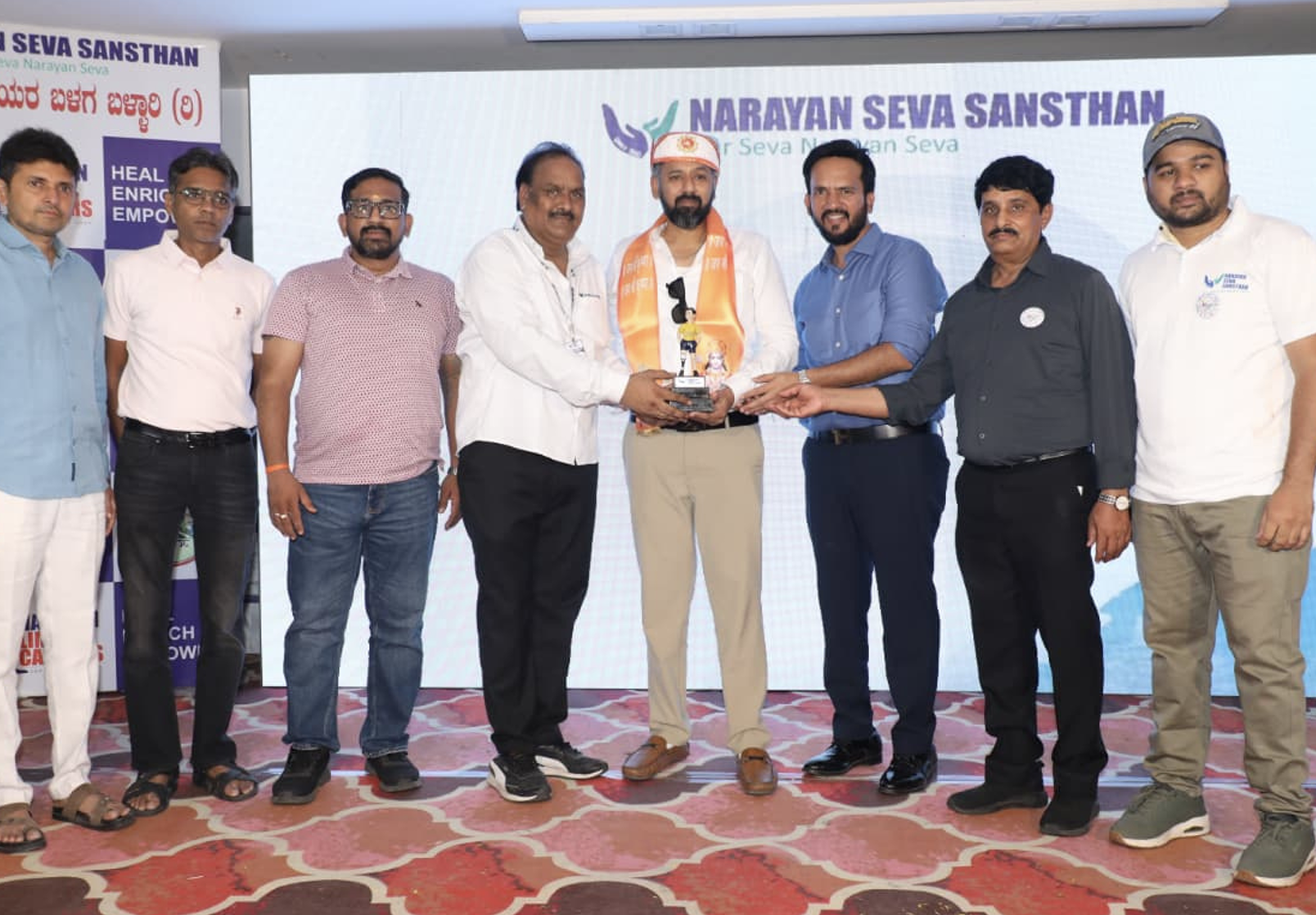
A 3D-printed Narayan Modular Artificial Limb Measurement Camp has been organised in Bellary, Karnataka, as part of efforts to improve access to prosthetic and orthotic rehabilitation services for people with disabilities in the region.
The service camp was organised by Narayan Seva Sansthan in collaboration with Sanmarga Geleyara Balaga and attracted beneficiaries from Bellary and surrounding areas requiring artificial limbs, calipers and related mobility support.
The initiative combined clinical assessment with modern prosthetic manufacturing techniques, with the modular artificial limb programme described as incorporating technologies influenced by Japanese and German approaches.
Individual assessment and measurement
During the camp, medical and technical specialists conducted physical assessments of each beneficiary before taking the measurements necessary for their individual prosthetic or orthotic device.
This stage is particularly important in prosthetic rehabilitation because an artificial limb cannot simply be selected according to a standard size. Limb condition, residual limb dimensions, joint range of motion, strength, mobility level and the individual’s daily activities can all influence the eventual prescription.
Similarly, people requiring calipers or other orthotic devices must be evaluated according to their specific clinical and functional needs.
The Bellary programme therefore provided an opportunity not only to identify people requiring assistive devices but also to begin the individualised fitting process that ultimately determines whether a device will be comfortable, functional and regularly used.
3D technology expands its role in Indian prosthetics
The use of 3D technologies is increasingly influencing how prosthetic and orthotic services can be delivered in India.
Digital measurement, 3D scanning, computer-aided design and additive manufacturing can potentially reduce some of the manual stages traditionally associated with the production of prosthetic and orthotic devices.
For organisations conducting outreach camps, these technologies are particularly interesting because they can help create a digital connection between the location where a patient is assessed and the facility where a device is designed or manufactured.
Where appropriate clinical systems are in place, measurements or scans collected during outreach programmes can be transferred digitally for subsequent design and production.
However, technology remains only one part of successful rehabilitation. Clinical assessment, appropriate component selection, socket or orthosis design, fitting, alignment, patient education and follow-up remain critical parts of the process.
Bringing rehabilitation closer to communities
Measurement camps have an important role in extending rehabilitation services beyond major hospitals and specialist centres.
For people living outside large cities, travelling repeatedly to a prosthetic and orthotic facility can create significant financial and logistical barriers. Outreach programmes can therefore provide an important first point of contact with rehabilitation professionals.
Bellary serves a large population across Karnataka and neighbouring areas, making locally organised assessment programmes particularly relevant for people who might otherwise have difficulty accessing specialist prosthetic and orthotic services.
The longer-term value of such initiatives will depend on ensuring that beneficiaries progress from assessment and measurement through manufacturing, fitting and appropriate follow-up.
For prosthetists and orthotists, this also highlights the continuing importance of developing scalable service models capable of supporting large numbers of patients without losing the individual clinical decision-making required for good outcomes.
Local leaders support the initiative
The camp was attended by former MLA Suryanarayana Reddy, Sanmarga Geleyara Balaga President Lakshmikanth Reddy and other invited guests.
The dignitaries recognised the initiative undertaken to support people with disabilities and praised efforts aimed at improving rehabilitation, independence and participation within the community.
Beneficiaries were wished healthy, self-reliant and dignified lives, while the organisations and professionals involved in the programme were acknowledged for contributing towards the wider empowerment of people with disabilities.
Growing importance of accessible prosthetic services
India continues to face a major challenge in ensuring that people who require prosthetic and orthotic devices can access appropriate assessment, technology and long-term clinical support.
Large charitable programmes and community measurement camps can help identify people who have previously remained outside the rehabilitation system.
At the same time, developments in digital manufacturing present an opportunity to improve how these programmes operate.
The combination of community outreach with technologies such as 3D scanning, digital design and additive manufacturing could help specialist prosthetic centres support a much wider geographic population.
For India’s prosthetic and orthotic profession, programmes such as the Bellary camp also demonstrate how technology and community-based rehabilitation can increasingly work together.
The ultimate measure of success will remain the same: whether each beneficiary receives a properly prescribed and fitted device that improves mobility, independence and participation in everyday life.
- Narayan Seva Sansthan
- Department of Empowerment of Persons with Disabilities, Government of India
- Rehabilitation Council of India
- International Society for Prosthetics and Orthotics
- Bharat CPO