
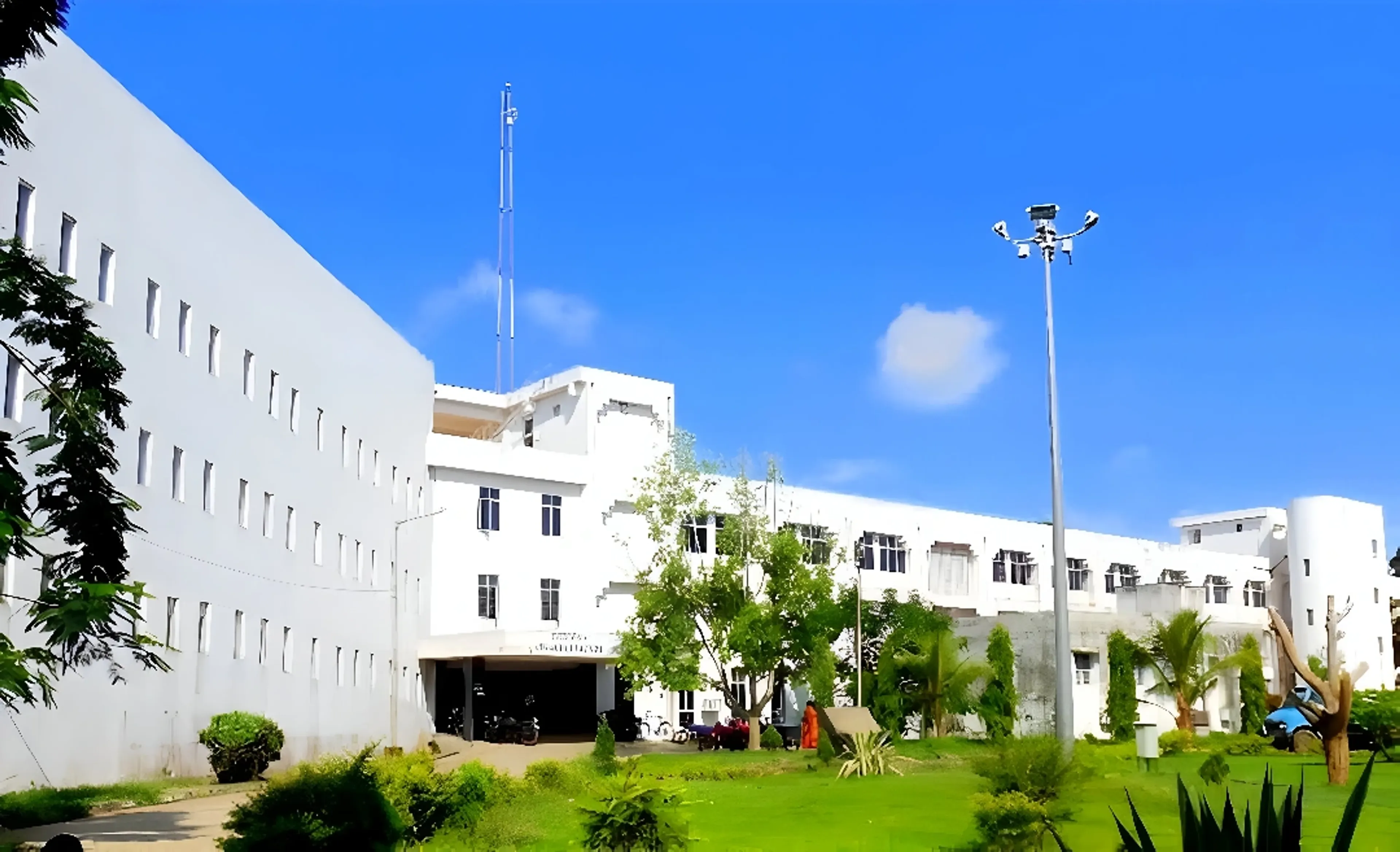
Few institutions are as closely connected with the development of India’s modern prosthetics and orthotics profession as the Swami Vivekanand National Institute of Rehabilitation Training and Research (SVNIRTAR) at Olatpur in Odisha.
Today, SVNIRTAR is a major Government of India rehabilitation institution providing clinical services, professional education, research and community outreach. But its origins can be traced back more than five decades to a much narrower challenge: India needed trained professionals capable of fitting the artificial limbs being manufactured for a growing population of people with limb loss.
Its evolution from a small artificial-limb training initiative into a multidisciplinary national institute mirrors the wider development of rehabilitation medicine and professional P&O education in India.
Origins following the Indo-Pak wars
According to SVNIRTAR’s official history, its development was partly shaped by the large number of military personnel and civilians who acquired disabilities during the Indo-Pak conflicts.
India subsequently established the Artificial Limbs Manufacturing Corporation of India (ALIMCO) in Kanpur, drawing partly on expertise from professionals associated with the Artificial Limb Centre in Pune.
ALIMCO could manufacture prosthetic components and assistive devices, but another challenge soon became apparent.
India needed trained technical personnel who understood how to take those components and turn them into properly fitted prostheses and orthoses for individual patients.
That requirement for specialist human resources led directly to the institution that would eventually become SVNIRTAR.
1974: Directorate of Artificial Limbs Fitting Centre
In March 1974, a dedicated manpower-development unit was created as the Directorate of Artificial Limbs Fitting Centre (DALFC).
It initially operated from Safdarjung Hospital in New Delhi before moving to rented accommodation in Safdarjung Enclave.
The initiative was closely associated with Dr Balu Sankaran, then Head of the Department of Orthopaedics at Safdarjung Hospital and Ex-Officio Chairman of ALIMCO.
As professional training increasingly became its central purpose, DALFC was renamed the Central Institute of Prosthetic and Orthotic Training — CIPOT.
At this point, the plan was still for the institute to remain in New Delhi, and land close to AIIMS had reportedly been identified for a permanent campus.
Then came a decision that would fundamentally change its future.
Why the institute moved from Delhi to rural Odisha
During Prime Minister Indira Gandhi’s visit to Odisha in 1975, then Odisha Chief Minister Nandini Satpathy highlighted the availability of approximately 16.5 acres of land and several buildings at Olatpur in Cuttack district.
The property had been donated to the Odisha government by the late Bijayram Mishra.
Rather than developing another rehabilitation institution in New Delhi, where specialist facilities were already available, the possibility emerged of placing the centre in a rural location where access to rehabilitation was much more limited.
Dr Sankaran subsequently visited Olatpur and recommended establishing the institute there.
The decision was approved.
CIPOT moved from New Delhi to Olatpur in November 1975, beginning operations at its new home on 3 December 1975.
That relocation became one of the defining moments in the institution’s history.
1976: NIPOT and formal P&O training
In 1976, CIPOT was renamed the National Institute of Prosthetic and Orthotic Training (NIPOT).
Formal training in prosthetics and orthotics began on 3 May 1976.
For India’s developing P&O profession, this was an important milestone.
The country was moving beyond a model in which artificial limbs were primarily manufactured and fitted by technicians trained through workshops or military rehabilitation environments.
A dedicated national institution was now focusing on the systematic development of professional expertise in prosthetic and orthotic assessment, design, fabrication and fitment.
NIPOT remained under the direct administrative control of ALIMCO until February 1984.
1984: From P&O training centre to rehabilitation institute
A second major transformation came in 1984.
The Government wanted to place greater emphasis on rural rehabilitation while giving the institute greater institutional autonomy.
On 22 February 1984, it was separated from ALIMCO and established as an autonomous body under what was then the Ministry of Welfare, after registration as a society under the Societies Registration Act.
Its name changed again, this time from NIPOT to the National Institute of Rehabilitation Training and Research — NIRTAR.
The change in name reflected a much broader mission.
The organisation was no longer simply a centre for training prosthetists and orthotists. Rehabilitation education, clinical services, research, outreach and multidisciplinary care were increasingly becoming part of its role.
2004: SVNIRTAR
In 2004, NIRTAR became the Swami Vivekanand National Institute of Rehabilitation Training and Research — SVNIRTAR, the name by which it is known today.
SVNIRTAR now operates as an autonomous institution under the Department of Empowerment of Persons with Disabilities (Divyangjan), Ministry of Social Justice and Empowerment, Government of India.
The Olatpur campus, approximately 30 kilometres from Cuttack and Bhubaneswar, has evolved into a comprehensive rehabilitation centre rather than simply a P&O school.
P&O remains at the heart of SVNIRTAR
Despite this expansion, prosthetics and orthotics remain fundamental to SVNIRTAR’s identity.
Its Department of Prosthetics and Orthotics provides clinical services for people requiring lower- and upper-limb prostheses, lower- and upper-extremity orthoses, spinal orthoses and other mobility devices. It also operates dedicated workshops for device fabrication and student training.
The institute today offers undergraduate education in Prosthetics and Orthotics, Physiotherapy, Occupational Therapy and Audiology & Speech-Language Pathology, alongside postgraduate programmes that include Prosthetics and Orthotics.
It also operates a 200-bed rehabilitation hospital and provides Physical Medicine and Rehabilitation, physiotherapy, occupational therapy, speech and hearing, psychology, vocational rehabilitation and social-work services.
Taking rehabilitation beyond Olatpur
One of the most significant continuities between the original decision to locate the institute in rural Odisha and today’s SVNIRTAR is its emphasis on taking rehabilitation closer to underserved communities.
The institute now operates or supports sub-centres and Composite Regional Centres in several locations and has participated in developing District Disability Rehabilitation Centres.
It also conducts outreach programmes in rural, remote and underserved areas, providing rehabilitation assessment, assistive devices, surgical interventions and follow-up services.
This makes the choice made in 1975 particularly significant.
Moving India’s fledgling national P&O training institute away from New Delhi and into rural Odisha could initially have appeared unconventional.
More than 50 years later, however, access to rehabilitation outside India’s largest cities remains one of the profession’s central challenges.
More than 50 years of Indian P&O history
The progression tells its own story:
DALFC → CIPOT → NIPOT → NIRTAR → SVNIRTAR.
Behind those changing names is the evolution of rehabilitation itself in India — from component manufacture and artificial-limb fitment, through formal professional P&O education, to today’s multidisciplinary approach involving rehabilitation medicine, prosthetics, orthotics, therapy, research and community services.
For generations of Indian prosthetists and orthotists, SVNIRTAR has been far more than another educational institution.
It represents an important part of the profession’s institutional history.
And as India continues to expand rehabilitation education, digital P&O technologies, community-based services and access to assistive technology, the institute that began with the simple objective of training people to fit artificial limbs properly remains closely connected to where the profession goes next.
- SVNIRTAR – Official Website
- SVNIRTAR – History
- SVNIRTAR – About Us
- SVNIRTAR – Department of Prosthetics and Orthotics
- Department of Empowerment of Persons with Disabilities
- ALIMCO
- Bharat CPO