
The Los Angeles 2028 Paralympic Games are expected to deliver the highest level of sporting performance in Paralympic history, as stronger athlete pathways, professional training, sport science and technology continue to push Para sport to new levels.
For India, the timing is particularly significant.
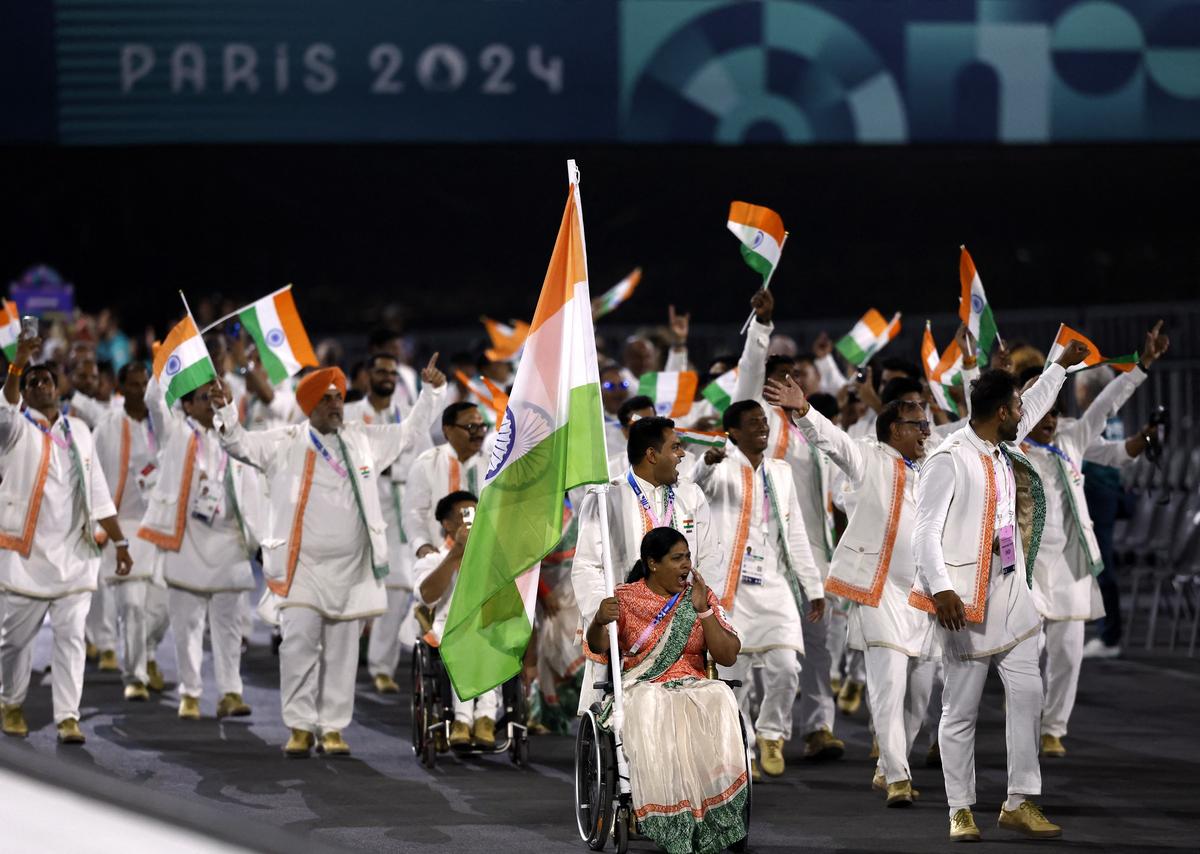
The country arrives in the current Paralympic cycle following its most successful Games ever at Paris 2024, where Indian athletes won 29 medals — seven gold, nine silver and 13 bronze.
With two years remaining until LA28 opens on 15 August 2028, the question for India is no longer simply whether it can compete successfully at the Paralympic Games, but how far it can develop the increasingly sophisticated performance infrastructure required to keep pace with the world’s leading Para sport nations.
That includes coaching and talent identification, but also an area of particular relevance to India’s prosthetics, orthotics and rehabilitation community: sports prosthetics, customised orthotic interventions, biomechanics and specialist athlete rehabilitation.
Paralympic sport is becoming increasingly competitive
International Paralympic Committee President Andrew Parsons says Para sport has never been more competitive.
A growing number of Para athletes are now able to train full-time while benefiting from high-level sport science, strength and conditioning, biomechanics, nutrition and medical support.
The evidence could already be seen at Paris 2024.
Across the Games, athletes broke 175 world records and 218 Paralympic records. The IPC also noted that winning performances from some previous Paralympic Games would no longer have been sufficient even to reach finals in several current events.
Margins are also becoming exceptionally small.
In Para athletics alone, 32 medal events at Paris were decided by less than 0.1 seconds or 10 centimetres, demonstrating just how important marginal performance gains are becoming.
By LA28, Parsons expects those performance levels to have advanced again.
LA28 will be the largest Paralympic Games yet
The scale of Los Angeles will also be unprecedented.
LA28 is expected to feature a record 4,480 Para athletes representing approximately 165 National Paralympic Committees, competing across 23 sports. Para climbing will make its Paralympic debut.
Gender representation is also continuing to improve, with a record 17 sports expected to offer gender parity in their medal programmes and 16 sports providing equal quota places for male and female athletes.
For India, increased competition means that simply maintaining the performance level achieved in Paris will require continued investment.
India enters LA28 cycle from a position of strength
Paris 2024 represented a major step forward for Indian Para sport.
India finished with 29 medals, compared with 19 at Tokyo 2020, establishing a new national Paralympic record.
The medal performances also came across multiple sports.
India’s Paris champions included athletes such as Avani Lekhara in Para shooting, Nitesh Kumar in Para badminton and Harvinder Singh in Para archery, demonstrating that India’s Paralympic progress is increasingly spread across different sporting disciplines.
That broader base could be important heading towards Los Angeles.
But the narrowing performance margins described by the IPC also highlight the importance of building more sophisticated support systems around elite Indian athletes.
A growing role for India’s prosthetists and orthotists
For athletes with limb difference, the relationship between the athlete and their prosthetist can effectively become part of the performance team.
Elite sports prosthetics require considerably more than supplying a component.
Socket design, suspension, alignment, interface materials and component selection can all influence an athlete’s comfort and ability to train consistently.
Small changes can become significant when an athlete is repeatedly sprinting, jumping, throwing or training several hours per day.
The prosthetist may therefore need to work alongside physiotherapists, sports physicians, biomechanists, coaches and strength and conditioning specialists.
Orthotists can play an equally important role.
Para athletes with neurological conditions, muscle weakness, joint instability or other impairments may require highly customised orthotic solutions designed around the specific demands of their sport.
For India’s P&O profession, growing Paralympic performance therefore creates a specialist area extending well beyond conventional rehabilitation.
Technology becomes part of the performance equation
The next Paralympic cycle will also coincide with rapid developments in technologies already affecting prosthetics and orthotics.
These include:
- 3D scanning of residual limbs
- Digital socket design
- Additive manufacturing
- Advanced composite materials
- Plantar pressure analysis
- Motion capture and gait analysis
- Wearable sensors
- Data-driven rehabilitation
- Customised sports orthoses
- Increasingly sophisticated prosthetic components
The key issue is not simply adopting more technology.
It is using objective information to understand an athlete’s biomechanics and then translating that information into clinically appropriate interventions.
For elite competition, this may involve studying loading patterns, symmetry, socket pressures, running mechanics or the relationship between an orthotic device and the athlete’s equipment.
As competitive margins shrink, this multidisciplinary approach is likely to become increasingly important.
From rehabilitation to performance
The evolution of Paralympic sport is also changing expectations within rehabilitation.
Traditional prosthetic rehabilitation may focus primarily on achieving safe mobility, independence and participation in everyday life.
Elite sport asks a different question: how can an athlete perform at their maximum possible level?
That creates different requirements for clinicians.
An athlete may need multiple sockets or devices for different activities, more frequent adjustments, intensive monitoring and rapid technical support around competitions.
The clinical relationship can also continue for years as the athlete’s strength, body composition, technique and competitive requirements change.
India’s emerging Para sport ecosystem therefore represents an opportunity for CPOs interested in developing expertise specifically in sports prosthetics and orthotics.
LA28 could create the next benchmark for India
The challenge facing India is a positive one.
After winning 29 medals in Paris, expectations are naturally higher.
But the IPC’s assessment of global Paralympic sport indicates that other nations are also progressing rapidly. LA28 will bring more athletes, deeper competition and increasingly sophisticated performance programmes.
Success in Los Angeles will consequently depend not just on producing talented athletes but on building the teams around them.
For Bharat CPO, this is where India’s prosthetists, orthotists and rehabilitation professionals can increasingly contribute.
The future Paralympic athlete may arrive at a prosthetic or orthotic clinic not simply asking to walk comfortably or return to everyday activities.
They may be asking for the intervention that helps them find the final 0.1 seconds or few centimetres separating a Paralympic finalist from a medal winner.
As LA28 approaches, that transition from rehabilitation to high-performance support could become one of the most exciting new opportunities for India’s P&O profession.
- International Paralympic Committee – LA28 performance outlook
- LA28 Paralympic Games
- India at Paris 2024 – International Paralympic Committee
- Paralympic Committee of India
- Bharat CPO