
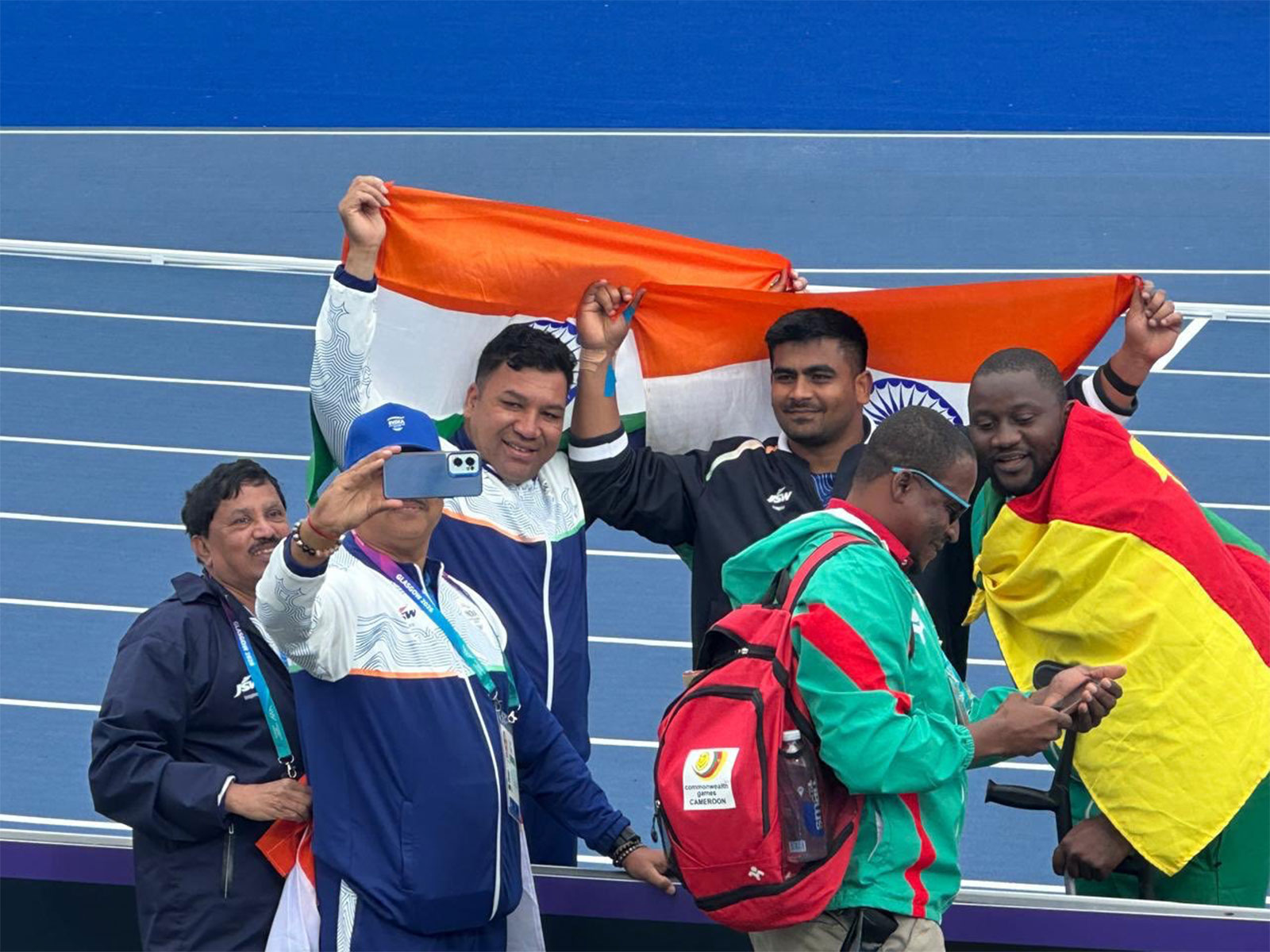
Indian para-athletes Soman Rana and Shubham Juyal delivered a historic one-two finish in the men’s F57 shot put at the 2026 Commonwealth Games in Glasgow.
Rana secured the gold medal with a best throw of 13.40 metres, recorded on his second attempt. Juyal claimed silver with a season-best 13.28 metres, achieved with his sixth and final throw.
The result underlined India’s growing strength in seated para throwing events and added another major international title to Rana’s career.
Rana converts years of international experience into gold
Soman Rana is an Indian Army veteran who lost his right leg in a landmine explosion in 2006.
He later entered para athletics and developed into one of India’s leading F57 shot-put competitors. Rana represented India at both the Tokyo and Paris Paralympic Games, finishing fourth in Tokyo with a throw of 13.81 metres and fifth in Paris with 14.07 metres.
He also won bronze at the 2025 World Para Athletics Championships in New Delhi with a season-best throw of 14.69 metres, competing against some of the strongest athletes in the classification.
His Glasgow victory therefore represents the result of a long international career rather than a sudden breakthrough.
Juyal secures silver with final-round throw
Shubham Juyal completed India’s one-two finish with his strongest performance in the final round.
His throw of 13.28 metres moved him into the silver-medal position and demonstrated his ability to perform under pressure late in the competition.
Juyal had already shown strong form during 2026. At the World Para Athletics Grand Prix in New Delhi in March, he won the F57 shot-put title with a personal-best throw of 14.45 metres.
He also reached the final of the 2025 World Para Athletics Championships, where he recorded a then-personal best of 13.72 metres.
The Commonwealth Games silver confirms his position among India’s leading emerging athletes in the classification.
Understanding the F57 classification
The F57 category includes athletes with lower-limb impairments who compete from a seated throwing frame.
Athletes must generate force through the upper body and trunk while remaining securely positioned within the frame. Performance depends on strength, balance, throwing technique and the interaction between the athlete and the seating system.
For athletes with lower-limb loss, prosthetic rehabilitation remains important for daily mobility and training away from the throwing circle, even though the competition itself is performed from a seated position.
A suitable everyday prosthesis can support strength training, travel, independence and participation in the wider sporting environment.
India’s strength in seated shot put
India has developed considerable depth in the men’s F57 event.
Hokato Hotozhe Sema won bronze at the Paris 2024 Paralympic Games and became the world number one in the classification during 2026. At that time, Soman Rana and Shubham Juyal were ranked second and third, giving India three athletes near the top of the global standings.
Rana and Juyal’s Commonwealth Games medals reinforce the success of India’s military and national para-sport development systems.
Both athletes have benefited from structured coaching, access to sports science and opportunities to compete internationally.
Rehabilitation centres can help identify sporting potential
Rana’s career also highlights the wider role that prosthetic and rehabilitation services can play after limb loss.
Rehabilitation should not focus only on restoring basic walking ability. Clinicians can also introduce patients to recreation, strength training and para-sport pathways suited to their interests and physical abilities.
Closer links between prosthetic centres, hospitals, the Army Paralympic Node, universities and state para-sport associations could help more people discover these opportunities.
For prosthetists and orthotists, understanding a patient’s sporting ambitions may also influence component choice, socket design and long-term rehabilitation planning.
Soman Rana and Shubham Juyal’s Glasgow one-two provides another example of what can be achieved when rehabilitation, opportunity and elite sporting support are brought together.
- Original ANI report
- Commonwealth Games report on India’s F57 one-two
- Paralympic Committee of India
- Sports Authority of India
- World Para Athletics
- Rehabilitation Council of India
- International Society for Prosthetics and Orthotics