
At 19, Hokato Hotozhe Sema was preparing to pursue his ambition of joining the Indian Army’s Para Special Forces. A landmine explosion during a patrol in Jammu and Kashmir changed that future within seconds, causing injuries that required the amputation of his left leg below the knee.
More than two decades later, Sema stood on the podium at the Paris 2024 Paralympic Games. His throw of 14.65 metres secured bronze in the men’s F57 shot put and made him one of the most recognisable athletes to emerge from the Indian Army’s rehabilitation and para-sport system.
His journey is among those documented in an Indian Express long-read examining the Army Paralympic Node in Pune.
Established in 2017, the Node provides soldiers who have experienced amputations, spinal cord injuries and other permanent impairments with a route into competitive para-sport. It currently supports 53 athletes training across four Indian cities.
The programme does not treat sport merely as a motivational activity added to rehabilitation. Once selected, participants enter a high-performance environment intended to prepare them for national championships, the Asian Para Games, Commonwealth Games and Paralympic competition.
Finding potential at rehabilitation centres
The pathway often begins at two major military rehabilitation facilities in Pune: the Artificial Limb Centre and the Spinal Cord Injury Centre at Military Hospital Kirkee.
Army Paralympic Node coaches visit both centres to meet soldiers undergoing treatment and assess whether a particular sport could match their physical characteristics, functional ability and interests.
The first challenge is rarely technical. A soldier who has recently experienced limb loss or spinal cord injury may still be processing a sudden change in mobility, military role, identity and expectations for the future. Some potential athletes require weeks or months of encouragement before they are ready to consider sport.
Peer mentoring is therefore important. Established para-athletes can speak from experience about rehabilitation, prosthetic use, competition and the practical difficulties of returning to an active life.
The model places para-sport within a wider rehabilitation continuum involving surgeons, physiotherapists, prosthetists, psychologists, coaches, families and military administrators.
From painful first steps to an Asian Games medal
Ajay Kumar was serving with the Ghatak Platoon of the 12 Dogra Regiment when he lost a limb in a mine explosion in Uri in 2017.
According to the Indian Express, walking with his first prosthesis was painful and he initially resisted repeated invitations to join the Paralympic Node. Competitive running appeared far removed from the immediate challenge of adapting to limb loss.
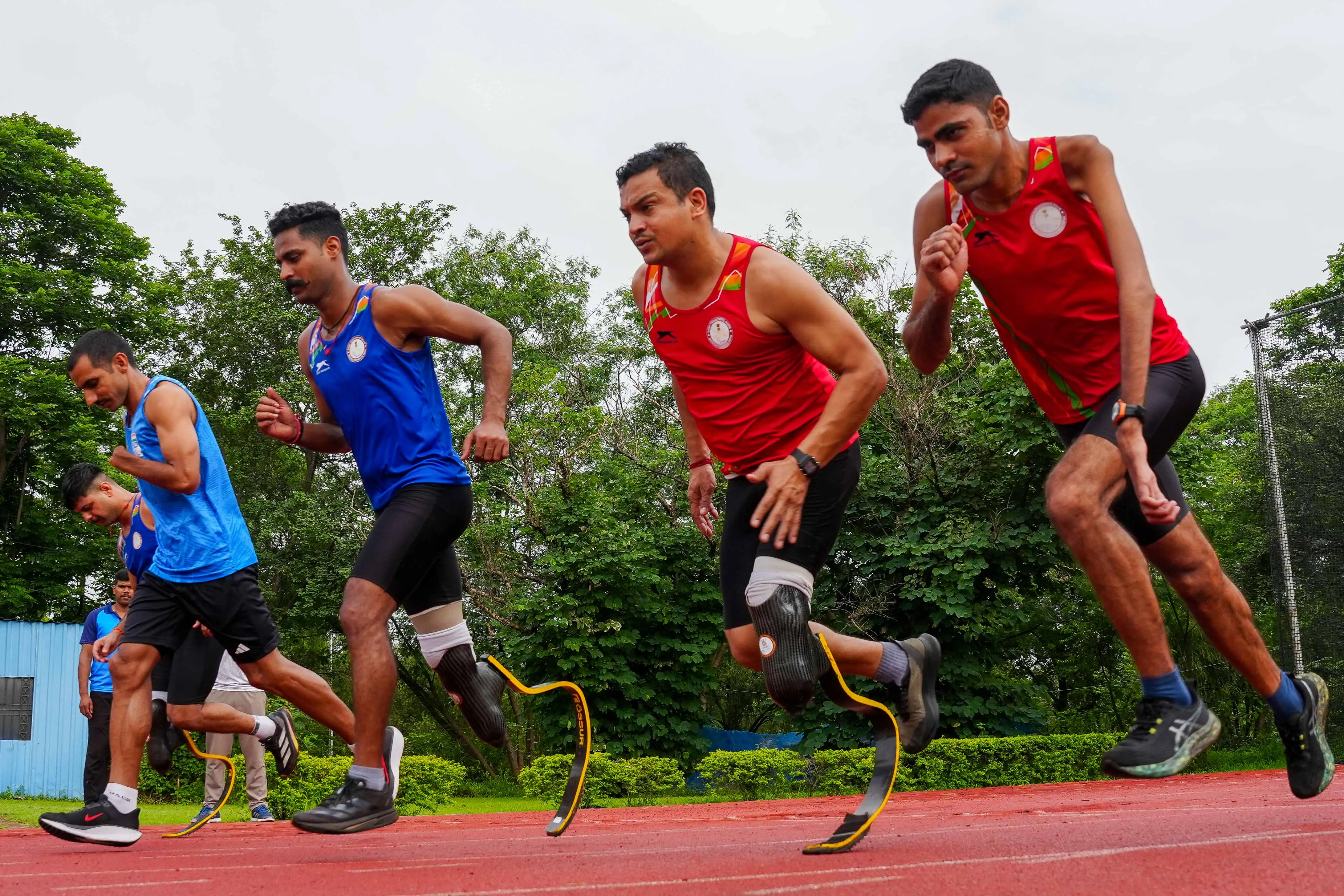
Kumar eventually agreed to train and became a blade runner in the T64 classification. At the 2023 Asian Para Games, he won silver in the 400 metres.
His progression illustrates the difference between an everyday walking prosthesis and a sport-specific running system. Running blades are designed around energy storage and return, but the blade alone does not create athletic performance.
Successful use requires an individually fitted socket, secure suspension, appropriate alignment, progressive loading and repeated gait training. Changes in residual-limb volume, skin condition or alignment can affect comfort and performance, making ongoing collaboration between athlete, prosthetist, physiotherapist and coach essential.
Soman Rana finds a new event
Soman Rana lost his right leg in a landmine explosion during an operation in Jammu and Kashmir’s Poonch sector in December 2006. Before his injury, he had competed as a national-level middleweight boxer.
His para-sport career began after he travelled to Pune for a replacement prosthetic leg in 2017 and was encouraged to explore the Army’s developing programme.
Rana transferred the strength, balance and explosive power developed through boxing into seated shot put. He finished fifth in the F57 event at the Paris Paralympics and later won gold at the 2026 Commonwealth Games in Glasgow. Fellow Army athlete Shubham Juyal secured silver in the same event.
The International Paralympic Committee’s official Paris results confirm Sema’s bronze-medal performance and Rana’s fifth-place finish in a final containing athletes from India, Iran, Brazil, Finland, France, Argentina and several other countries.
53 athletes across four cities
The programme’s headquarters is in Pune, where participants train in athletics, archery, swimming, triathlon, rowing and sport climbing.
Other disciplines use specialist Army facilities elsewhere:
- Para-shooters train at the Army Marksmanship Unit in Mhow
- Taekwondo athletes are based in Bengaluru
- Canoe and kayak athletes train in Bhopal
- Pune remains the central location for rehabilitation, administration and several principal sports
The Army’s Mission Olympic Wing oversees funding, technical development and training. The Bombay Engineers Group and Centre at Kirkee provides administrative support.
A Ministry of Defence account of the Army’s sporting system states that the Paralympic Node was created to motivate and train soldiers with disabilities for competitive para-sport. The same system operates alongside 28 sports nodes supporting thousands of Army athletes.
Prosthetic services behind sporting performance
The Artificial Limb Centre’s contribution extends beyond fitting standard walking limbs. Its multidisciplinary rehabilitation system helps injured personnel relearn everyday activities before potential candidates move into specialised sport.
The centre has also worked on activity-specific prosthetic solutions, including the Phoenix Foot and a dedicated Rowing Foot for para-rowers. Running athletes may require specialist blade systems and sockets capable of tolerating repeated high-impact loading.
For India’s prosthetists and orthotists, the programme highlights several important principles:
- The everyday prosthesis and sports prosthesis may require different designs
- Socket comfort remains fundamental even when advanced components are used
- Alignment must reflect the biomechanics of the individual event
- Training loads should be increased progressively
- Skin condition and residual-limb health require continuing monitoring
- Prosthetic servicing must fit around competition and travel schedules
- The athlete should remain central to component and design decisions
Not every person undergoing rehabilitation will want or be suited to elite sport. Equally, an athlete’s worth cannot be measured only through medals. The value of the programme includes physical conditioning, confidence, peer connection, independence and the creation of a meaningful new role after injury.
National recognition
On 18 August 2026, the Ministry of Youth Affairs and Sports selected the Army Paralympic Node for the Rashtriya Khel Protsahan Puraskar 2025.
The award recognises organisations that have made a visible contribution to sports promotion and development. For the Node, it acknowledges nearly a decade of building a structured bridge between military rehabilitation and international para-sport.
The programme’s achievements demonstrate what becomes possible when prosthetic and rehabilitation services are connected to long-term opportunity. Restoring mobility may be the first objective after injury, but for some soldiers at the Army Paralympic Node, it is also the beginning of an entirely new competitive career.
- Indian Express: Inside the Army’s Paralympic Node
- Indian Army Artificial Limb Centre
- Ministry of Defence: Indian Army Sports Conclave
- National Sports Awards 2025 Announcement
- Paris 2024 Men’s Shot Put F57 Results
- Hokato Hotozhe Sema Athlete Profile
- Military Hospital Kirkee Spinal Cord Injury Rehabilitation
- Army Para-Swimmers at the National Championships