
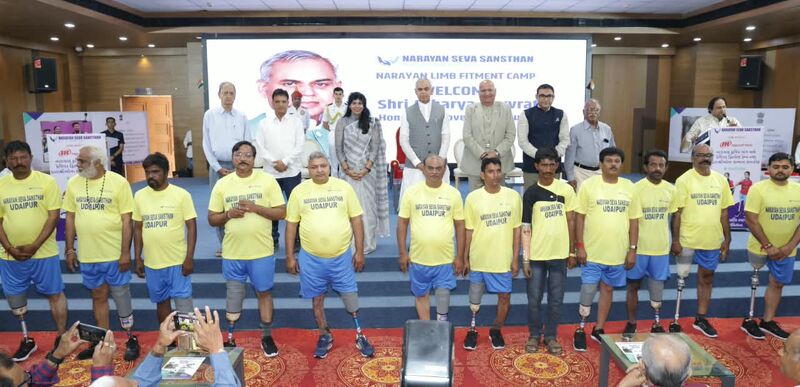
Narayan Seva Sansthan and CSR partner Ingersoll Rand India Limited have provided artificial limbs, calipers and other assistive devices to 335 people with disabilities at a fitment camp in Ahmedabad, Gujarat.
Held on 6 September 2026 at Atal Kalam Campus Lane, Gujarat University, the programme provided 291 Narayan Modular Artificial Limbs to 271 beneficiaries. A further 87 calipers and other assistive devices were supplied to 64 people.
The initiative followed a selection and measurement camp held in Ahmedabad on 26 July, when more than 450 people registered for assessment. Following screening and measurement, 335 selected beneficiaries returned for the fitment programme.
The figures were reported by India CSR and confirmed in local coverage of the event.
Fitting accompanied by mobility training
The programme extended beyond the physical distribution of devices. A 40-member specialist team from Narayan Seva Sansthan carried out the fittings and provided beneficiaries with guidance on:
- Maintaining balance
- Walking with an artificial limb
- Using calipers and other devices safely
- Developing appropriate walking techniques
- Caring for and maintaining the supplied device
This training is an important part of prosthetic and orthotic provision. Receiving a device does not automatically result in safe or independent mobility. Users need sufficient instruction to understand how to put on and remove the device, recognise potential skin problems, develop confidence and use the intervention appropriately within their daily environment.
The event concluded with a parade involving beneficiaries who had received their devices, giving participants and their families an opportunity to demonstrate their initial mobility.
CSR support for rehabilitation access
The camp was organised with financial and organisational support from Ingersoll Rand India Limited as part of its corporate social responsibility activities.
Sunil Khanduja, chairman and managing director of Ingersoll Rand India, presided over the programme. Gujarat Governor Acharya Devvrat attended as chief guest and described the initiative as an example of technology and compassion working together.
Vandana Agarwal, director of Narayan Seva Sansthan, said the organisation’s objective was not limited to supplying artificial limbs. Its wider aim was to help people regain confidence and progress towards greater self-reliance.
That distinction is important for CSR programmes supporting assistive technology. Device numbers provide a clear measure of activity, but meaningful impact depends on whether the intervention is clinically appropriate, comfortable, maintainable and capable of supporting the person’s own mobility and participation goals.
A staged camp model
The Ahmedabad initiative used a two-stage structure. Potential beneficiaries were first assessed and measured in July, with eligible participants returning for fitting approximately six weeks later.
This separation provides time for individual device preparation, but it also highlights the importance of maintaining contact with beneficiaries between assessment and delivery. Travel costs, changing health conditions and difficulties returning to the venue can all affect completion rates in outreach programmes.
After fitting, longer-term arrangements are equally important. Prosthetic sockets and orthotic devices may require adjustment as users increase their activity or experience physical changes. Paediatric users need regular reassessment because of growth, while all users need a clear route for repairs, replacement components and clinical review.
Future impact reporting from CSR-supported camps could therefore extend beyond the number of devices supplied to include:
- Number of people assessed and selected
- Number returning for delivery
- First-fit acceptance and adjustment rates
- Functional mobility after training
- Skin and comfort issues
- Follow-up attendance
- Device use after three, six and 12 months
- Repairs and replacement requirements
- Return to education, employment or community participation
These measures would allow corporate partners and service providers to understand whether an intervention is creating sustained value.
Four decades of disability support
Founded in 1985, Narayan Seva Sansthan provides rehabilitation, surgery, prosthetic limbs and assistive devices to people who may otherwise struggle to afford care.
According to the organisation, it has supplied free artificial limbs to more than 40,200 people and provided free medical services to over 454,000 people in India and internationally. Its artificial-limb programme includes below-knee, above-knee, below-elbow and above-elbow prostheses, alongside mobility devices and rehabilitation support.
The Ahmedabad camp demonstrates how partnerships between rehabilitation organisations and corporate funders can expand access to prosthetic and orthotic services. Its strongest lesson is that CSR creates greater value when funding supports the complete pathway—from assessment and device preparation to fitting, mobility training, follow-up and participation.
- India CSR: Narayan Seva Provides Artificial Limbs and Calipers to 335 People in Ahmedabad
- Narayan Seva Sansthan
- Narayan Artificial Limbs Programme
- Ahmedabad Measurement Camp Announcement
- Ingersoll Rand India