

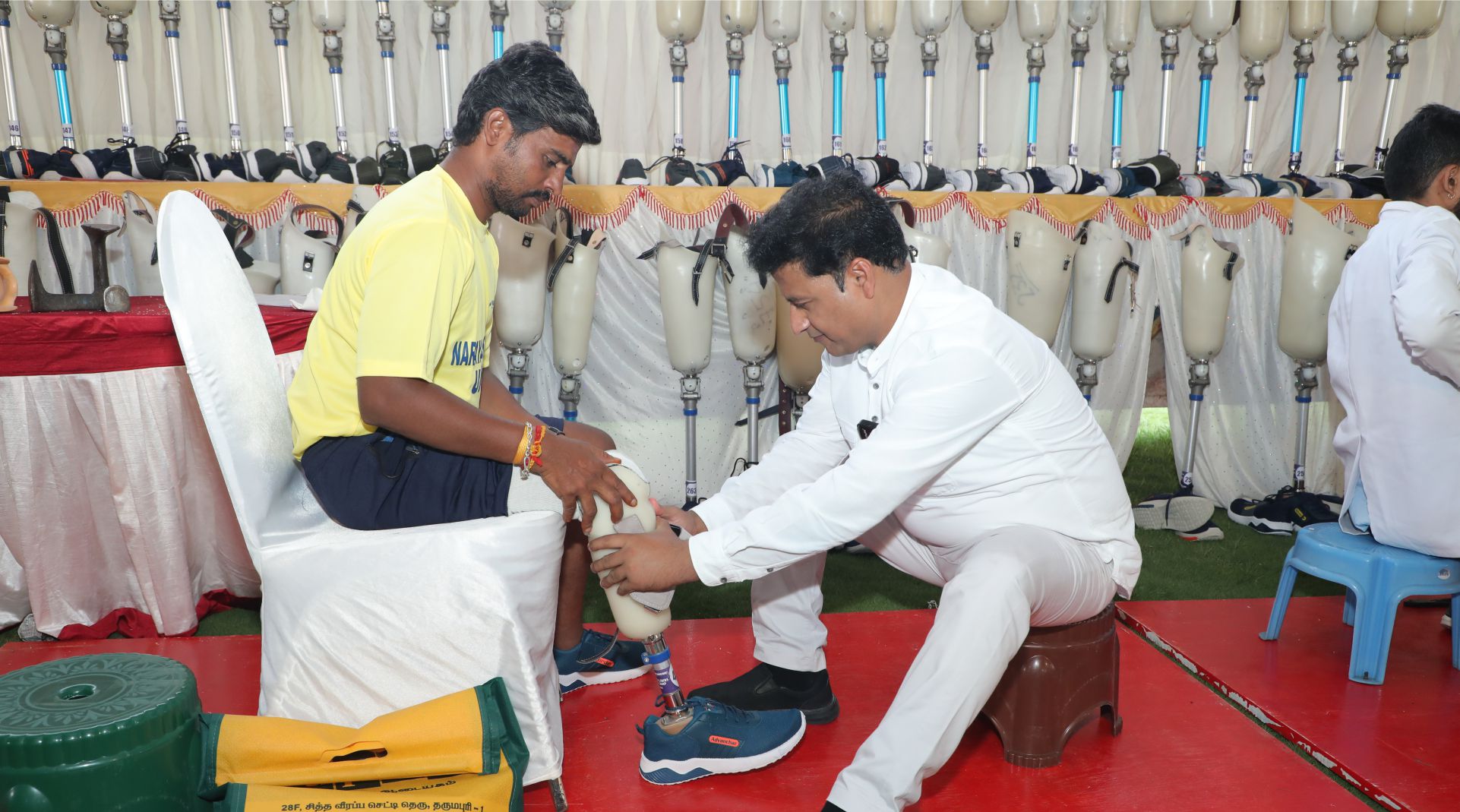
Narayan Seva Sansthan fitted 687 artificial limbs and calipers for 634 people at a camp in Ballari, Karnataka, according to reports by Bilkul Online and the Press Network of India. The fitting followed a selection and measurement camp on 16 August, at which more than 797 people registered.
What happened at the Ballari artificial limb camp?
Both reports, published on 26 October 2026, describe a free fitting camp organised by Narayan Seva Sansthan, Udaipur. The organisation reports that 687 modular artificial limbs and calipers were fitted for 634 beneficiaries, with a 40-member specialist team. The reports do not give the dates or venue of the fitting camp itself. The earlier selection and measurement camp, held on 16 August, drew more than 797 registrations, according to the organisers.
Limbs, calipers and walking practice
The devices were Narayan modular artificial limbs and calipers. Bilkul Online reports that mirror bars were used for walking practice. The figure of 687 devices for 634 people suggests some beneficiaries received more than one device, though the reports do not break the numbers down by device type or limb level.
Who organised it and who took part?
The reports name Director Vandana Agarwal, President Prashant Agarwal and camp coordinator Hariprasad Laddha. B. Sriramulu, a former Karnataka Cabinet Minister, attended as chief guest. He said such initiatives help people with disabilities become self-reliant and rebuild their confidence and dignity, according to Bilkul Online. Dr Suman Penkar, Superintendent of Police, who presided, described the Sansthan’s work as “an inspiring example of compassion and social responsibility.” Ms Agarwal said the aim goes beyond supplying limbs and is to help people walk with confidence and live with dignity.
The Sansthan says it was founded in 1985 and has given free artificial limbs to more than 40,809 people and free medical services to over 456,000 people. These are the organisation’s own figures and have not been independently verified.
How does Ballari fit the pattern of free limb camps in India?
Free fitting camps have become one of the most visible routes to prosthetic and orthotic care in India. Bharat CPO has reported on the earlier Bellary measurement camp, Narayan Seva Sansthan’s Delhi fitting camp and its Ahmedabad assessment camp, among others. Ballari follows the same two-stage pattern: a selection and measurement camp first, then a fitting camp some weeks later.
Bharat CPO Perspective
The following is Bharat CPO’s reading and is separate from what the organisers and reports state. A camp that fits 634 people in one event shows the scale of unmet need in the region. For certified prosthetists and orthotists, the questions that matter come after the camp: who handles adjustments as residual limbs change, who repairs and replaces components, and how a recipient reaches a clinician if a socket stops fitting.
The reports do not say what follow-up arrangements exist for Ballari recipients, and Bharat CPO has no information on this. Local CPOs and rehabilitation services may be well placed to become a continuing point of contact, and the wider debate about free camps and the private market is covered in an earlier Bharat CPO article.
Frequently asked questions
How many people were fitted at the Ballari camp? 634 beneficiaries received 687 artificial limbs and calipers, according to the organisers as reported by Bilkul Online and the Press Network of India.
Who organised it? Narayan Seva Sansthan, Udaipur, with a 40-member specialist team.
What was the earlier camp? A selection and measurement camp on 16 August, where more than 797 people registered.
Suggested hyperlinks / sources
- Bilkul Online: 634 persons with disabilities move towards independence with advanced technology
- Press Network of India: Narayan Seva Sansthan fits 687 artificial limbs and calipers in Ballari
- Bharat CPO: the earlier Bellary measurement camp
- Bharat CPO: Narayan Seva Sansthan’s Delhi fitting camp
- Bharat CPO: the Ahmedabad assessment camp
- Bharat CPO: free distribution camps and the private market