
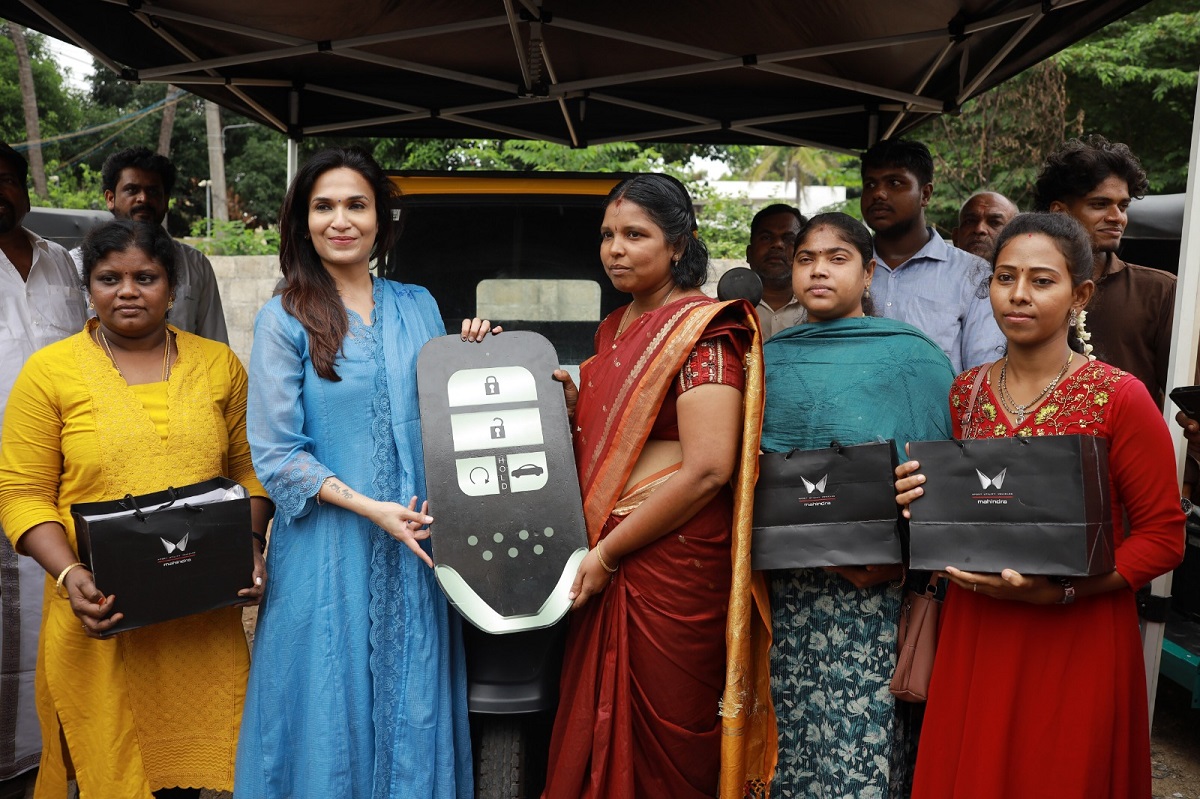
Film director and producer Soundarya Rajinikanth led a welfare aid distribution event in Nagercoil, Tamil Nadu, where free artificial limbs and livelihood-support vehicles were provided to people with disabilities and women from the local community.
The programme was jointly coordinated by Nagercoil Round Table 176 and Nagercoil Ladies Circle 196, with film producer Magesh Raj Pasilian attending as special guest. According to the original report in News Today, 27 artificial limbs manufactured by Sree Balaji Orthotics were distributed free of cost to differently abled beneficiaries, while five women received electric autos to support livelihood and financial independence.
For BharatCPO readers, the event is significant because it connects prosthetic access with the wider goal of social and economic participation. An artificial limb is not only a mobility device. For many users, it can be the difference between dependency and independence, between staying at home and returning to work, and between social isolation and community participation.
The inclusion of electric autos also broadens the welfare model beyond medical assistance. Mobility restoration and livelihood generation are closely connected. A person may receive a prosthesis and regain walking ability, but without employment, transport, family support or community inclusion, the full benefits of rehabilitation may not be realised. By combining assistive devices with livelihood support, the Nagercoil programme reflects a more practical understanding of disability empowerment.
The artificial limbs distributed at the event were manufactured by Sree Balaji Orthotics, highlighting the role of local orthotic and prosthetic providers in community-based disability initiatives. India’s O&P sector includes a wide mix of public institutions, private clinics, charitable providers, NGOs and local manufacturers. Events like this show how local fabrication capacity can support immediate community needs when linked with civic groups, donors and public figures.
For people with lower-limb loss, prosthetic rehabilitation usually requires more than the handover of a device. Proper assessment, measurement, socket fitting, alignment, gait training, skin monitoring, repair and follow-up are all essential. A free limb distribution programme is most effective when beneficiaries are also connected to long-term clinical support and replacement pathways.
This is particularly important in India, where many amputees face high out-of-pocket costs, travel barriers and inconsistent follow-up services. A prosthesis can change a person’s life, but only when it fits well, is comfortable, is maintained and is appropriate for the user’s daily environment. Rural and semi-urban users may need robust, repairable and affordable devices, along with access to local technicians and clinicians who can make adjustments over time.
The Nagercoil event also highlights the continuing role of civil society in disability support. Round Table India and Ladies Circle India chapters have long been involved in community service, education, welfare and local fundraising. By coordinating disability and livelihood support, local chapters can help bridge gaps between clinical need and available funding.
For BharatCPO, the key message is that artificial limb distribution should be seen as the beginning of a rehabilitation pathway, not the end. Beneficiaries need education on prosthetic use, stump care, footwear, balance, safe walking, pain, skin breakdown and when to seek adjustments. Without this support, even a well-intentioned donation can become underused or abandoned.
A stronger community prosthetic programme should include:
- Pre-distribution clinical assessment
- Appropriate prosthetic prescription based on user needs
- High-quality socket fitting and alignment
- Gait training and patient education
- Follow-up review after delivery
- Repairs and maintenance support
- Replacement planning as the device wears out
- Links to livelihood, transport and social inclusion programmes
The presence of Soundarya Rajinikanth helped bring public attention to the event. Celebrity-led welfare initiatives can play an important role when they raise visibility for disability inclusion and attract wider community support. However, the long-term impact depends on whether beneficiaries continue to receive the clinical and practical support needed after the event.
The Nagercoil programme is therefore a useful reminder for India’s rehabilitation and O&P community. Artificial limbs can restore mobility, but real empowerment requires a wider ecosystem: trained clinicians, local manufacturers, civic organisations, donors, livelihood support, accessible transport and follow-up care.
As India works to improve disability inclusion and rehabilitation access, community programmes like this can make a meaningful difference — especially when they move beyond one-time distribution and become part of a sustained pathway toward mobility, work and dignity.
- Original News Today article on Soundarya Rajinikanth welfare aid distribution in Nagercoil
- Nagercoil Round Table 176 Instagram update on artificial limbs and electric autos
- Round Table India official website
- Ladies Circle India official website
- Department of Empowerment of Persons with Disabilities, Government of India
- Artificial Limbs Manufacturing Corporation of India
- World Health Organization standards for prosthetics and orthotics
- World Health Organization rehabilitation overview