
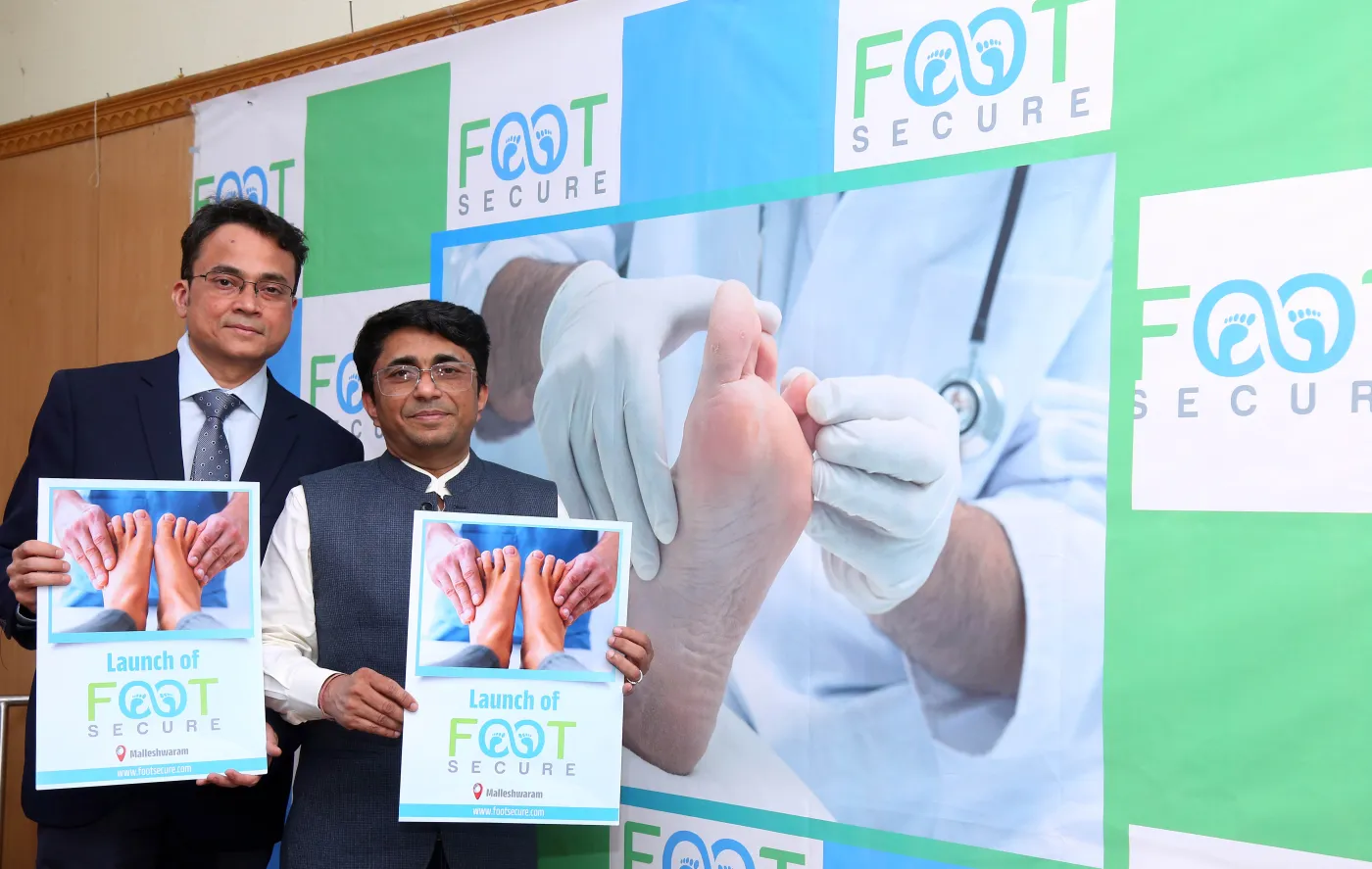
India’s diabetic foot burden is increasingly becoming a limb salvage crisis — and one Bengaluru-based podiatric surgeon is arguing that the solution must be integrated, preventive and multidisciplinary.
A recent Mid-Day feature profiled Dr Sanjay Sharma, founder of FootSecure, and his work to build a new model of lower-limb care in India. The article reports that India is home to more than 100 million people living with diabetes, with an estimated 14 lakh diabetes-related amputations taking place each year, including around 1.4 lakh major below-knee or above-knee amputations. Dr Sharma states that up to 80% of these amputations may be preventable.
For Bharat CPO readers, the story is highly relevant because diabetic foot care sits directly at the intersection of podiatry, orthotics, footwear, wound care, vascular care and rehabilitation.
Diabetic Foot Is Not Just a Wound Problem
A diabetic foot ulcer is often treated as a wound, but the underlying problem is usually much wider. Neuropathy may reduce protective sensation. Poor circulation may reduce healing potential. Deformity may create abnormal pressure. Footwear may cause rubbing or compression. Infection may spread quickly. Delayed referral may turn a manageable ulcer into a limb-threatening emergency.
Dr Sharma told Mid-Day that a diabetic foot problem affects “mobility, independence, livelihood and survival.”
This is an important message for India’s rehabilitation sector. Limb salvage is not only about avoiding amputation. It is about preserving walking, work, family roles, dignity and long-term health.
The Gap: Patients Move Between Specialists Without One System
When FootSecure was created, Dr Sharma identified a major gap in India’s diabetic foot pathway. Patients were moving between diabetologists, surgeons, orthopaedic specialists, physiotherapists, orthotists and wound care providers, but there was often no single coordinated system looking at the foot as a whole.
This fragmented pathway is familiar across India.
A patient with diabetes may visit one doctor for blood sugar control, another for wound dressing, another for vascular advice, and a separate provider for footwear or orthotics. If these services are not connected, pressure may remain unaddressed, footwear may remain unsuitable, and warning signs may be missed.
For diabetic foot care, fragmentation can cost limbs.
FootSecure’s Integrated Model
FootSecure now operates across multiple locations in Bengaluru and brings together podiatric surgeons, vascular surgeons, plastic surgeons, orthopaedic specialists, physiotherapists and orthotists under one roof.
The model combines clinical care with digital technology. On the clinical side, this includes consultation, neurological and vascular assessment, wound care, surgery, orthotics, customised footwear and rehabilitation. Digitally, the team uses platforms such as Foot360 and Wound360 to capture wound photographs, measurements and clinical data.
This is exactly the type of model India needs more widely: one pathway that can identify risk, treat wounds, manage pressure, support mobility and follow patients over time.
The Role of Technology in Limb Salvage
The Mid-Day report notes that FootSecure uses 3D foot mapping, plantar pressure scans and thermal imaging to detect complications before skin breakdown occurs. Dr Sharma also emphasises that AI supports the clinician but does not replace clinical judgement.
For Bharat CPO readers, this matters because technology is becoming central to diabetic foot prevention.
Useful tools may include:
- Plantar pressure assessment
- 3D foot scanning
- Thermal imaging
- Digital wound measurement
- Remote wound monitoring
- Custom insole design
- Footwear fit assessment
- Gait analysis
- Outcome tracking
However, these tools only create value when they lead to better clinical action. A pressure scan must lead to pressure relief. Thermal changes must lead to early intervention. Wound photographs must lead to faster referral and follow-up.
Technology should support the clinical pathway, not replace it.
Orthotists Must Be Part of the Limb Salvage Team
One of the most important points in the FootSecure model is the inclusion of orthotists. Diabetic foot prevention and limb salvage cannot succeed without pressure management.
Orthotists and pedorthic professionals can support diabetic foot teams through:
- Custom insoles
- Protective footwear
- Offloading devices
- Total contact cast support
- Charcot restraint orthotic walkers
- AFOs for deformity or instability
- Partial foot prostheses
- Post-amputation rehabilitation
- Pressure redistribution
- Footwear modification
- Long-term review after ulcer healing
In many cases, the wound may be treated medically but will recur if the mechanical cause is not addressed. Orthotic and footwear intervention is therefore central to recurrence prevention.
Prevention Before Skin Breakdown
At the Global Podiatry Summit 2026 in Copenhagen, Dr Sharma represented India and spoke on limb salvage. He told Mid-Day that a key international message was the need to identify risk much earlier, including loss of sensation, poor circulation, deformity and unsuitable footwear, before the skin breaks down.
This is the shift India urgently needs.
Diabetic foot services should not begin only after an ulcer appears. Every person with diabetes should have regular foot screening that includes:
- Sensation testing
- Vascular assessment
- Foot deformity review
- Footwear assessment
- Callus and pressure checks
- Previous ulcer or amputation history
- Education on daily foot inspection
- Referral for orthotics or footwear when needed
The goal is to prevent the first ulcer, not only treat the wound after it forms.
Surgery, Biomechanics and Footwear
The Mid-Day article also notes that FootSecure’s preventive approach includes minimally invasive procedures for selected high-risk patients, such as tendon lengthening and tendon transfers, to rebalance the foot and reduce pressure over vulnerable areas.
This highlights a key principle: limb salvage is biomechanical as well as medical.
A foot with high pressure, deformity or abnormal loading may continue to break down unless the mechanical problem is corrected. In some patients, surgery may reduce deforming forces. In others, footwear, insoles, orthoses or offloading devices may be the main intervention. Many patients require both surgical and orthotic planning.
For India’s P&O sector, this reinforces the need for closer collaboration between surgeons and orthotists.
Training Is the Missing Link
Dr Sharma has trained more than 500 doctors in diabetic foot management and argues that diabetic foot examination should become a compulsory clinical skill in medical and nursing education. He notes that doctors routinely monitor blood sugar, kidneys, eyes and the heart, but many patients complete consultations without anyone removing their shoes and socks.
This may be one of the most important points in the article.
India cannot solve diabetic foot complications only with specialist centres. Primary care doctors, nurses, diabetologists, surgeons, physiotherapists and orthotists all need stronger diabetic foot skills.
A basic foot check should become routine, especially for high-risk patients. Removing shoes and socks during a diabetes consultation may be a simple act, but it can reveal callus, deformity, ulcers, infection, footwear damage or early pressure problems.
Lower Amputation Rates Are Possible
The Mid-Day feature reports that FootSecure’s internal amputation rate is approximately 2.6%, compared with an estimated Indian average of around 6% in comparable diabetic foot populations.
Although such figures depend on patient mix, referral timing and case complexity, they suggest that integrated care can make a measurable difference.
For Bharat CPO, the message is clear: limb salvage improves when the right professionals are connected early. Diabetologists, podiatric surgeons, vascular surgeons, wound care specialists, orthotists and rehabilitation teams must work as one system.
Beyond Diabetic Foot
FootSecure also works with children with foot deformities, athletes with sports injuries and elderly patients with arthritis or post-traumatic conditions. Dr Sharma warns that persistent foot pain is not normal, and that a callus may be a warning sign of excessive pressure beneath the skin.
This wider foot-care message is important for India.
Foot health is often ignored until pain, ulceration or disability appears. Yet early foot assessment can identify deformity, pressure, gait problems, footwear issues and musculoskeletal conditions before they become more serious.
For orthotists and prosthetists, this creates an opportunity to contribute not only after injury or amputation, but earlier in prevention and mobility care.
What India Needs Next
India’s limb salvage challenge requires a national shift in how diabetic foot and lower-limb care are organised.
Key priorities include:
- Recognised podiatry education pathways
- Stronger diabetic foot training for doctors and nurses
- Integration of orthotists into diabetic foot teams
- Access to protective footwear and custom insoles
- Wider use of pressure assessment and offloading
- Early vascular referral pathways
- Digital wound and foot-risk monitoring
- Limb salvage clinics in major hospitals
- Referral networks for smaller cities
- Public awareness that foot ulcers are medical emergencies
For India’s P&O sector, diabetic foot care should be treated as a major area of professional growth and responsibility.
A New Model of Care
Dr Sanjay Sharma’s FootSecure model shows that limb salvage is not the work of one specialist. It requires a system that connects prevention, surgery, wound care, biomechanics, orthotics, footwear, rehabilitation and digital follow-up.
For Bharat CPO readers, the message is direct: orthotics and footwear are not secondary services in diabetic foot care. They are central to preventing recurrence, preserving mobility and reducing avoidable amputations.
India’s diabetic foot crisis is large, but many amputations may be preventable if care begins earlier and becomes more coordinated.
The future of limb salvage in India will depend on whether the health system can move from treating wounds to protecting feet — before the skin breaks down.
- Mid-Day: India’s Limb Salvage Problem
- FootSecure
- International Working Group on the Diabetic Foot Guidelines
- Diabetes India
- WHO: Diabetes
- WHO: Rehabilitation
- WHO: Assistive Technology