
As India’s diabetic-foot burden continues to place growing emphasis on prevention, an everyday item that rarely receives the same attention as footwear is starting to enter the conversation: the sock.
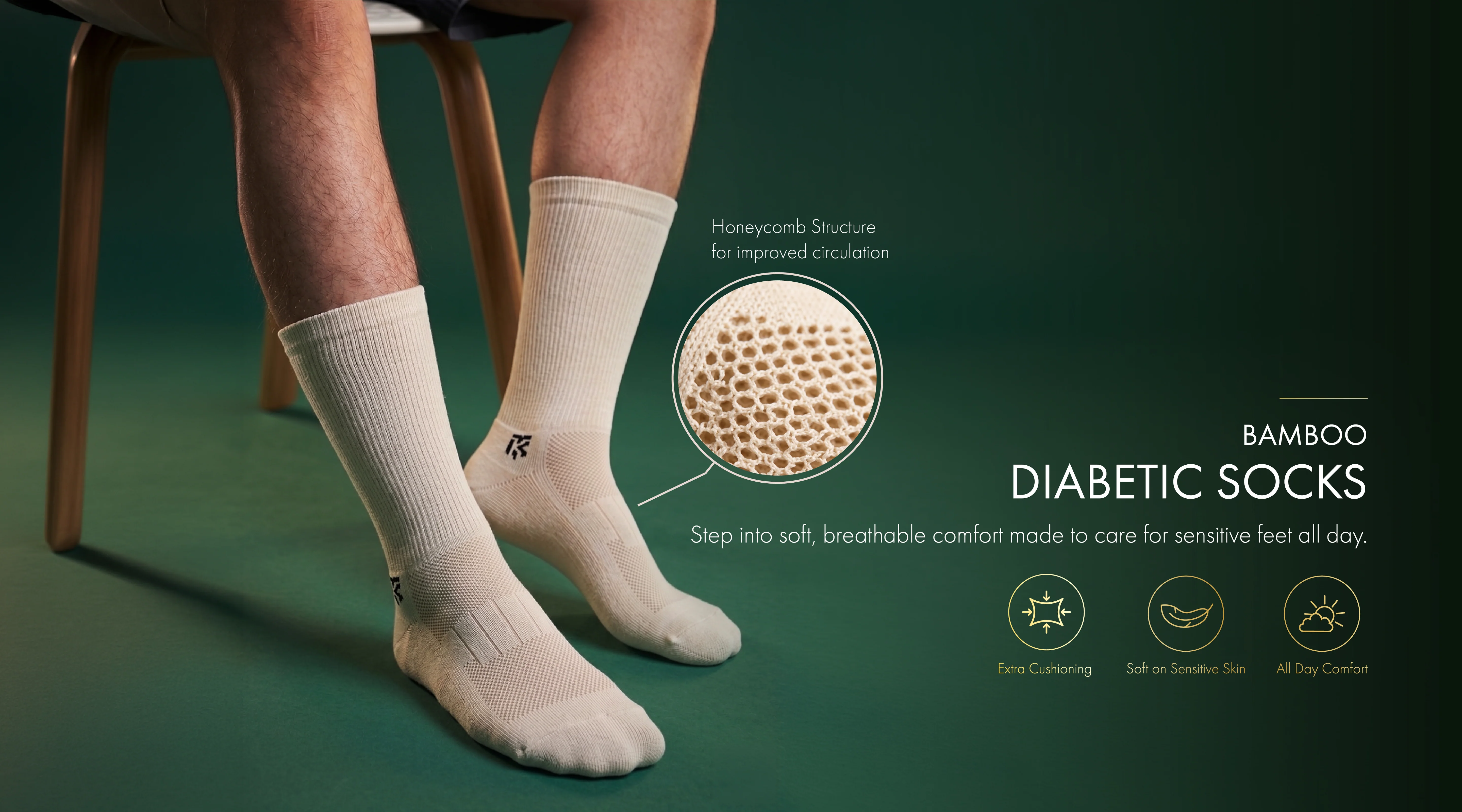
Mumbai-based entrepreneur Loveleen Machado, founder of Kikitoes, has developed a range of bamboo diabetic socks after questioning why patients and consumers often spend considerable time selecting shoes while paying comparatively little attention to the material sitting directly against their skin throughout the day.
In a recent Mid-Day feature, Machado explained that the idea emerged after learning more about the everyday discomfort experienced by people with sensitive feet, including sweating, tight elastic, bulky seams and poorly fitting socks. Kikitoes consequently focused its diabetic range around softness, fit and day-to-day comfort.
For India’s podiatry, orthotics and diabetic-foot community, the story is significant because it reflects a wider shift from treating diabetic-foot complications after they occur towards paying greater attention to the relatively simple interventions that can help protect a vulnerable foot.
Why socks matter in diabetic foot care
For many people, socks are largely a clothing choice.
For someone with diabetes, particularly when peripheral neuropathy or circulation problems are present, the design of the sock can become much more important.
Reduced sensation may make it difficult for a patient to detect rubbing, pressure or a developing blister. Features commonly associated with diabetic socks therefore include soft materials, minimal or flat seams, moisture management and non-binding cuffs intended to reduce irritation and constriction.
Not every person with diabetes requires specialised socks, but patients with neuropathy, sensitive skin or established foot-risk factors may benefit from paying closer attention to their choice of hosiery.
This places socks within a much larger preventive pathway that can include regular foot examination, appropriate footwear, pressure redistribution, skin inspection and referral to specialist foot-care professionals where necessary.
Why bamboo?
Kikitoes has chosen bamboo-derived fabric as the basis for its diabetic sock range.
The company positions the material around softness, breathability and moisture management, while designing the socks with a looser, less restrictive fit.
Bamboo-viscose blends are already used by a number of diabetic-sock manufacturers internationally, particularly where the objective is to create a soft fabric that can wick moisture while reducing irritation against sensitive skin.
The material itself, however, is only part of the product.
For a diabetic or neuropathic foot, construction and fit may be just as important as fibre choice.
A soft sock that wrinkles inside a shoe, has a prominent toe seam or is too tight around the leg can still create problems. Equally, a specialised sock cannot compensate for shoes that are too small or for an orthotic intervention that is creating excessive local pressure.
For CPOs and podiatrists, the message remains that socks should be assessed as part of the complete foot-footwear interface.
An overlooked element of therapeutic footwear
Orthotists, podiatrists and pedorthists frequently spend considerable time designing insoles and selecting footwear, but the sock sits directly between those interventions and the skin.
That makes it an important but sometimes overlooked variable.
A change in sock thickness can alter how tightly a shoe fits.
Moisture can affect skin condition and friction.
A folded or poorly positioned sock can create a localised area of pressure.
For a patient with normal sensation, discomfort usually provides an early warning.
For someone with diabetic neuropathy, that warning system may be reduced or absent.
This is why patient education should ideally include advice not only about shoes and insoles but also about how socks fit, how frequently they are changed and whether the patient checks their feet after removing them.
A growing opportunity for India’s foot-care sector
The emergence of brands specifically targeting diabetic-foot comfort also demonstrates how India’s foot-health market is becoming more specialised.
Diabetic-foot management increasingly involves a network of professionals and products, from diabetologists and vascular surgeons to podiatrists, CPOs, wound-care teams, custom insoles, therapeutic footwear and pressure-measurement technologies.
Preventive hosiery can occupy a relatively simple position within that ecosystem.
It does not replace clinical treatment, but it may form one small part of a broader strategy designed to reduce avoidable irritation and protect patients at risk.
For Indian CPOs, this also creates an opportunity to think beyond the device itself.
A patient receiving a custom diabetic insole may require guidance on footwear sizing and socks.
A patient fitted with an AFO may need hosiery that protects the skin beneath the brace.
A patient who has already undergone a partial-foot amputation may require particular attention to both interface materials and footwear volume.
The most effective lower-limb intervention is often a system, rather than an isolated product.
Consumer products still need clinical context
One important distinction should remain clear.
The term “diabetic sock” does not automatically make a product medically necessary or appropriate for every patient with diabetes.
Some people with well-controlled diabetes and no foot complications may be perfectly comfortable in conventional, appropriately fitting socks. Others with neuropathy, vascular disease, previous ulceration or significant deformity may require much more specialised management.
Compression is another area where caution is needed. Compression socks and non-binding diabetic socks are not interchangeable, and patients with vascular or circulatory concerns should seek clinical advice before selecting compression products.
That clinical context is important as India’s diabetic-foot product market expands.
From socks to prevention
Kikitoes’ development of bamboo diabetic socks may appear like a small consumer-product story compared with advances in custom footwear, plantar-pressure systems or digital orthotics.
But diabetic-foot prevention is often built from a collection of small interventions applied consistently.
Foot inspection, properly fitting shoes, suitable socks, early treatment of callus and rapid referral when problems develop can collectively make a substantial difference.
Machado’s original question — why consumers think carefully about shoes but considerably less about the socks inside them — is therefore particularly relevant to the diabetic-foot sector.
For Bharat CPO, the wider message is straightforward.
As India develops more sophisticated diabetic-foot services, attention needs to extend from high-end technology right down to the basic materials touching a patient’s skin every day.
Sometimes better foot care begins not with a scanner or custom orthosis, but with something as simple as the right pair of socks.
- Mid-Day – Why We Chose to Work on Bamboo Diabetic Socks
- Kikitoes
- Kikitoes – Bamboo Socks Guide
- Bharat CPO