

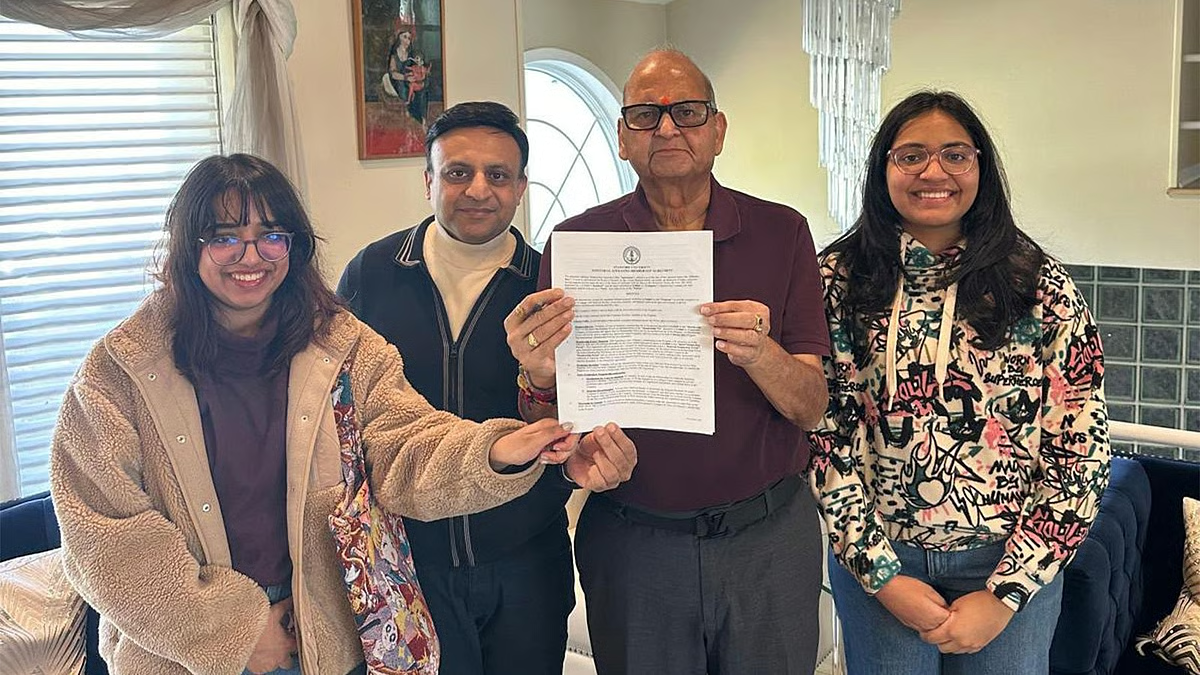
Jaipur Foot USA has signed an agreement with Stanford University to develop the Jodhpur-Jaipur Hand, a low-cost myoelectric prosthetic hand controlled by the user’s muscle signals. ANI reports that work is expected to begin soon, but no timeline or cost estimate has been announced.
Prem Bhandari, Chairman of Jaipur Foot USA and head of the Rajasthan Association of North America (RANA), signed an Industrial Affiliates Membership Agreement with Stanford at a RANA event in New York on 17 November, ANI says. Jaipur Foot USA supports Bhagwan Mahaveer Viklang Sahayata Samiti (BMVSS), the Jaipur-based organisation known for the Jaipur Foot.
Jaipur Foot USA signs Stanford agreement
What the Jodhpur-Jaipur Hand is meant to do
The project aims to develop a myoelectric prosthetic hand, one controlled by electrical signals generated by the user’s muscles, to help people with limb disabilities regain independence. Bhandari told ANI that work is expected to begin soon with Stanford’s engineering design programme. O. P. Choudhary, an adviser to Jaipur Foot USA, will coordinate the project, and Silicon Valley entrepreneur Armand Neukermans helped bring the proposal to Stanford, according to the report.
What is not yet known about the Jodhpur-Jaipur Hand
ANI says no specific timeline or cost estimate has been announced. The report does not give a design specification, a testing or approval pathway, a manufacturing location or details of how the hand would be fitted and distributed. The device does not yet exist as a product, and readers should not assume a price or launch date.
Who is funding the project?
ANI reports that the project will be supported by contributions from private donors, including Bhandari, the Chandra and K. K. Mehta Family Foundation, Manish Daddha, Alkesh and O. P. Choudhary, and Neukermans. The report also notes a family connection: Bhandari’s father, Professor S. P. C. Bhandari, was an exchange visitor at Stanford in 1966-67.
From the Jaipur Knee to a myoelectric hand
BMVSS has worked with Stanford before. ANI notes that the Jaipur Knee, a low-cost prosthetic knee joint developed with the university, was included in TIME magazine’s list of the 50 best inventions of 2009. The background to the organisation and its free-of-cost model is covered in The History of the Jaipur Foot: How BMVSS Built a Global Model for Low-Cost Prosthetic Care.
BMVSS says that up to March 2026 it had rehabilitated more than 2.5 million people with limbs and other aids and appliances. That figure comes from the organisation, not from the ANI report.
Free limb camp planned at S-VYASA, Bengaluru
Bhandari also announced plans for a free prosthetic limb distribution camp at the Swami Vivekananda Yoga Anusandhana Samsthana (S-VYASA) in Bengaluru early next year. It aims to reach around 1,000 beneficiaries, who are yet to be identified. Former Foreign Secretary Harsh Vardhan Shringla, now a Rajya Sabha member, has agreed to serve as chief adviser to the camp, ANI reports.
Bhandari is due back in India on 26 November for about a month. During the visit he plans to help organise an employment fair for nomadic and semi-nomadic communities in Rajasthan and to support scholarships for students from those communities, according to ANI. For a recent BMVSS camp, see Jaipur Foot Camp in Thiruvananthapuram to Fit Free Limbs for 400 People.
Bharat CPO Perspective
Cost is a recurring barrier to upper-limb prosthetic access in India, which is why an announcement aimed at a low-cost myoelectric hand will interest CPOs, rehabilitation teams and charities. At this stage it is an agreement and an intention, not a product. Bharat CPO has examined the access question in Bionic Hand Affordability in India: Why Rehabilitation and Work Matter More Than the Device, and reported on local production in Motorica Begins Local Production of Bionic Prostheses in India.
Details worth watching as the project develops include the price when one is announced, how the hand will be tested, how clinicians and users will be trained, and how servicing and repair will work in a free-of-cost distribution model. None of these has been addressed in the reports reviewed.
Frequently asked questions
What is the Jodhpur-Jaipur Hand? A planned low-cost myoelectric prosthetic hand, controlled by electrical signals from the user’s muscles, to be developed by Jaipur Foot USA with Stanford University.
Who is paying for it? Private donors, including Prem Bhandari, the Chandra and K. K. Mehta Family Foundation, Manish Daddha, Alkesh and O. P. Choudhary, and Armand Neukermans, according to ANI.
When will it be available and what will it cost? No timeline or cost estimate has been announced.
Suggested hyperlinks / sources
- ANI via Asianet Newsable: Jaipur Foot USA teams with Stanford for low-cost myoelectric hand (18 November 2026)
- NewKerala: Stanford University, Jaipur Foot USA join hands to develop low-cost prosthetic hand
- BMVSS / Jaipur Foot
- BMVSS brochure, May 2026