

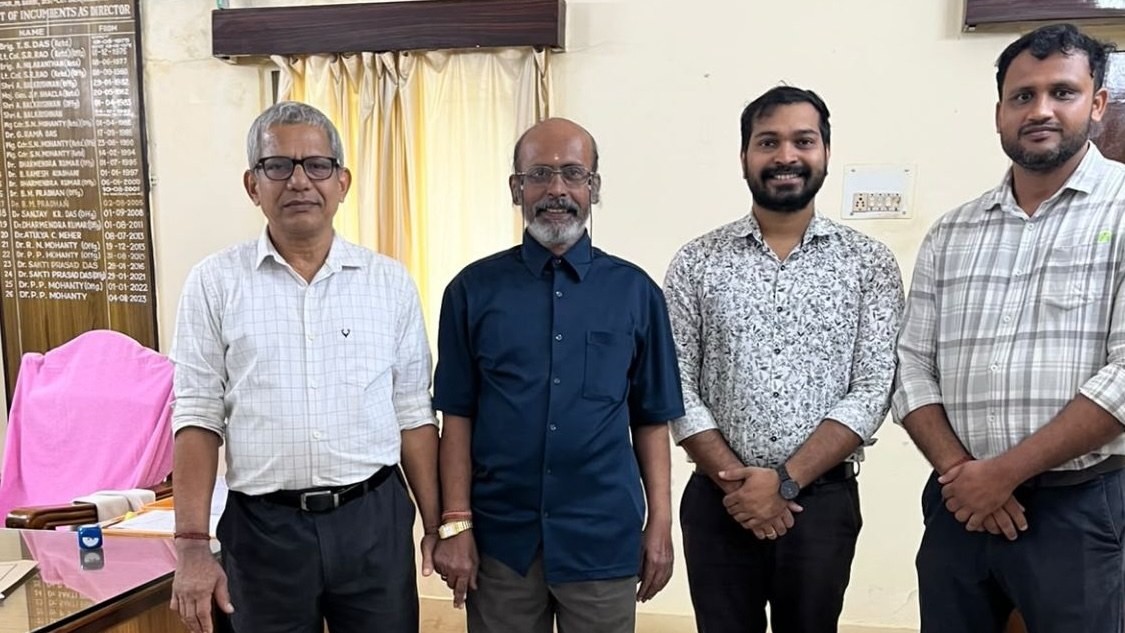
The Swami Vivekanand National Institute of Rehabilitation Training and Research (SVNIRTAR) in Olatpur, Cuttack, has fitted a customised, high-end prosthetic system worth ₹9,99,400 to Dr Satya Narayan Mishra, a right transfemoral (above-knee) amputee. SVNIRTAR says he is the first transfemoral amputee at the institute to use the Government of India’s ₹10 lakh assistive device scheme for Central Government employees.
Dr Mishra is Assistant Director at the National Archives of India (Records Centre, Eastern Zone, Bhubaneswar), Ministry of Culture. SVNIRTAR said the new prosthesis gives him greater mobility, independence and confidence.

How does the ₹10 lakh scheme work?
Under guidelines from the Department of Empowerment of Persons with Disabilities (DEPwD) and the Department of Personnel and Training (DoPT), eligible Central Government employees with disabilities can access high-tech assistive devices worth up to ₹10 lakh once every three years. Each device is subject to the prescribed assessment and approval.
SVNIRTAR said the case shows how government initiatives, advanced rehabilitation technology and professional expertise can come together to promote accessibility, workplace inclusion and equal opportunities for persons with disabilities. The institute said it remains committed to empowering persons with disabilities through quality rehabilitation services, assistive technology and inclusive opportunities.
Bharat CPO Perspective
A ceiling of ₹10 lakh puts advanced above-knee components within reach for eligible employees, technology that most Indian amputees could never afford privately. It also means the clinical team has to justify a high-end prescription through assessment, and then deliver the fitting, alignment and gait training that make expensive components worth their cost. A first transfemoral fitting under the scheme at SVNIRTAR, a national institute under DEPwD, should help other eligible Central Government employees in Odisha and eastern India see that the scheme can work in practice.
The scheme covers only Central Government employees. Most people with limb loss in India still depend on basic devices provided through government schemes and NGO camps, or pay privately. As our Odisha State Profile notes, the state has a strong P&O foundation, much of it built around SVNIRTAR, whose history began as an artificial limb training centre. Cases like Dr Mishra’s show what well-funded prosthetic care can achieve, and why wider funding routes for people outside government service matter.
Frequently asked questions
Who received the prosthesis? Dr Satya Narayan Mishra, Assistant Director at the National Archives of India (Records Centre, Eastern Zone, Bhubaneswar), a right transfemoral amputee.
How much did the prosthesis cost? ₹9,99,400, just within the scheme’s ₹10 lakh limit.
Who is eligible for the scheme? Eligible Central Government employees with disabilities, for high-tech assistive devices worth up to ₹10 lakh once every three years, subject to assessment and approval under DEPwD and DoPT guidelines.
Sources
- LinkedIn post by SVNIRTAR Cuttack (official profile) (November 2026)
- Bharat CPO: The History of SVNIRTAR
- Bharat CPO: Odisha State Profile
- Bharat CPO: SVNIRTAR and OPAI Odisha Mark IPOD 2026